Rural health transformation requires more than connection—it requires care.
Across the country, rural communities are exploring new models designed to close widening healthcare gaps. Among the options often considered are telehealth kiosks—compact stations that offer video access to a remote provider. Others point to mobile clinics or at-home diagnostic and monitoring kits as potential solutions.
Each of these approaches expands access in some way. But rural communities do not simply need more access points. They need clinical certainty. Because the issue is rarely just the ability to speak to a clinician. The real challenge is the ability to be evaluated, diagnosed, and treated—accurately, consistently, and immediately—without fragmentation or guesswork.
Telehealth kiosks function primarily as communication tools. They connect patients to providers but often lack the integrated diagnostic tools necessary to fully assess a condition. Many encounters still end in deferred care.
At-home diagnostics introduce an entirely different set of limitations. First, they depend on reliable broadband access. Yet approximately 1 in 5 Americans lacks dependable high-speed internet, and millions more experience unstable connectivity insufficient for high-quality clinical video. A glitching connection on a small screen does not support confident diagnosis.
But connectivity is only part of the issue. At-home monitoring shifts clinical responsibility into uncontrolled environments. Consumer-grade devices vary widely in calibration and accuracy.
Improper cuff placement alters blood pressure readings.
Ambient lighting distorts camera-based assessments.
Background noise compromises auscultation attempts.
Improper technique leads to faulty pulse oximetry or temperature readings.
Even when devices are accurate, clinicians must interpret data generated by hardware in unknown conditions, without assurance of maintenance, calibration, or user training.
There is also the matter of compliance and usability. Patients must correctly operate devices, remember to record readings, interpret instructions, and troubleshoot issues—often without assistance. Elderly patients, individuals with limited health literacy, and those managing multiple chronic conditions may struggle with device setup or digital platforms. Equipment may sit unused. Batteries fail. Apps disconnect.
Most critically, at-home monitoring cannot replicate a controlled clinical environment.
There is no calibrated exam space.
No standardized lighting.
No integrated diagnostic array.
No immediate escalation protocol within a clinical setting.
Mobile clinics face different constraints. They are episodic by design. They arrive on a schedule and depart on a schedule. They depend on vehicle maintenance, staffing availability, fuel costs, and weather. They are not permanent infrastructure. They are rotating resources.
When illness strikes outside the scheduled visit window, access is again delayed.
Rural healthcare cannot depend on intermittent, consumer-grade, or bandwidth-fragile solutions.
The OnMed CareStation™ was built as infrastructure.
Not as a kiosk.
Not as a vehicle.
Not as a kit shipped to a home.
But as an 8×10 foot, permanently installed Clinic-in-a-Box designed to deliver clinical-grade evaluation inside a standardized, controlled environment.
Within the CareStation are advanced, medical-grade diagnostic instruments that enable accurate, real-time assessment:
These tools are built into the environment—maintained, calibrated, standardized, and supported. The clinician is not guessing at the quality of the data. The environment is purpose-built for diagnosis.
Patients engage with a live clinician on a 55-inch high-definition screen, creating a life-size, immersive clinical interaction. Subtle physical cues are visible. Visual assessments are clear. Communication is uninterrupted. It feels like a clinician is present—because clinically, they are.
The result is resolution.
Approximately 85% of patients are treated within the CareStation without escalation.
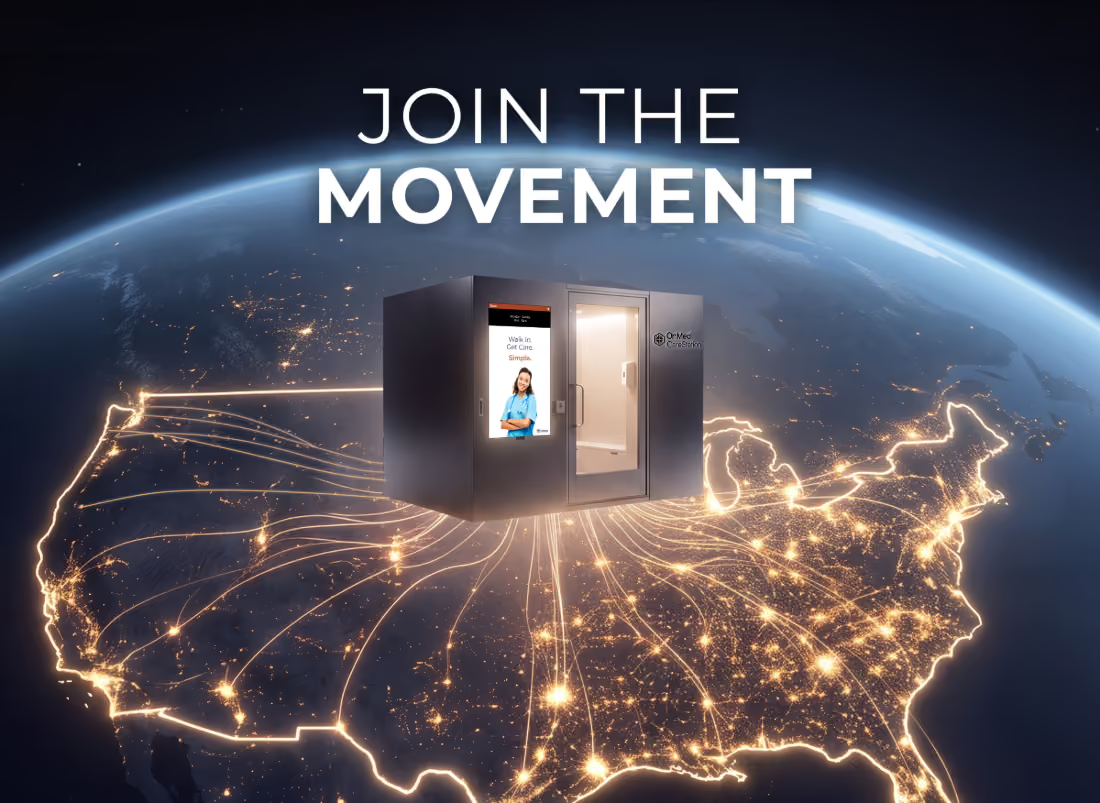
And unlike at-home solutions that rely solely on local internet infrastructure, the CareStation operates with both broadband and satellite connectivity. This dual-path design ensures reliability even in areas with unstable terrestrial service. No digital deserts. No dropped consultations at critical moments. No ZIP code left off the healthcare grid.
But the CareStation’s impact extends beyond diagnostics.
It is not designed to replace local providers—it is designed to support them.
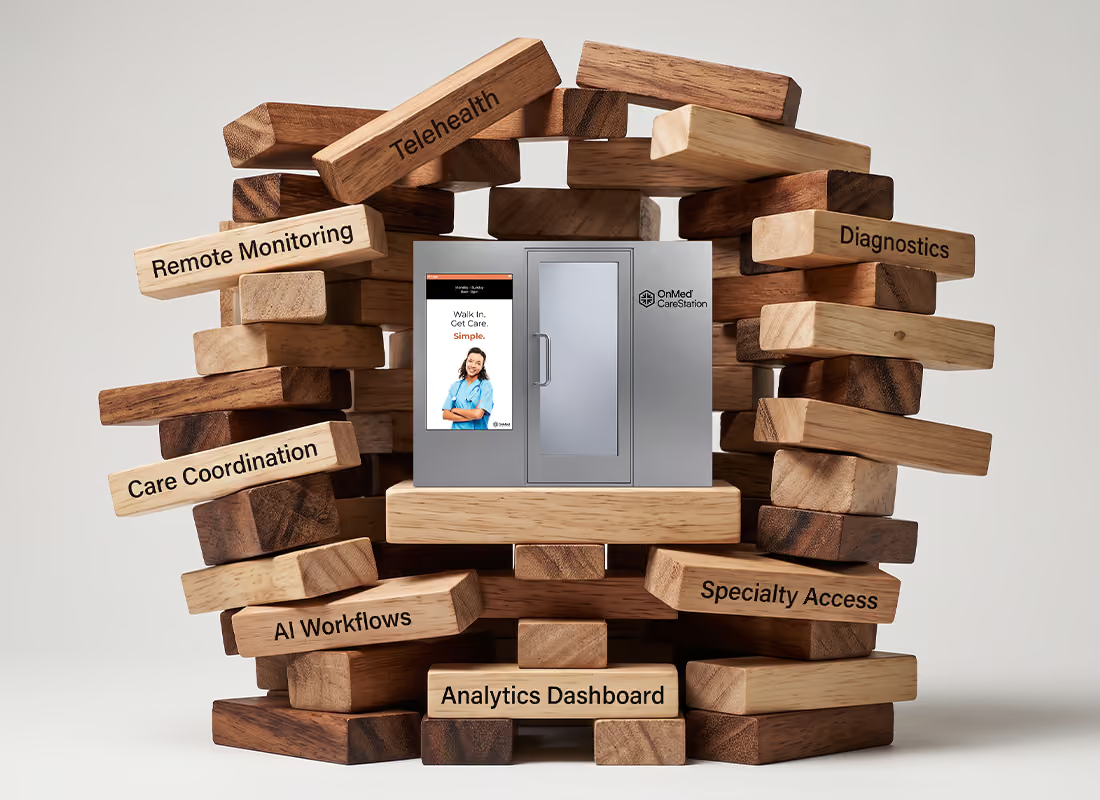
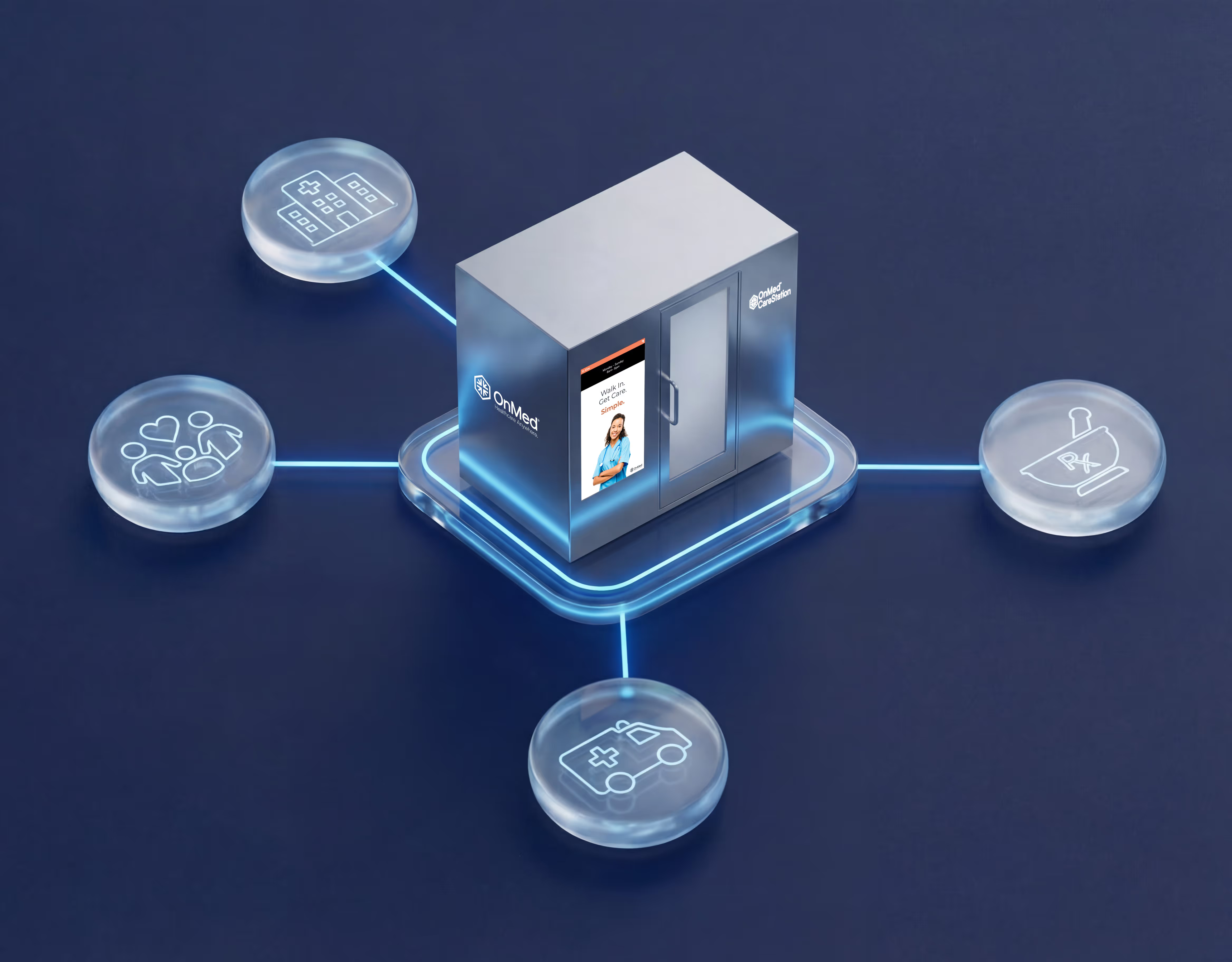
CareStation clinicians integrate with regional health systems, generate referrals, coordinate follow-up care, and transmit prescriptions directly to local pharmacists — preserving continuity and strengthening rural healthcare economies.
Through a localized Community Playbook, the CareStation also functions as a community healthcare hub—connecting individuals to food banks, shelters, transportation programs, and EMS coordination.
In towns where a single ambulance may serve the entire region, the CareStation can triage non-emergent conditions on site—helping ensure that emergency services remain available for true crises rather than routine concerns.
This is what distinguishes infrastructure from convenience.
Telehealth kiosks expand communication.
Mobile clinics expand episodic reach.
At-home kits expand consumer access in an uncontrolled environment for users lucky enough to have connectivity, literacy, and technical confidence.
For rural communities navigating hospital closures, clinician shortages, EMS strain, and broadband instability, that difference is not incremental.
It is foundational.
Because rural health transformation requires more than connectivity.
It requires a permanent, clinically controlled, diagnostic-capable platform designed to deliver real care—accurately, consistently, and locally.
Learn more about how OnMed's bringing healthcare anywhere for rural communities or schedule a demo today.
Follow along as we continue to redefine the healthcare landscape and bring the OnMed CareStation to communities across the U.S.