For decades, rural and underserved communities have faced the same challenges: too few providers, long travel distances, limited specialty access, and emergency departments bearing the burden of care that should have happened earlier and closer to home. In 2026, that reality changes.
The CMS Rural Health Transformation Program (RHTP) represents a once-in-a-generation opportunity—$50 billion over five years—to fundamentally reshape how care is delivered in rural America. Every state now has the resources to expand access, stabilize local systems, and invest in modern, technology-enabled care models.
But funding alone does not transform health systems.
Execution does.
States, health systems, tribes, FQHCs, and community partners are now facing the same urgent question:
How do we turn RHTP dollars into real access – quickly, sustainably, and without adding strain to already stretched systems?
RHTP is not a long-range planning exercise. It is designed to deliver visible, measurable improvements in access, utilization, and outcomes – on a compressed timeline.
Traditional solutions struggle to meet this moment:
Communities need solutions that can move at the speed of RHTP.
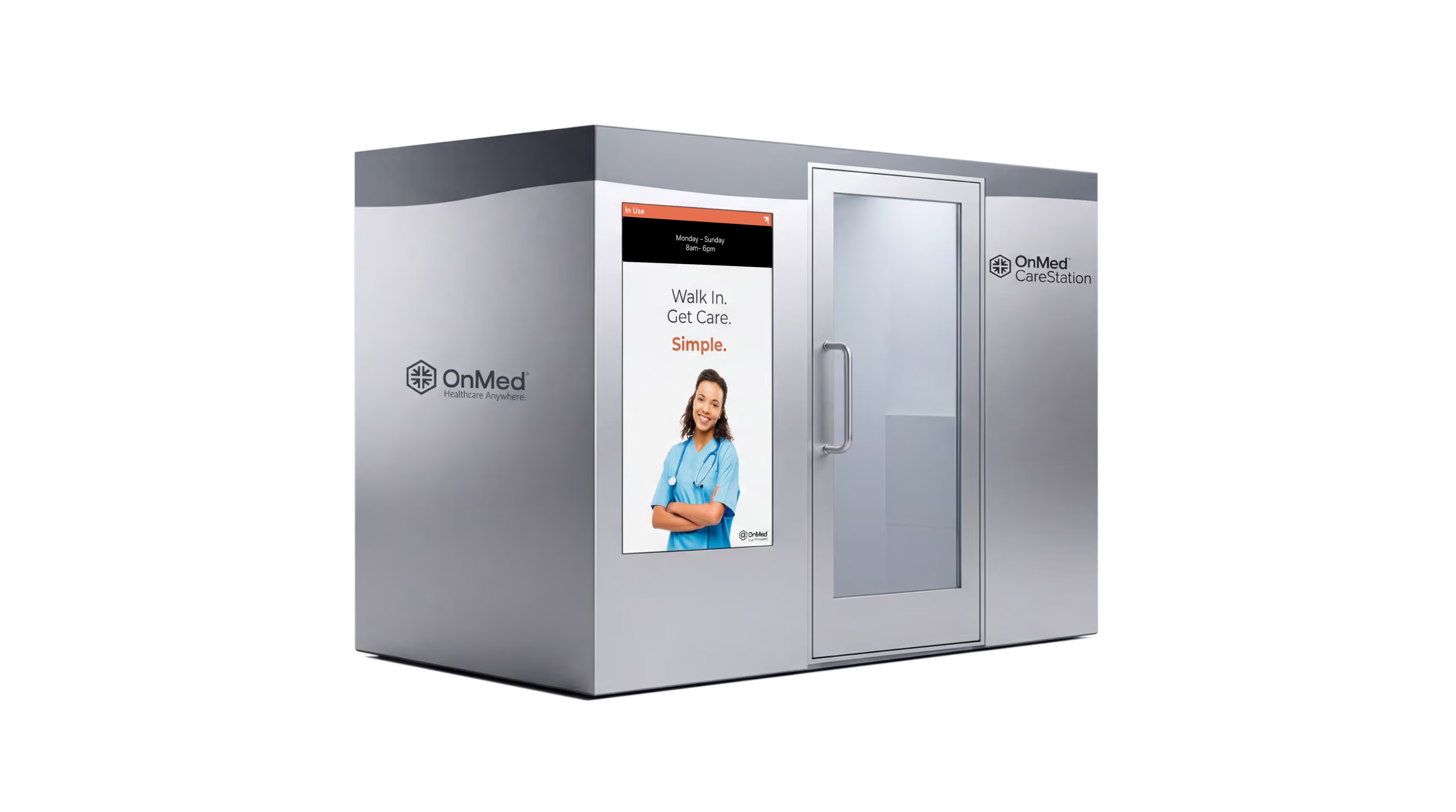
OnMed was built for moments exactly like this. OnMed CareStations are fully integrated, clinic-grade healthcare access points, often described as a Clinic in a Box, that brings primary care, urgent care, and behavioral health screening directly into communities.
They are:
CareStations are already deployed across rural towns, community centers, pharmacies, schools, shelters, campuses, and health system sites – extending care without requiring new buildings or on-site staffing.
This is not a pilot concept. It is ready-to-deploy infrastructure.
Healthcare in rural and underserved communities does not fail because of a lack of commitment. It fails because the system was never designed for the realities on the ground.
Clinics are stretched thin. Providers cover multiple sites. Patients delay care because the nearest option is hours away. Emergency departments become the default front door—not because care is emergent, but because it is the only door that is open.
OnMed was designed around this reality.
CareStations are not meant to be standalone clinics or a replacement for existing providers. They are extensions of the care teams that already serve the community—built to meet patients where they are, when they need care, without forcing systems to hire more staff, build new facilities, or re-engineer workflows.
A CareStation functions as a front door to the local health system, embedded in places people already trust and access: a hospital campus, an FQHC site, a tribal health facility, a rural pharmacy, a community center, or a workforce hub. From the patient’s perspective, care becomes immediate, private, and local. From the provider’s perspective, care becomes scalable.
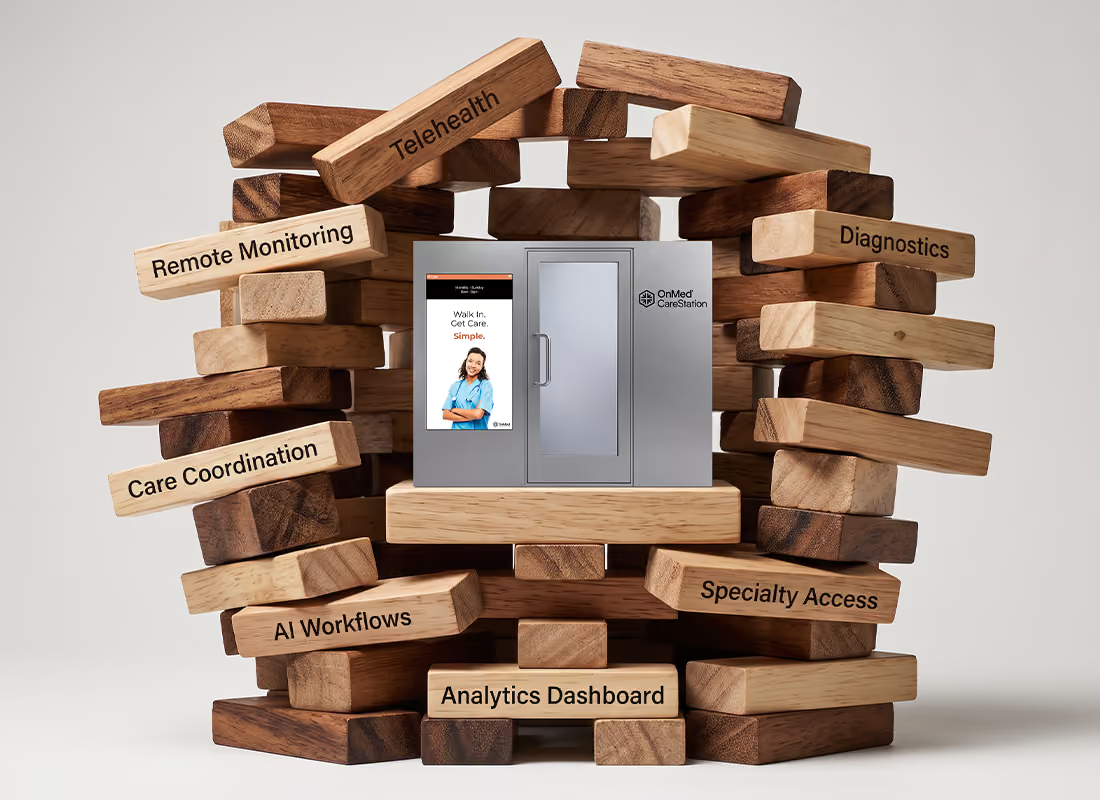
Clinicians do not need to be on-site. Instead, they are connected through a fully integrated platform that supports real-time visits, diagnostics, prescribing, and referrals – allowing providers to practice at the top of their license while extending their reach far beyond a single physical location.
This design matters.
It means:
CareStations fit into existing referral networks, EHRs, and care coordination workflows. They escalate appropriately, route patients back into local systems, and strengthen—not fragment—continuity of care.
In short, they work the way healthcare actually works in rural America: distributed, resource-constrained, relationship-driven, and deeply local.
By designing for these realities, OnMed enables communities to expand access without asking providers to do more with less—and without asking patients to travel farther, wait longer, or give up.
That is what makes CareStations a natural execution layer for the Rural Health Transformation Program: they are not theoretical solutions. They are built for the day-to-day reality of delivering care where it is hardest—and where it matters most.
OnMed’s approach is not adjacent to RHTP, it is directly aligned.
CMS explicitly referenced OnMed in the RHTP Notice of Funding Opportunity, highlighting deployable, technology-enabled access points as a pathway to sustainable rural care.
States have followed suit.
Virginia and Nebraska both explicitly named OnMed in their RHTP applications as part of their execution strategy – recognizing the need for solutions that can be deployed quickly, integrated easily, and scaled statewide.
This validation matters because RHTP is not theoretical. States are already choosing the tools they trust to deliver.
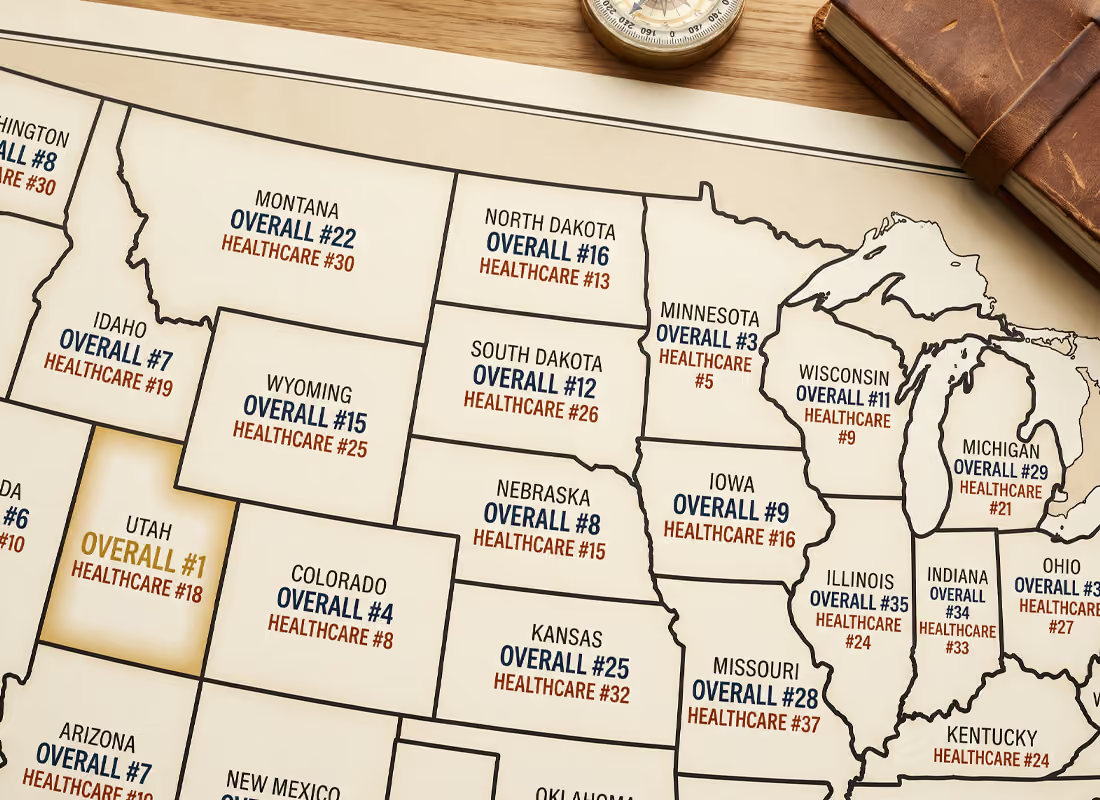
To understand what it will take to truly close access gaps under RHTP, OnMed conducted a state-by-state analysis using the same signals CMS prioritizes:
The result was not an estimate, it was a roadmap.
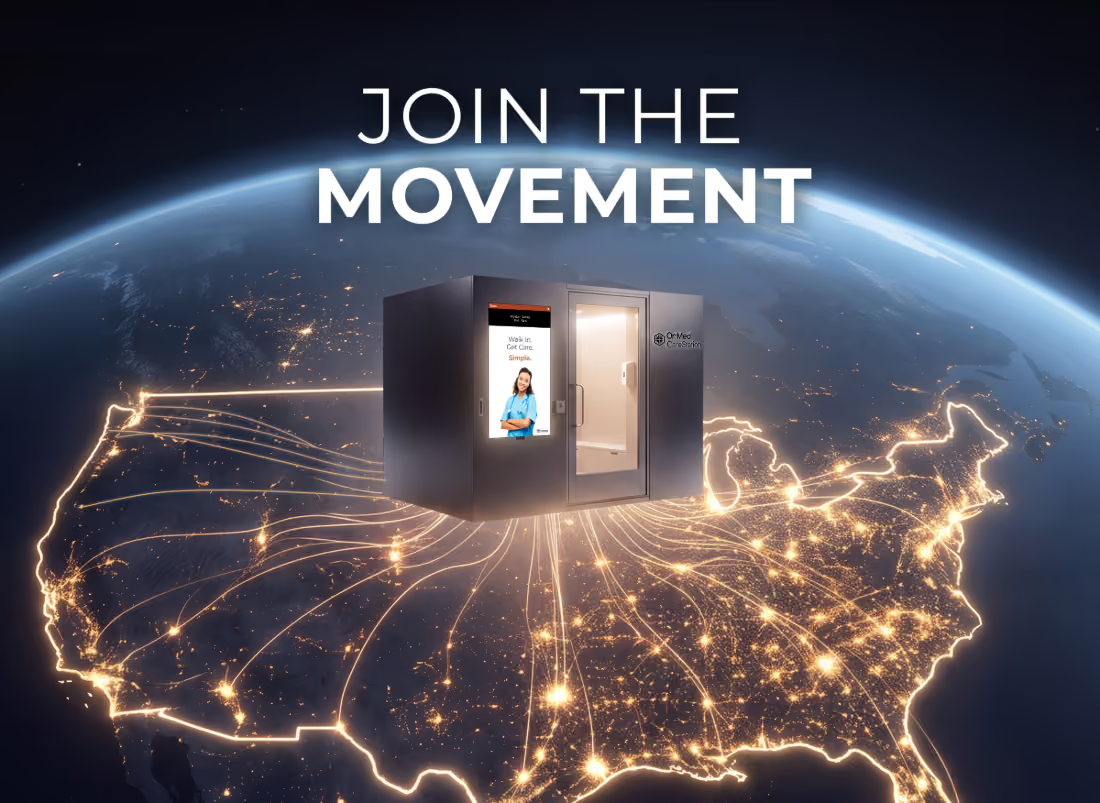
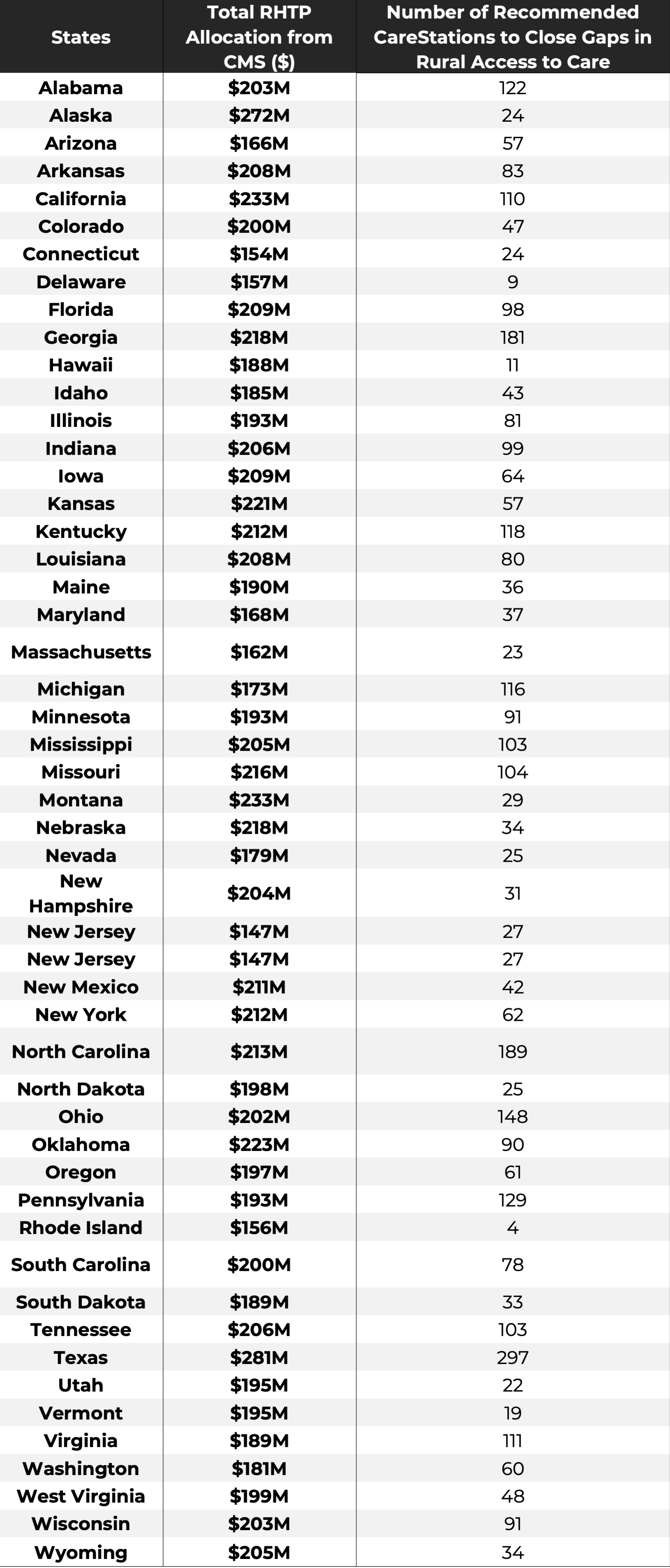
Across all 50 states, 3,610 CareStations represent the approximate access infrastructure required to meaningfully close persistent gaps under RHTP.
This is not about saturation.
It is about coverage.
From four CareStations in Rhode Island to nearly 300 in Texas, recommended deployments scale with geography, population, and need. Larger, more rural states require broader footprints. Smaller states benefit from targeted placements that extend existing networks.
These recommendations are not abstract. They are designed to be implemented by:
Each CareStation becomes a front door to care.
Organizations pursuing RHTP funding consistently cite the same reasons for partnering with OnMed:
Most importantly, CareStations make RHTP real, not just funded.
RHTP will be remembered not for how much money was allocated, but for how effectively it changed lives. Communities that succeed will be those that:
OnMed is ready.
The infrastructure exists.
The funding is here.
The opportunity is now.
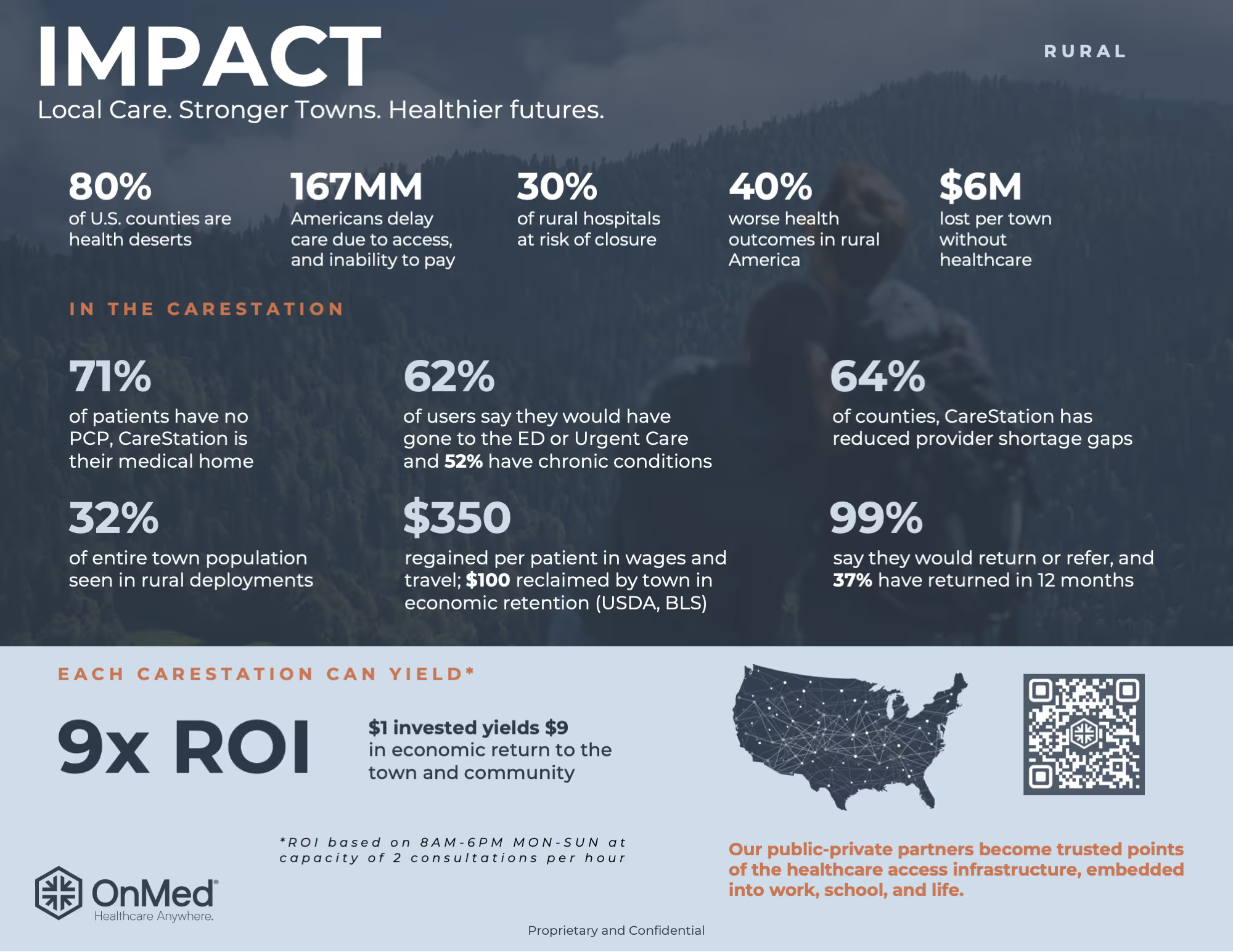
OnMed is a healthcare technology company delivering clinic-grade CareStations that expand access to care through integrated telehealth, diagnostic tools, and referral workflows. OnMed partners with hospitals, FQHCs, tribes, health plans, and governments nationwide to deploy sustainable, community-based healthcare infrastructure.
OnMed makes RHTP real. The funding is here. The moment is now. Learn how OnMed can help close your rural healthcare gaps.
About OnMed
OnMed is transforming how the world accesses healthcare. With its patented OnMed CareStation®, an 8×10 foot “Clinic-in-a-Box”, OnMed delivers comprehensive, immediate care wherever people live, work, and learn. The OnMed CareStation is a tech-enabled, AI-powered, and human-delivered platform that blends the comprehensiveness of traditional in-person care with the rapid scalability of telemedicine. Each CareStation serves as a local access point within a scalable, connected grid that delivers everyday healthcare at scale.
Powered by public-private partnerships across insurers, healthcare providers, governments, employers, and educational institutions, OnMed is redefining healthcare access, closing critical gaps, restoring trust, and strengthening the health and economic resilience of communities everywhere. Learn more at www.onmed.com.
Follow along as we continue to redefine the healthcare landscape and bring the OnMed CareStation to communities across the U.S.