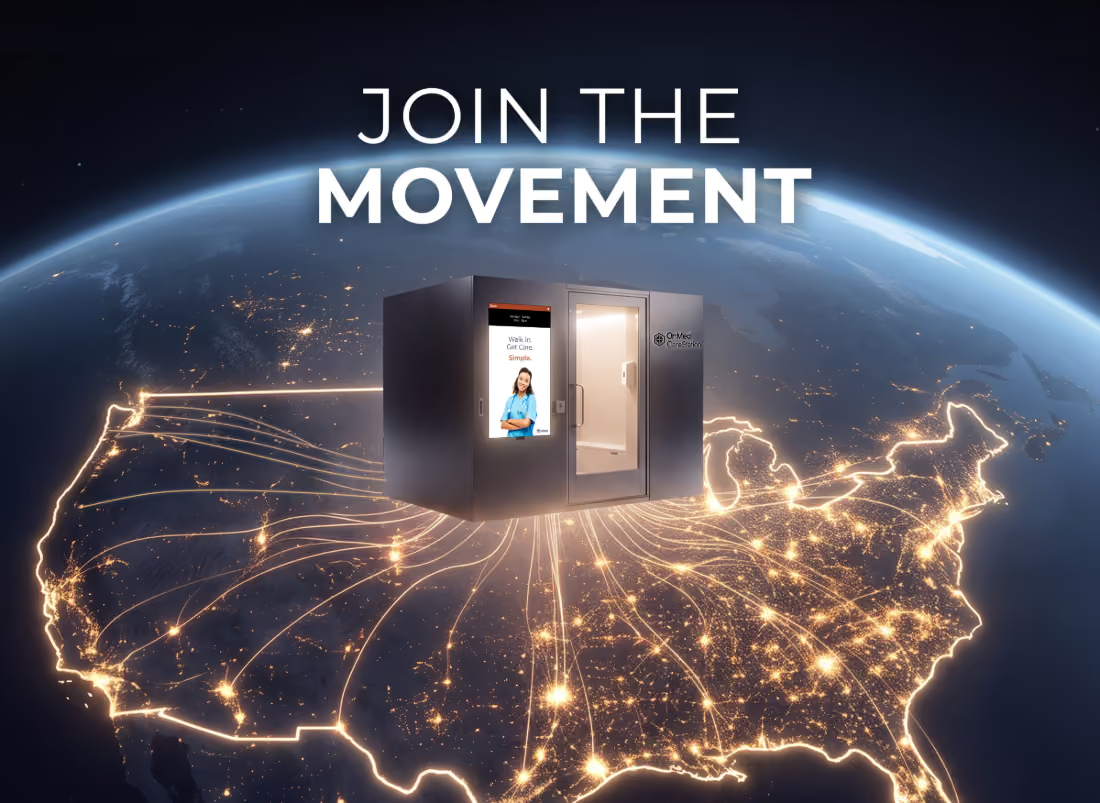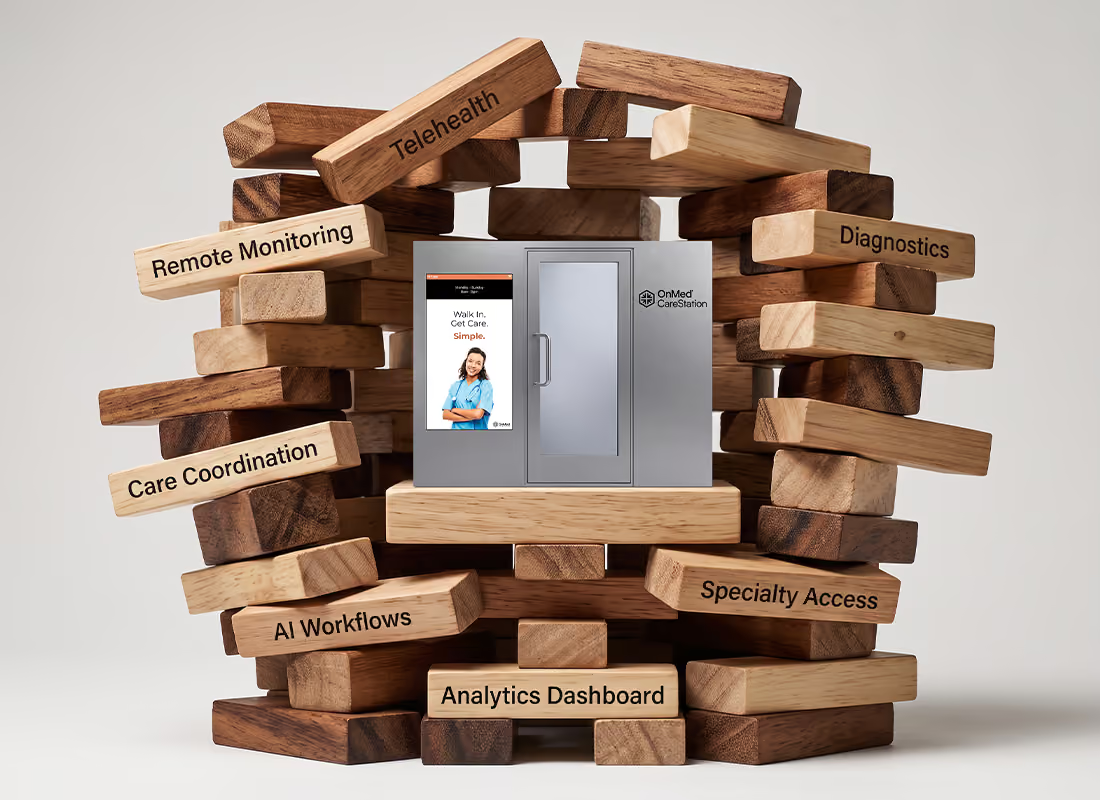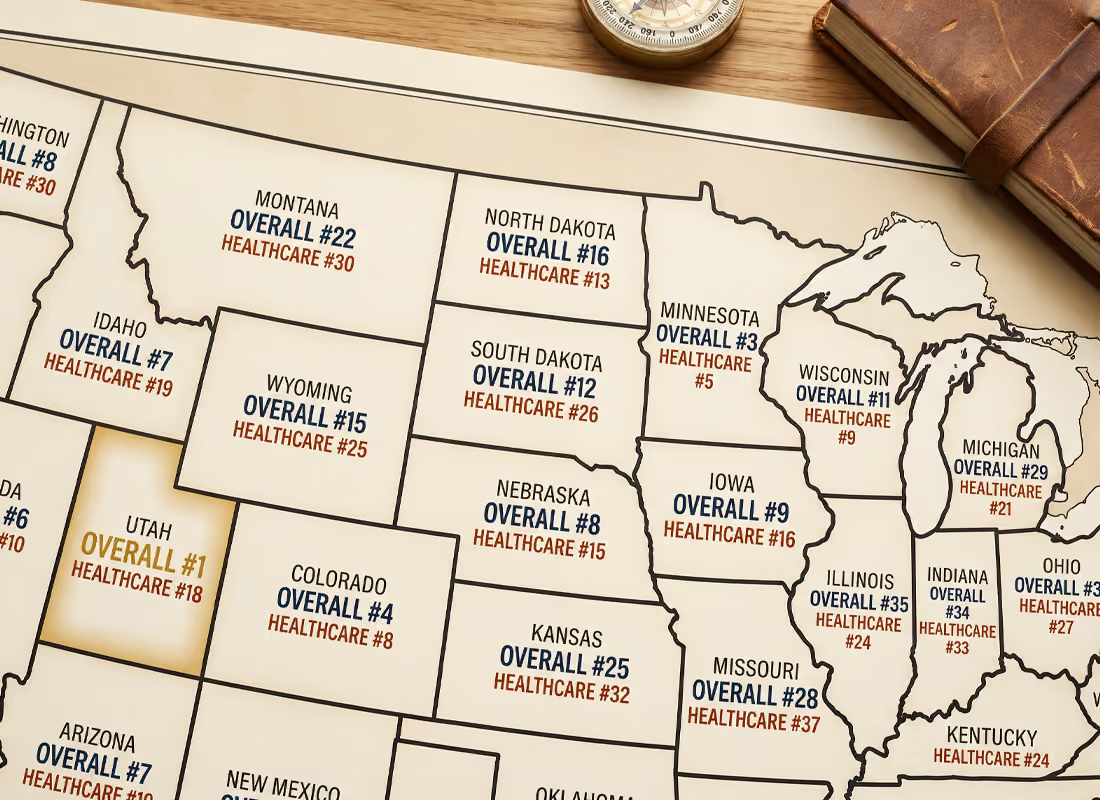
See how one structural challenge impacts healthcare costs, outcomes, and workforce stability.


You’ve heard of food deserts—areas where fresh, affordable food is hard to find. But what about healthcare deserts? This crisis leaves millions without timely, quality medical care, and many starving for access. Lack of access impacts 80% of U.S. counties, touching over 120 million people, meaning 1 in 3 Americans lack adequate healthcare. But this traditional definition of underserved America only scratches the surface. The reality is far more severe.
A healthcare desert isn’t defined by geography alone. It reflects a complex web of barriers that keep people at a dangerous distance from the care they need. According to experts, a “medical desert” is an area where population healthcare needs are partially or entirely unmet due to inadequate access or poor-quality care. These gaps can stem from shortages of clinicians, limited facilities, long wait times, high costs, or sociocultural barriers. This is a man-made crisis—and it demands urgent attention.
From agonizingly long wait times for a basic checkup to entire counties without a single hospital or pharmacy, the desert’s cactus pricks the population disproportionately, impacting our most vulnerable communities.
In the 15 largest U.S. metro areas, the average wait to schedule an appointment is now a staggering 31 days, with specialist waits stretching as long as 67 days. The strain intensifies even further in rural America. This is more than an inconvenience—it’s a critical barrier to preventive care and early intervention, allowing treatable conditions to escalate into emergencies. The American Association of Medical Colleges (AAMC) projects a national physician shortage of 139,000 by 2033, further compounding these already dire delays.
Beyond physician access, the healthcare infrastructure itself is eroding. Over 28 million Americans live more than 30 minutes from the nearest hospital. Nearly 44 million Americans live in a designated primary care shortage zone, and 78 million Americans reside in communities without access to a low-cost care center.
Healthcare deserts hit underserved populations hardest. Low income, lack of insurance, and limited internet access deepen existing disparities. These access gaps directly worsen chronic disease outcomes—with diabetes rates 30% higher among Native American and Latino populations compared to White Americans. Six conditions account for 86% of excess mortality among Black Americans, and nearly 45% of Black deaths before age 70 could be prevented with equitable access to quality care.
The problem persists—but why? The causes are complex, require innovation, and cannot be solved with a single fix. Addressing healthcare deserts will require innovation, sustained investment, and new delivery models. Workforce shortages, infrastructure challenges, fragmented systems, policy constraints, and chronic underinvestment remain deeply embedded barriers to equitable healthcare access.
Behind every statistic is a human story—real lives shaped by the daily realities of living in a healthcare desert. These narratives reveal the profound personal toll of limited access to care, where routine medical needs become ongoing struggles with life-altering consequences.
Barbara Kingsolver—acclaimed author and longtime resident of rural Appalachia—is no stranger to the realities of healthcare deserts. In her novel Demon Copperfield, she illuminates the severe lack of meaningful healthcare access in economically distressed communities and the grave challenges that follow.
One character in Demon Copperfield, Dori, is forced to quit school to care for her ailing father because no local medical options exist. With her mother deceased, Dori must drive her father across state lines nearly every week to reach heart and lung specialists. As Kingsolver reflects, “That’s the case. Many times, I’ve driven to doctors who lived four or five hours away in the nearest city.”
Though Demon Copperfield portrays the devastating consequences of healthcare deserts through fiction, the crisis is painfully real—and millions of Americans face these barriers to care every single day.
Take Tchenavia Atkinson, for example. Hardee County, Florida—home to just 25,000 residents—has only one hospital, leaving basic healthcare access severely limited. Tchenavia shares that even routine care requires traveling to Lakeland, more than an hour away, turning everyday medical needs into time-consuming and burdensome journeys.
Barbara Kingsolver echoed this reality in a recent interview with Ezra Klein, highlighting how rural healthcare challenges are often invisible to those in urban areas. As she explains, “I think one of many things people in cities don’t understand is how hard it is for us to get to see doctors in the country. This is something that’s just—what we live with here. There are not enough physicians to meet our needs. And so you have to wait a long time to get into one. And that doctor doesn’t have the chance to follow you up. He’s got one chance to help.”
The lived reality of healthcare deserts is pervasive and deeply human—posing daily challenges that millions of Americans face quietly, and that many of us never have to consider.
As traditional healthcare systems struggle to reach underserved communities, new solutions are stepping in to fill the gap. From mobile care models to evolving digital tools, innovation is reshaping how access can—and should—work.
Addressing healthcare deserts requires a multi-pronged approach that combines community-based care with the right technology:
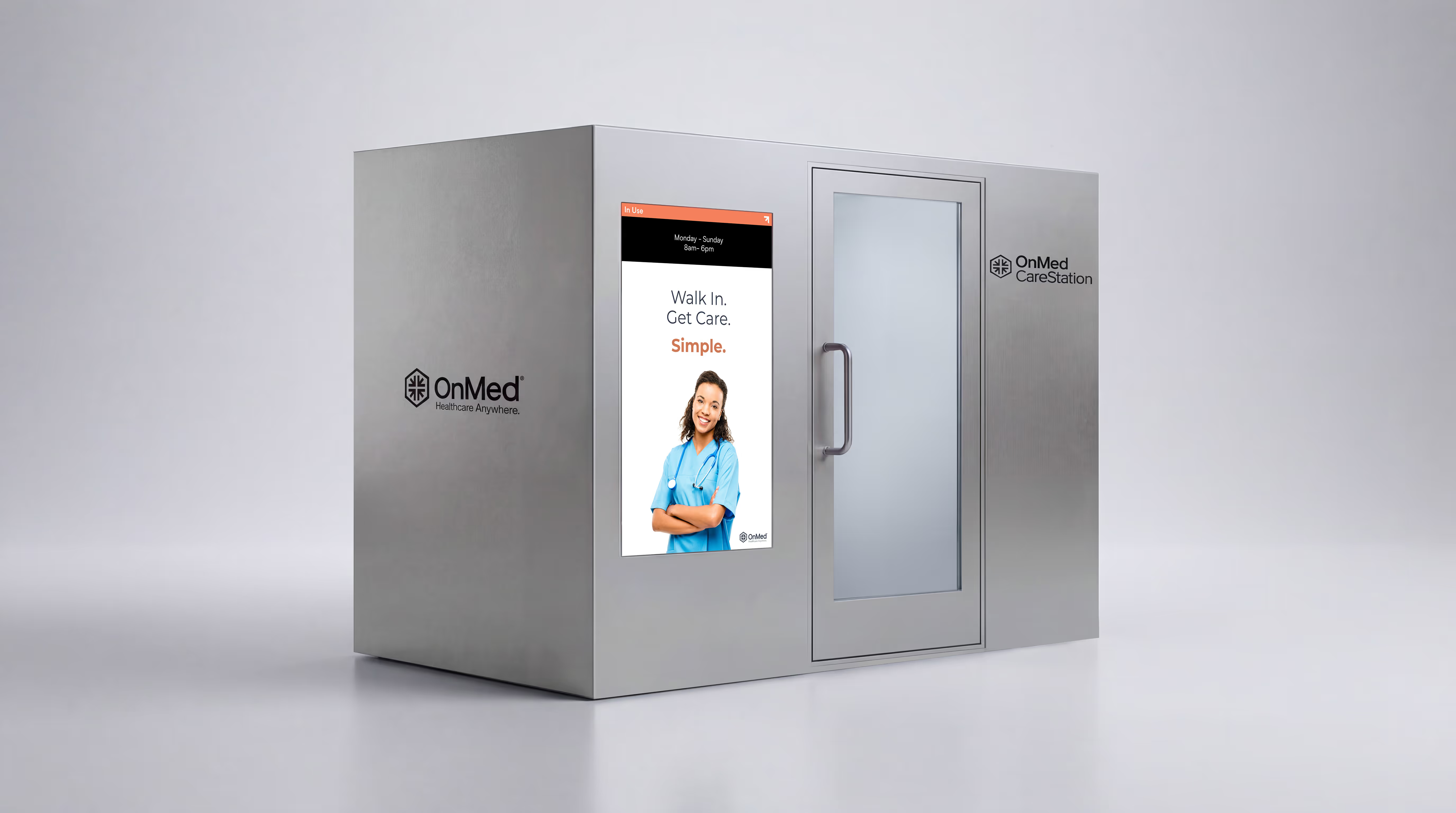
This is where OnMed's CareStation® enters the picture. As an 8’ x 10’ Clinic-in-a-Box, it delivers everyday healthcare access almost anywhere there’s a power outlet. Designed to function as a first point of care, the OnMed CareStation is poised to become a foundational element of America’s public health infrastructure.
By combining the comprehensive care, vitals monitoring, diagnostic tools, and human compassion of an in-person clinic with the speed, scalability, and reach of virtual care, OnMed amplifies the strengths of both models—while eliminating the limitations that have stalled each on their own. This is true hybrid care, delivered in ways traditional clinics and telehealth platforms simply can’t match.
OnMed serves as a critical connective layer in America’s healthcare ecosystem, enabling meaningful cost savings while dramatically expanding access—and ensuring individuals receive timely, comprehensive, and consistent care where they live, work, and learn.
Healthcare access shouldn’t require trekking miles through a healthcare desert. OnMed shows up where care is needed most—because everyone, everywhere, deserves to be cared for.
The OnMed CareStation® is an 8-by-10-foot "Clinic-in-a-Box" that connects patients in real time with licensed clinicians and integrated diagnostic tools through a fully integrated device and human platform. Patients can walk in and receive a diagnosis, treatment plan, and e-prescription, often without an appointment or waiting room. Unlike traditional telehealth, the CareStation combines virtual care with diagnostic tools, real-time scans, and vital sign monitoring to support comprehensive clinical evaluations where care is needed most. See how a CareStation visit works.
A healthcare desert is a geographic area where residents face significant barriers to accessing basic medical care due to a shortage of providers, facilities, or both. Today, 80% of U.S. counties meet the criteria for a healthcare desert, leaving millions of Americans more than an hour from the nearest clinic or hospital. These areas are not limited to rural communities. They include urban and suburban neighborhoods, tribal lands, and correctional environments where structural gaps in the system have persisted for decades. The consequences are measurable: delayed diagnoses, undertreated chronic conditions, and emergency departments absorbing care that should have been delivered much earlier. Barriers can include provider shortages, appointment delays, transportation challenges, limited clinic availability, affordability concerns, and fragmented care delivery.
Contrary to popular assumption, most are not rural. A 2025 Georgetown University analysis that measures healthcare deserts by health outcomes rather than provider counts alone found that only 22% of the nation's healthcare deserts are rural—the majority are urban or semi-urban, a pattern that traditional supply-based measures often miss. Urban healthcare deserts occur when residents face persistent obstacles that make timely diagnosis, treatment, and resolution difficult despite living near healthcare resources.
• 58% of CareStation patients stated they would have otherwise gone to the ER or urgent care—actively removing low-acuity volume from emergency departments and redirecting it to the appropriate, lower-cost setting.
• 86% of patients are fully treated inside the CareStation without redirection to a specialist, urgent care, or emergency department. The CareStation is a self-contained care delivery vehicle that prevents more expensive downstream costs before they become a factor.
• In 5 West Alabama rural communities with CareStation deployments: 1. The CareStation has provided care to 43% of the total population in each community. 2. 6 out of every 10 patients in those communities has no primary care physician and have completed a survey confirming that the CareStation acts as their PCP. 3. 54% have returned within 6 months—creating new access points for underserved patients and showcasing unparalleled level of stickiness with the solution.
The CareStation is operational in as little as 45 days from contract signing, requiring only a power outlet and broadband or satellite connectivity—no construction or permits.
Follow along as we continue to redefine the healthcare landscape and bring the OnMed CareStation to communities across the U.S.