
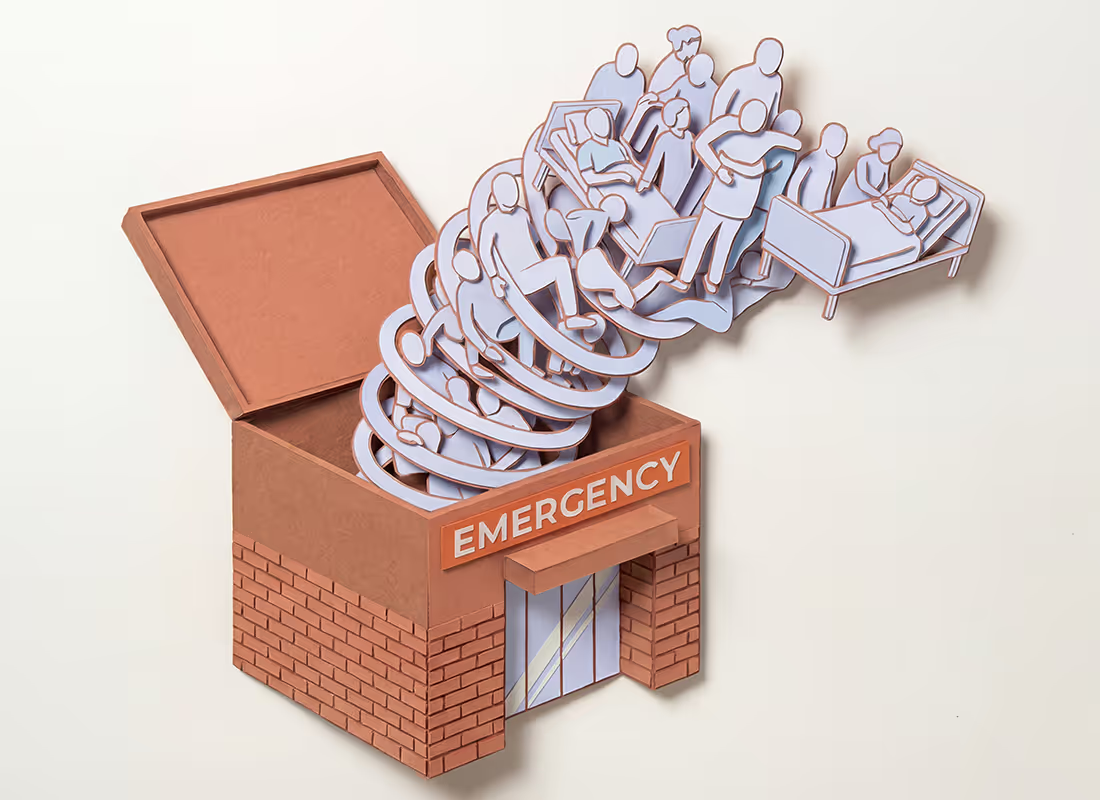
It’s after hours. Your child has an ear infection. The fever keeps climbing.
You call the pediatrician. Voicemail. Urgent care is closed. Telehealth can't examine ears remotely.
So you do what millions of families do every year—you go to the emergency department.
When you arrive, the waiting room is already full. The board shows a four-hour wait. Your child is crying. You’re exhausted. All you need is a quick exam and antibiotics so you can go home.
Around you, the waiting room tells the same story—a patient who just needs a prescription refill. Someone with unmanaged diabetes who couldn’t get a primary care appointment. An uninsured patient who knows the emergency department is the only place they can’t be turned away.
None of them should be here. And yet, all of them are.
This isn’t an anomaly. This is the modern emergency department.
Across the country, EDs are carrying the weight of a healthcare system with widening access gaps. Not because providers failed, but because the system was never designed for this volume, this mix of acuity, or this level of dependency on emergency care as a primary access point.
Providers are not short on demand. They are short on capacity, clinicians, time, and margin.
Emergency departments have quietly become the nation’s primary care safety net—particularly for uninsured and underinsured populations who rely on EMTALA to access care. In safety-net hospitals, patients are two to three times more likely to use the ED for primary-care-treatable conditions. The result is predictable: overcrowding, longer wait times, higher left-without-being-seen rates, and growing uncompensated care burdens.
Meanwhile, clinicians are stretched thin.
Physicians move from room to room with little time to pause, connect, or practice the kind of medicine they trained for. Nurses are balancing impossible ratios. Documentation competes with human interaction. Burnout isn’t theoretical—it’s operational. And clinician shortages only compound the problem, forcing health systems to do more with fewer people inside infrastructure that was never built for this level of strain.
Throughput becomes the pressure point.
When 60-70% of ED visits are non-emergent—ear infections, UTIs, rashes, sinus infections, medication refills—critical cases slow down, hallway beds multiply, and frustration grows on all sides. Patients leave without being seen. Clinicians feel defeated. Systems lose revenue as patients seek follow-up care outside the network once trust erodes.
This isn’t a breakdown in care. It’s a breakdown in access—and it demands a new blueprint.
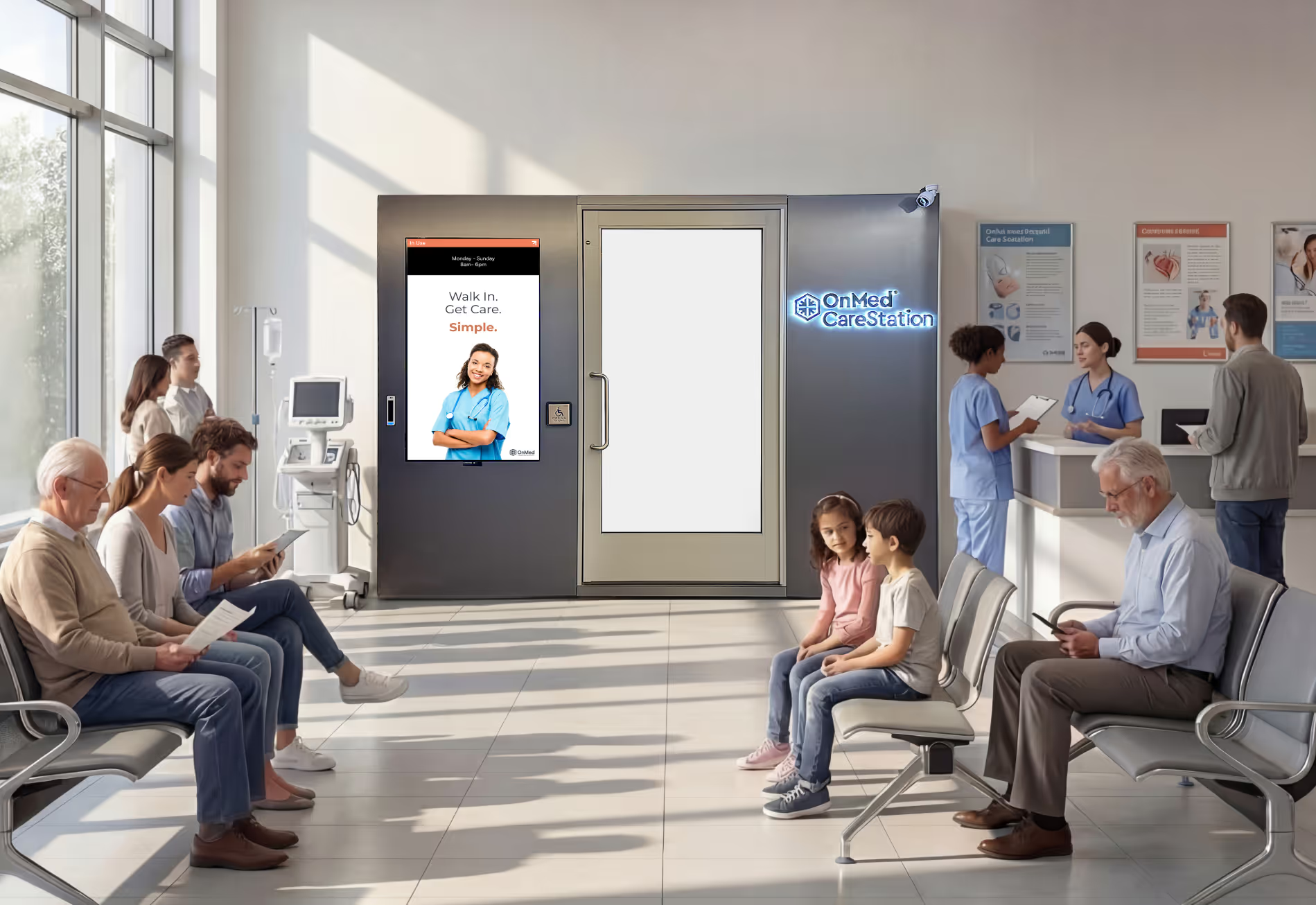
The OnMed CareStation™ was built as a missing layer in healthcare infrastructure—designed specifically to help providers rebalance demand, restore flow, and extend access without adding brick-and-mortar burden or staffing strain.
Inside the emergency department, the CareStation functions as an ED optimization tool. Because it is EMTALA-compliant, it integrates directly into existing workflows without adding regulatory complexity. Providers retain full control of triage. High-acuity cases stay in the ED. Non-emergent L3–L5 cases can be routed to the CareStation without re-triage, and if escalation is needed, patients move back into the ED seamlessly.
The impact is immediate and measurable: improved throughput, reduced wait times, fewer hallway gurneys, lower left-without-being-seen rates, and meaningful relief for clinicians who no longer have to manage primary care level cases in an emergency setting.
But the value of the CareStation extends beyond the four walls of the hospital.
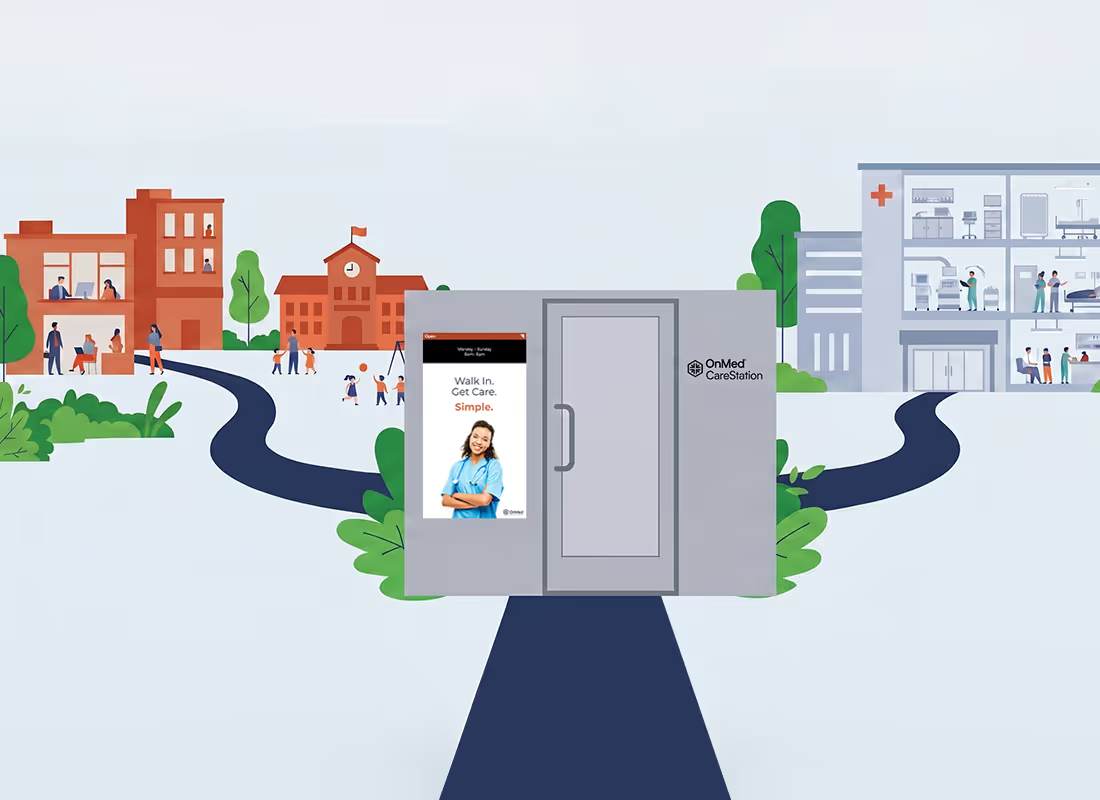
Placed outside the ED, in communities, workplaces, campuses, and retail, the CareStation becomes an extension of the provider’s brand and catchment area. It allows health systems to meet patients where they already are, diverting non-emergent cases before they ever reach the emergency department.
This outside-in diversion is critical. It reduces unnecessary ED utilization while maintaining continuity, referral integrity, and data visibility within the provider network. Unlike traditional diversion strategies, patients are not sent out of system. Referrals stay in network. Downstream services are preserved. Leakage is reduced.
At the same time, the CareStation supports inside-out optimization—relieving pressure from within the ED by creating a dedicated pathway for non-emergent care that aligns with how emergency medicine was always meant to function.
With integrated diagnostics and live clinicians, the majority of CareStation visits are resolved without escalation. This enables earlier identification of high-risk patients, reduces avoidable admissions and readmissions, and lowers total cost of care, while allowing clinicians to focus on the cases that truly require emergency intervention.
This is not about replacing providers or diverting care away from them. It’s about strengthening the system with an access layer that enables providers to work at the top of their license, protect their teams, preserve their revenue, and create a more humane, efficient care experience.
In a healthcare environment defined by clinician shortages, burnout, access gaps, and mounting pressure on emergency departments, optimization cannot come from working harder inside broken constraints.
It must come from better architecture.
The OnMed CareStation™ represents a blueprint for provider optimization—one that aligns access, outcomes, and economics while restoring balance to the system and dignity to the practice of care and the patient.
The CareStation is more than a new access point. It is a practical, scalable operating layer that absorbs low acuity demand, restores clinical bandwidth, and ensures patients receive timely care without overwhelming frontline teams. It delivers evidence-based protocols at the point of need, extends provider reach without compromising quality, and transforms stranded clinical capacity into usable capacity.
For health systems, it protects margins. For clinicians, it reduces burnout and restores purpose. For patients, it makes care feel accessible, consistent, and humane again.
This is how emergency departments return to emergency medicine—and how providers become architects of a smarter, more resilient healthcare system.
Learn more or contact us to schedule a demo today.
Follow along as we continue to redefine the healthcare landscape and bring the OnMed CareStation to communities across the U.S.
.avif)