
Healthcare is entering its most consequential era—not because we are replacing people with machines, but because, for the first time, all of the right ingredients are finally coming together.
Artificial intelligence is advancing at extraordinary speed. Clinicians are more open than ever to technology that can enhance—not replace—their judgment. Society is demanding healthcare that is accessible, equitable, and proactive. What has been missing is not intelligence or intent. What has been missing is access.
Because without access, information is irrelevant.
Without access, data is incomplete.
Without access, even the most powerful AI has nothing to learn from and nowhere to act.
This is where OnMed begins.
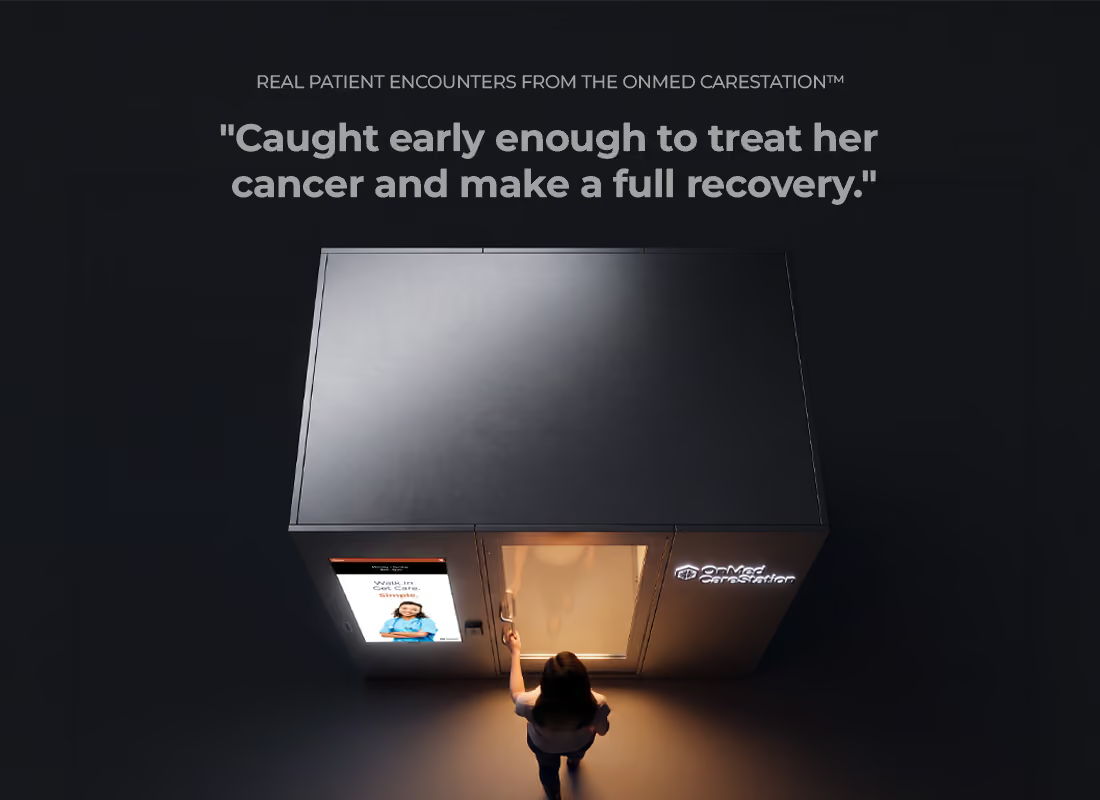
OnMed is a connected healthcare access platform built to solve the most foundational problem in healthcare: getting people access to care. At the center of the platform is the OnMed CareStation®—an 8’ x 10’ Clinic-in-a-Box that delivers real, human-led healthcare wherever it is placed.
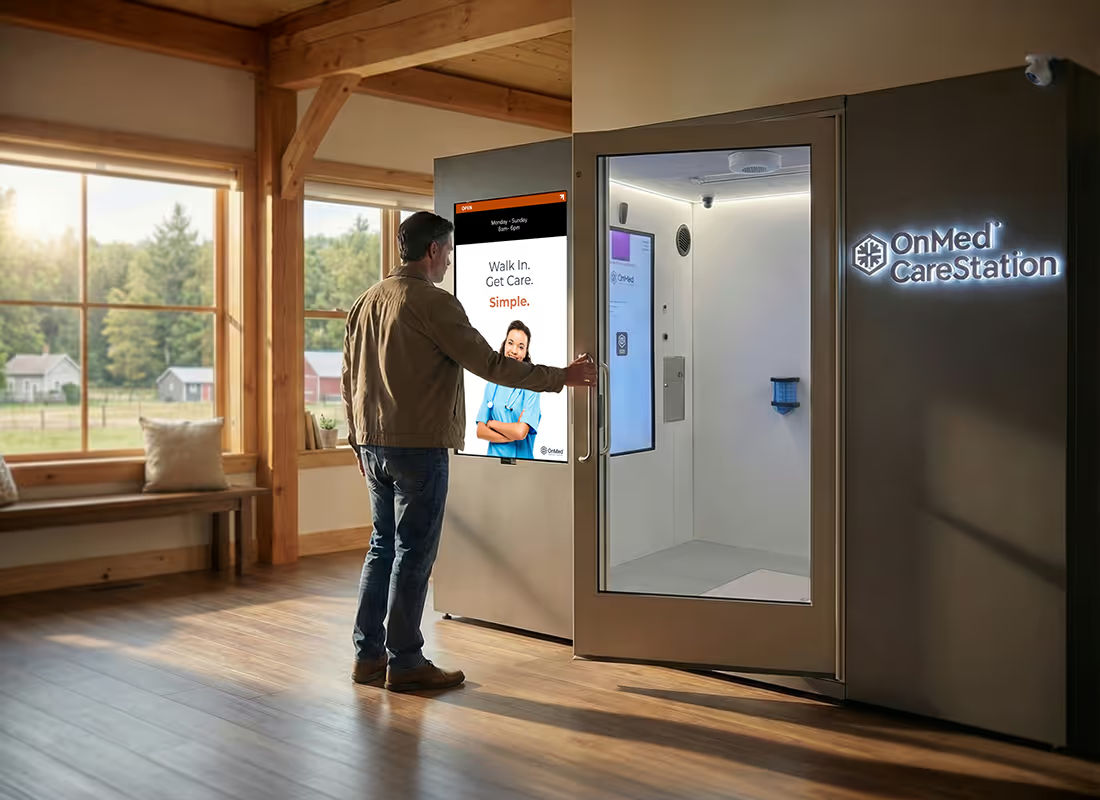
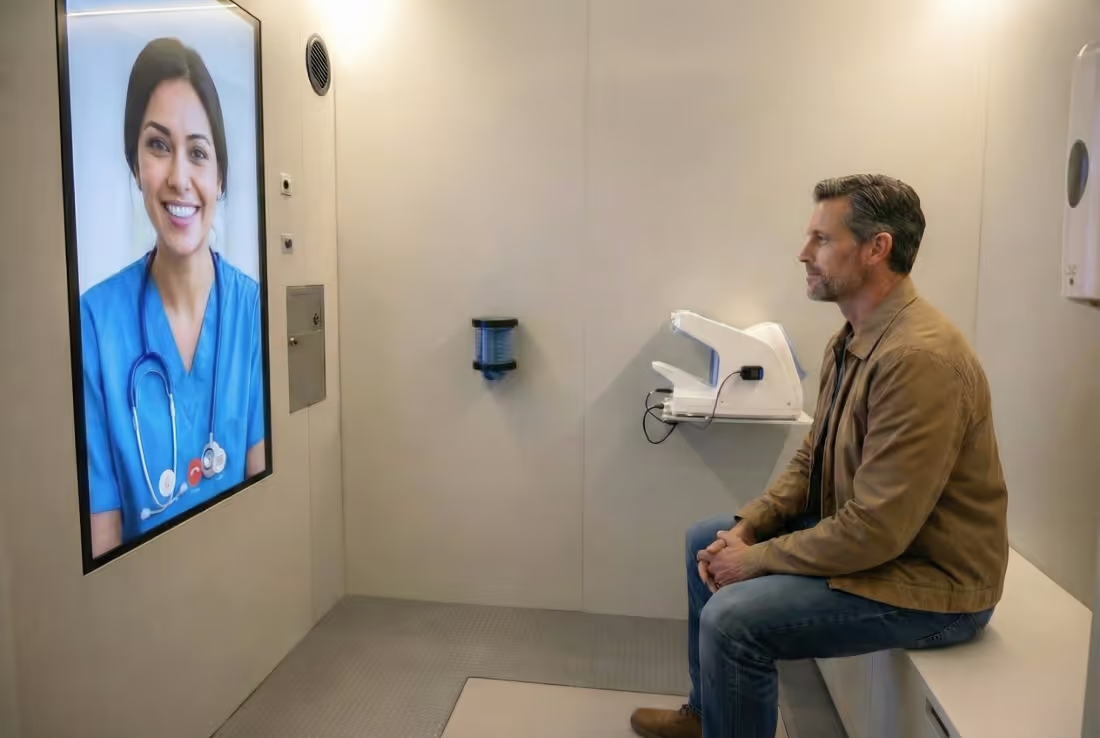
The CareStation is a physical, walk-in healthcare environment equipped with integrated diagnostic tools, life-size video connection to licensed clinicians, and AI-enabled systems that support faster, smarter clinical decisions. No appointments. No long waits. Walk in, press start, and connect with a real clinician in seconds.
The CareStation is the front door—but it is also the footprint.
Because access is not the outcome. Access is the catalyst.
When people can reliably enter care through a consistent, trusted access point, everything downstream changes. Data becomes meaningful. Insights become real instead of theoretical.
Without that first step—getting people into care—every promise in healthcare collapses under its own weight.
Healthcare requires trust.
Trust requires human connection.
Every CareStation visit is delivered by a real clinician—listening, assessing, explaining, reassuring, and deciding. AI operates alongside them, not instead of them, surfacing insights, reducing cognitive load, and enabling faster, smarter decisions.
Humans are the last mile of healthcare—and they always should be.
Because healthcare is the most personal thing we have. When someone is sick, scared, or uncertain, they don’t want an algorithm. They want understanding. They want judgment. They want care.
AI reaches its full potential not when it replaces clinicians, but when it amplifies human expertise.
OnMed creates the environment where that partnership works. AI supports clinicians with pattern recognition and predictive insights. Clinicians apply context, empathy, and human judgment. Patients receive care that is both intelligent and deeply human.
This is not automation for efficiency’s sake.
This is intelligence in service of better human outcomes.
Every major platform that reshaped society required physical infrastructure. Electricity required a grid. The internet required physical endpoints. Cloud computing required distributed data centers.
Healthcare is no different.
OnMed provides a distributed, interoperable network of CareStations—8’ x 10’ access points deployed across workplaces, schools, campuses, rural communities, and public spaces. Together, they form a healthcare grid.
A grid where each CareStation is a node.
Where every visit fuels learning.
Where physical access enables digital intelligence.
This physical footprint is what allows intelligence to scale responsibly. It grounds AI in real-world environments, real diagnostics, and real human interactions—while generating high-quality data across populations.
As care flows through the platform, patterns begin to emerge. AI can surface early indicators, uncover previously invisible connections, and help predict what comes next. But population intelligence never replaces individual care. It strengthens it.
Insights gathered at scale flow back to the CareStation—where a clinician translates them into action for a single human being.
This is how healthcare becomes predictive without becoming impersonal.
OnMed is not building this future alone—and it shouldn’t.
The next era of healthcare will be built by partners who understand that the sum is greater than its parts. Access platforms. AI innovators. Clinicians. Health systems. Employers. Schools. Governments.
OnMed provides the access layer—the front door and the physical grid. Partners bring intelligence, innovation, and scale. Clinicians bring trust, empathy, and judgment.
Together, these pieces create a globally connected system capable of learning faster, sharing insight responsibly, and advancing care in ways that were never before possible.
We are standing at a rare moment in time.
The technology is ready.
The clinicians are ready.
The infrastructure is finally possible.
All of the ingredients for transformation are on the table. What’s required now is the decision to come together and build.
Not later.
Not cautiously.
Now.
Because when access is universal, intelligence is connected, and humans remain at the center, healthcare doesn’t just improve—it evolves.
OnMed is building the front door.
The CareStation.
The grid.
The foundation.
The question is no longer whether this future is possible. The question is whois willing to help build it.
Follow along as we continue to redefine the healthcare landscape and bring the OnMed CareStation to communities across the U.S.