

These towns need something real. Bring it, and they'll want you there.
Somewhere in America this year, a small county just got the biggest news in its history. A data center is coming. Billions in investment, a bigger tax base, a bet on a place that has spent decades watching opportunity leave. On paper, it's a gift.
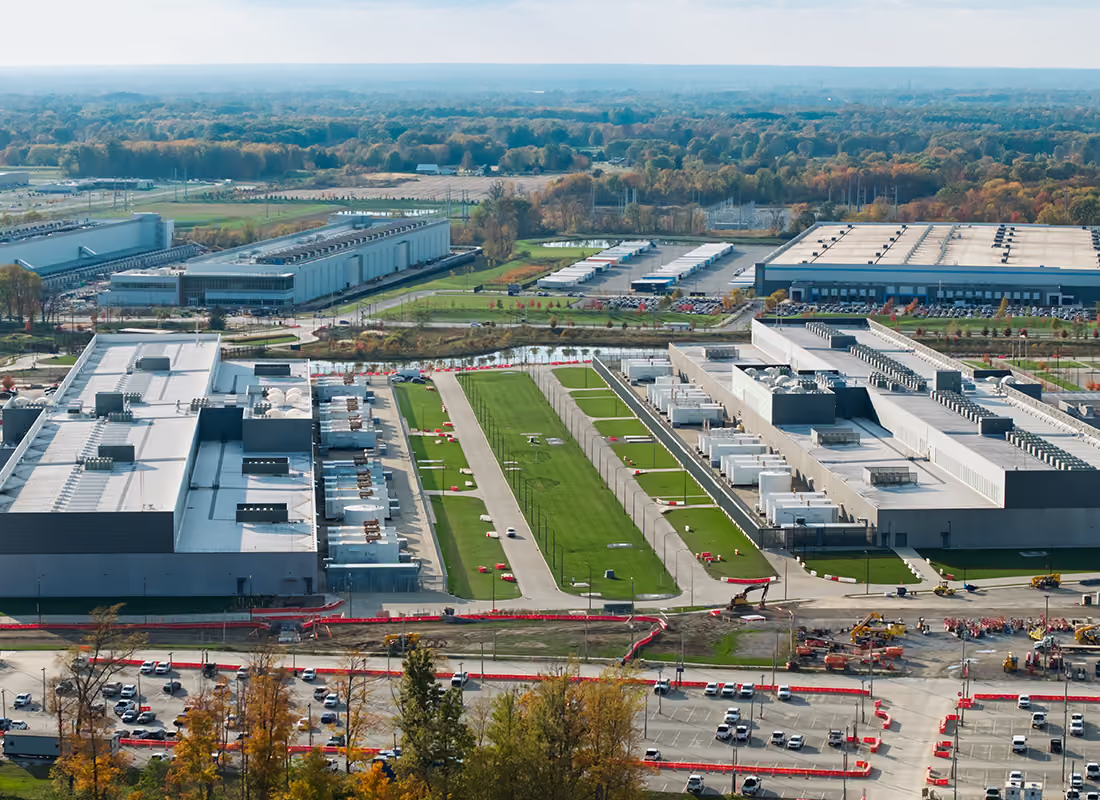
By the time the cranes arrive, it doesn't always feel like one. The story can sour into hearings, headlines, and a suspicion that a company from somewhere else showed up, and will take far more than it gives back. That's not how it has to go. Some developers get welcomed instead of fought, and the reason usually comes down to a single question the whole town is asking: are we better off because they came?
There's a simple way to make the answer yes, and it starts with a need almost every one of these communities shares. Healthcare here is scarcer than roads or broadband. Most are federally designated shortage areas for primary and behavioral care, and hundreds of rural hospitals are close to shutting down. In the suburbs and smaller cities where the other campuses land, the problem is a system already running full. Either way, care is one thing residents worry about, drive too far for, and wish they had more of.
It's also the one need a developer can actually meet quickly and cheaply. New power lines and water systems take years and billions. Access to healthcare doesn't. A campus can't lower anyone's electric bill overnight, but it can open a place to get care. Do that, and you stop being the outsider who came to take. You become the neighbor who brought something the town had been going without.
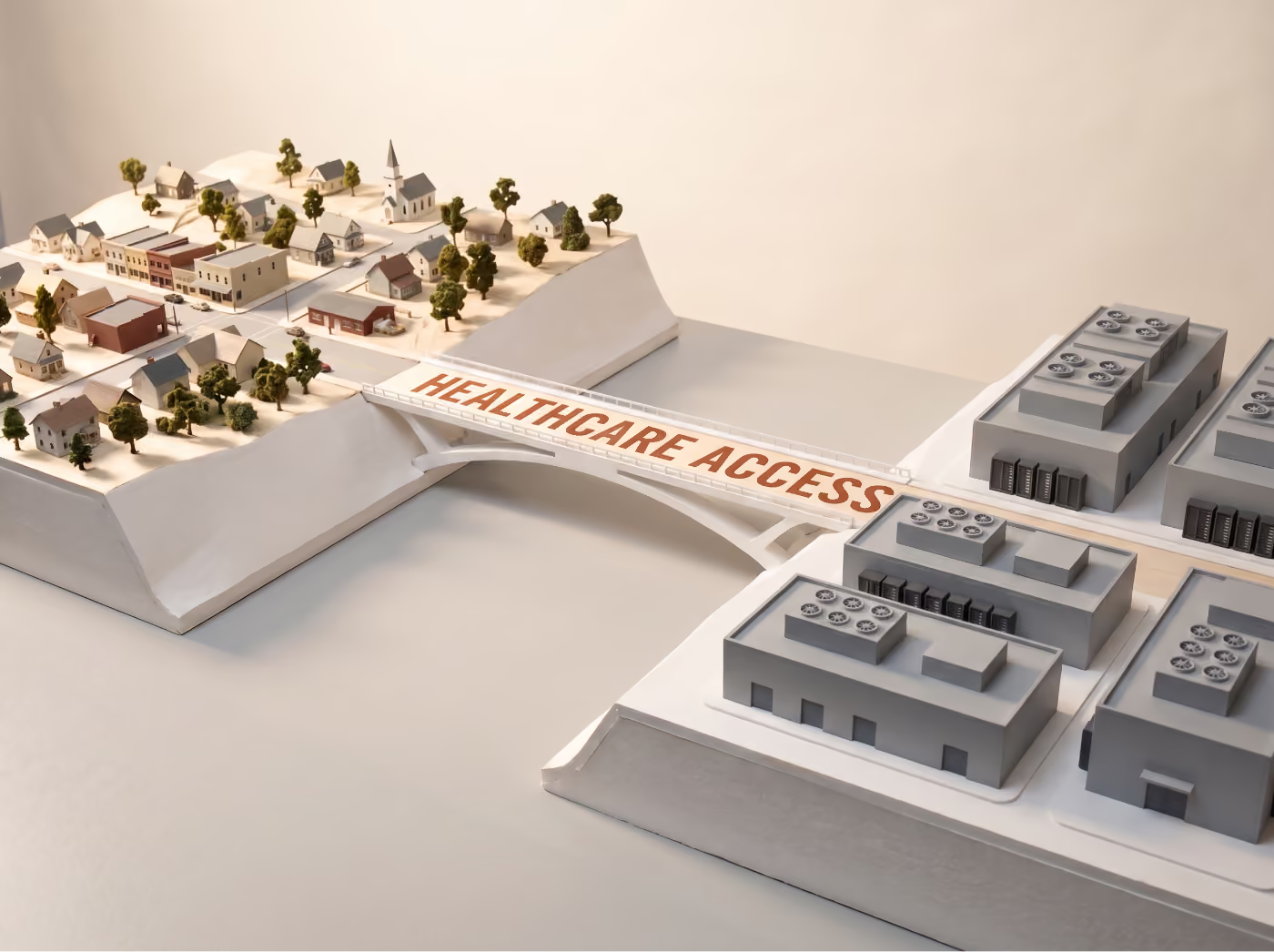
We call it care positive: leave a community with more care than the build required. It works in three parts. Put care at the construction site, so the crews are looked after close to the job. Leave permanent care in the community, where people live, built for whatever that county is actually short on. And report the results, so the good is real and not just promised.
Everybody wins, and that's not a slogan. Residents get care they couldn't get before, in places where a skipped checkup or an untreated worry too often ends in the emergency room. The workers, thousands of them far from home on a hard job, get looked after on-site. And the developer earns the one thing that's hard to buy and easy to lose: a town that's glad it showed up.
The best part is that the generous choice is also the profitable one. Delay is the most expensive thing that can happen to a build, and it's rarely caused by weather or supply chains. It's caused by a community that digs in to slow the project down. A 100-megawatt phase that comes online late loses somewhere between $15 and $24 million a month, and a full gigawatt campus loses that in a matter of days, with losses of $150M+ every month of delay. Next to numbers like those, a care commitment is a rounding error, a fraction of one percent of the capital budget and less than a single phase loses in one day of delay. On top of that, the care on-site pays for itself, returning more than $4 for every $1 spent through fewer lost shifts and lower claims. Developers already pour money into protecting the schedule from everything else. This protects it from the one risk money can't quietly buy off, and it does so by doing something the town will actually thank them for.
None of this is new. The industry learned the same lesson with water. What started as an obligation nobody wanted became a point of pride, with public promises to put back more than was taken and the reporting to prove it, until good stewardship was simply what a serious builder did. Paying for community health isn't new for a megaproject either. Energy and infrastructure companies have funded scanners, clinics, and hospital wings for generations as the price of belonging somewhere. It's already reaching data centers. SoftBank's campus in Piketon, Ohio committed $40 million to the surrounding community and named medical infrastructure among the things it would pay for. The path is there. It just needs to become the rule instead of the exception.
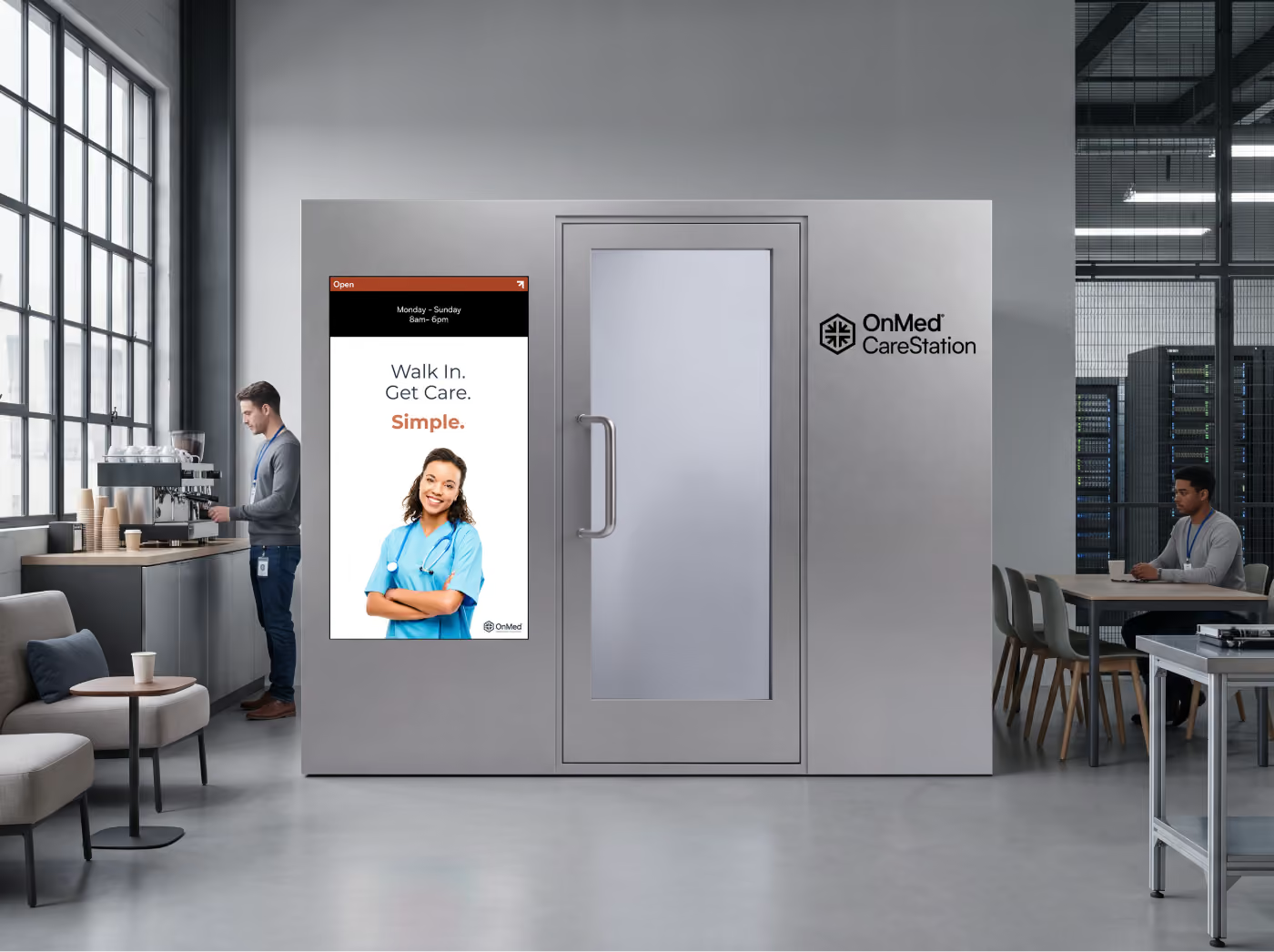
What makes it practical is the OnMed CareStation™, an 8x10 foot, walk-in, Clinic-in-a-Box that needs no construction and is operational in about 45 days. It offers everyday healthcare, with integrated diagnostic tools and a live clinician on every visit. Tech-enabled, AI-powered, and always human-delivered, it's a real place to get real care, set down exactly where the need is and built to stay. Where it already operates, most patients showed up without a regular source of care and now call it their medical home. When the cranes are gone, it's still open, and that's what turns two hard years into something lasting.
Nobody sets out to be the company a town resents. They set out to build something remarkable and finish on time. Care positive is how those two goals can become the same goal. The company builds what it came to build, with fewer fights and fewer delays. The town gets something it genuinely needed. And years later, what people remember isn't the argument over the fence line. It's the CareStation still open down the road.
Learn more about how OnMed is transforming how the world accesses healthcare with the patented OnMed CareStation™ at onmed.com.
Follow along as we continue to redefine the healthcare landscape and bring the OnMed CareStation to communities across the U.S.
.png)