Every year, pharmaceutical companies spend billions developing drugs that will ultimately serve all of America—yet the patients who participate in testing those drugs represent a remarkably narrow slice of the population. They tend to be urban, insured, and already connected to the healthcare system. The tens of millions of Americans who are not—those living in rural communities, underserved areas, and healthcare deserts—are largely absent from the data that shapes modern medicine.
This is not a minor gap. It is a structural flaw in how drugs are discovered, tested, approved, and ultimately deployed. And it means that pharmaceutical companies are developing treatments for an incomplete picture of the people who need them most.
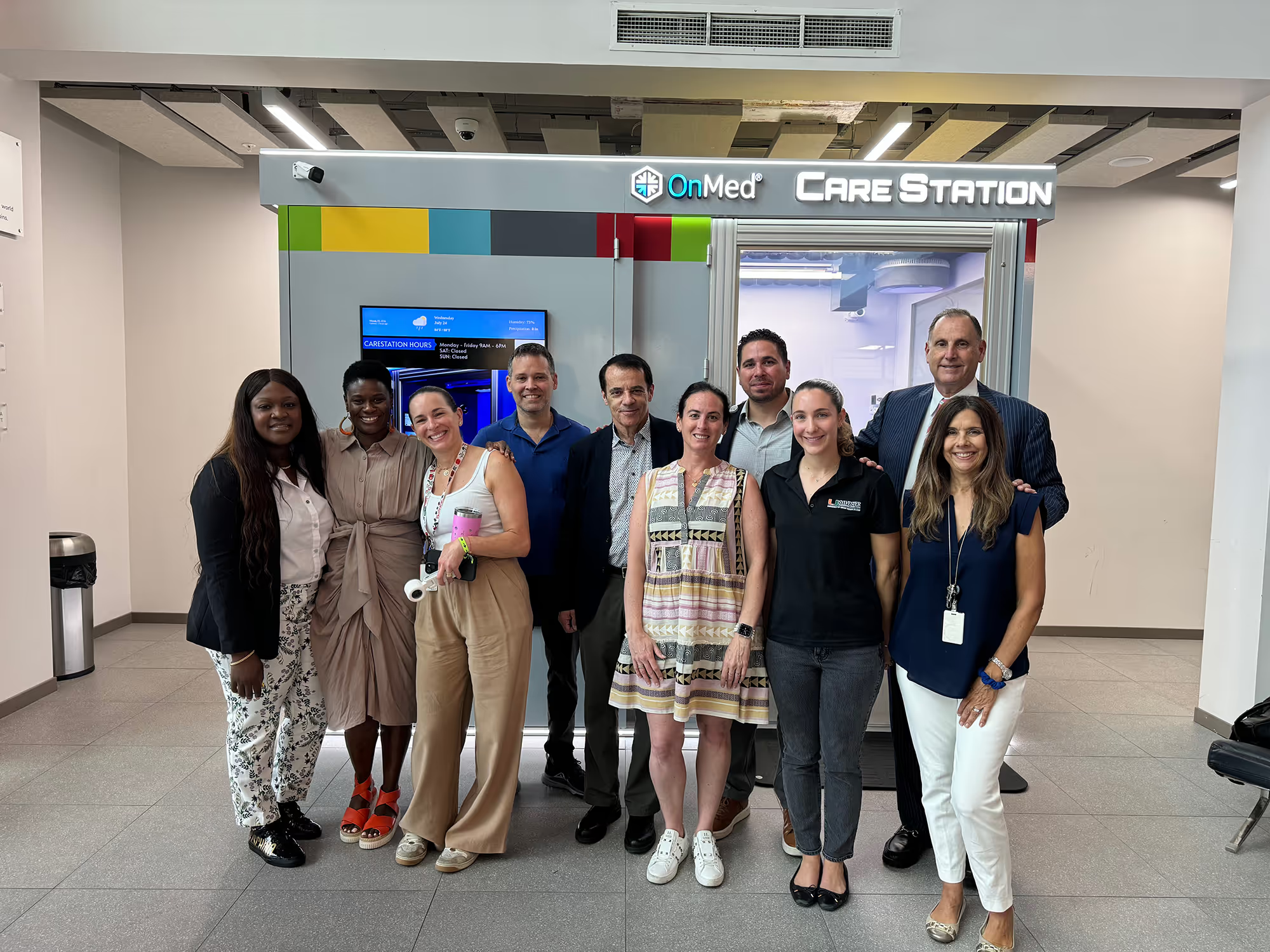
OnMed's CareStation™—a patented, tech-enabled, AI-powered, always human-delivered clinic deployed inside a purpose-built 8×10 unit—is changing that. By bringing comprehensive, clinical care directly into the communities that have never had it, OnMed creates something the pharmaceutical industry has long needed but never had access to: a continuous, trusted relationship with the 120 million Americans currently invisible to healthcare AI, clinical research, and drug commercialization.
The opportunity spans the entire drug development lifecycle—from the earliest stages of identifying candidates and building trial populations, through active clinical research, and into long-term post-market monitoring and drug delivery. At each stage, the CareStation serves as the front door to a world of patients that pharmaceutical companies have never been able to reach.
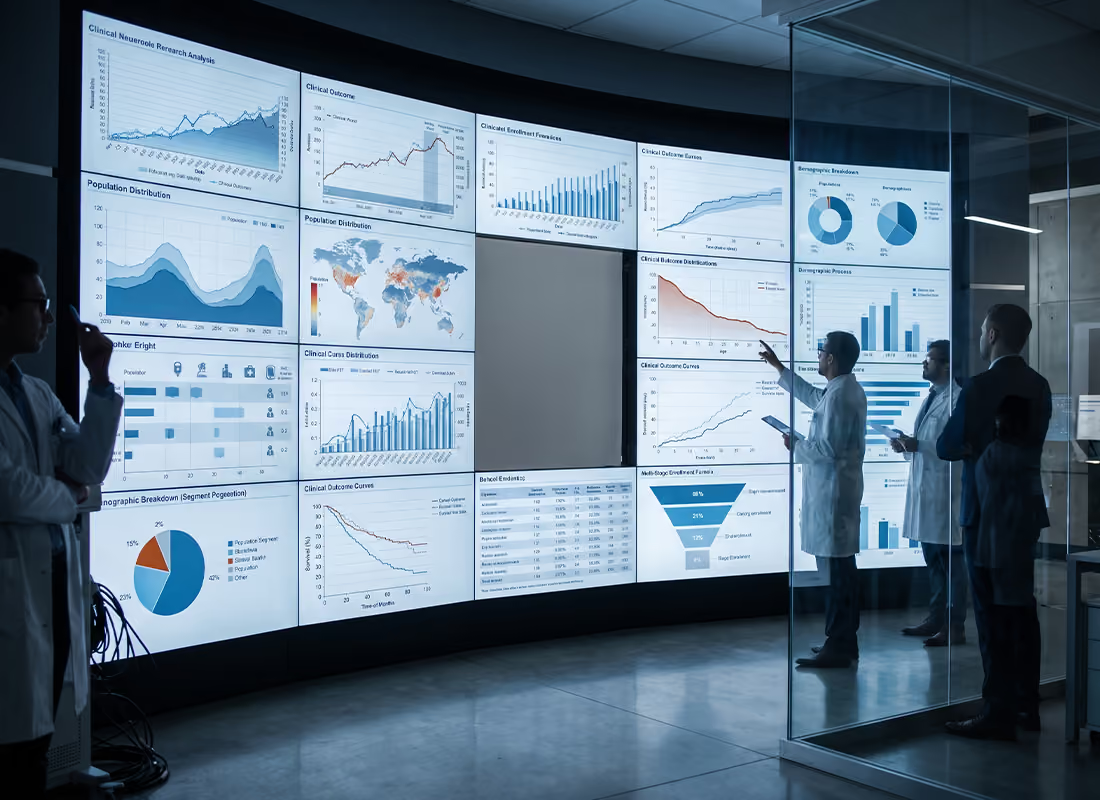
Clinical trials in the United States are funded through a relatively small number of academic medical centers (AMCs)—major research hospitals and university health systems that receive federal and industry grants to conduct clinical research. Estimates suggest fewer than 150 of these institutions account for the overwhelming majority of trial activity in this country. That means that trial after trial draws from the same concentrated pools of patients: people who live near a major research hospital, who have an established relationship with the healthcare system, and who are health-literate enough to navigate the enrollment process.
The result is that clinical trial populations are not representative of the broader American patient population. Diverse communities, rural residents, and people without a primary care physician are chronically underrepresented. This creates real downstream risk: drugs that perform well in trials may behave differently across the fuller range of patients who eventually take them—and the data needed to understand that is simply not being collected.
OnMed addresses this at the root. Because the CareStation is deployed directly into underserved communities—in pharmacies, community centers, rural health systems, employers, and other high-traffic locations—it establishes an ongoing care relationship with populations that have had no prior access point to the healthcare system. Of the people who use a CareStation, 78% have no primary care physician. For many, it is the first consistent point of medical contact they have ever had.
This creates a fundamentally new asset for pharmaceutical companies: a geographically distributed, continuously growing, diverse patient base that is actively engaged with their health. Before a trial ever begins, OnMed can help sponsors identify and cultivate a population of willing, eligible participants from communities that have historically been out of reach.
Screening is a natural extension of this relationship. The CareStation is equipped with a robust suite of diagnostic tools—blood pressure monitoring, pulse oximetry, thermal imaging, digital stethoscope, HD cameras, and otoscope—and supported by clinical-grade AI workflows and human care providers. This makes it an ideal environment for pre-trial screening activities across a wide range of therapeutic areas: identifying patients who may qualify for a metabolic disease or GLP-1 trial; flagging early indicators of cardiovascular risk; conducting preliminary assessments for oncology candidates, including early cancer screening; identifying patients with undiagnosed prediabetes or hypertension for prevention trials; or surfacing candidates for rare disease, respiratory, or neurodegenerative studies—all before a contract research organization (CRO) is ever engaged. Reaching patients earlier, in their own communities, compresses timelines and dramatically expands the candidate pool.
One of the most persistent and costly challenges in clinical research is patient dropout. Trials are long. They require regular check-ins, monitoring, and protocol adherence over months or years. And the infrastructure for all of that has traditionally been anchored at the research site—which, as noted above, tends to be a major medical center located in an urban or suburban area.
For participants who live one, two, or three hours away, the burden of repeated site visits is enormous. Jobs, childcare, transportation, and the general difficulty of life make it hard to stay enrolled. This is not a willingness problem. It is a distance and time problem. And it costs the industry dearly in data integrity, timeline delays, and the expense of recruiting replacement participants.
The CareStation decentralizes the trial experience. Because CareStations are already embedded in the communities where enrolled patients live, they can serve as local check-in points—reducing travel barriers, maintaining care continuity, and keeping participants engaged with the protocol. Routine monitoring, chronic disease management during the trial period, and patient support can all happen closer to home, on a schedule that fits participants' lives rather than the research site's calendar.
This is not a replacement for the research site. It is a support layer that extends the reach of the trial into communities that were previously unreachable—and keeps participants connected through the full duration of the study. The result is lower dropout rates, cleaner data, and a more representative trial population at completion.
For pharmaceutical sponsors, this means trials that finish on time with the patient numbers they committed to—and a dataset that reflects the real world rather than a narrow geographic and demographic slice of it.
The value of the CareStation relationship does not end when a trial concludes. In many ways, that is where the most durable opportunity begins.
Post-market surveillance—the ongoing monitoring of how an approved drug performs in real-world conditions, including side effects, dosing adherence, and long-term outcomes—is one of the most underfunded and underdeveloped areas of pharmaceutical science. It is also one of the most important. Drugs behave differently across populations, over time, and in combination with other treatments. But collecting that data requires an ongoing touchpoint with patients who have largely moved on from the research setting.
The CareStation maintains that touchpoint. Because it is the medical home for the patients in its community—a place they return to again and again, with a 37% repeat usage rate and a 78% rate of patients calling it their primary medical home—it generates longitudinal data that is extraordinarily rare in healthcare. Pharmaceutical companies can follow patients months or years after trial completion, gathering the real-world outcome data that informs next-generation drug development, regulatory submissions, and clinical practice guidelines.
The commercialization dimension is equally significant. Consider GLP-1 medications—a class of drugs originally developed for type 2 diabetes that have demonstrated dramatic efficacy in treating obesity, and which are now among the most prescribed and discussed pharmaceuticals in the world. The populations most affected by obesity and metabolic disease are disproportionately represented in the communities OnMed serves. Yet they are also among the least likely to have a physician prescribing and monitoring their care.
The CareStation can serve as a distribution and adherence channel for drugs like GLP-1s at scale—reaching patients who would otherwise never receive them, supporting ongoing monitoring and side effect management, and generating the real-world clinical data manufacturers need to understand how these medications perform across the full spectrum of the patient population. This is not a narrow pilot opportunity. It is the potential for one of the largest screening and treatment initiatives in the country's history—and a model that applies equally to oncology, cardiovascular disease, rare disease, and any therapeutic area where reaching the right patients early is the difference between a successful drug and a missed one.
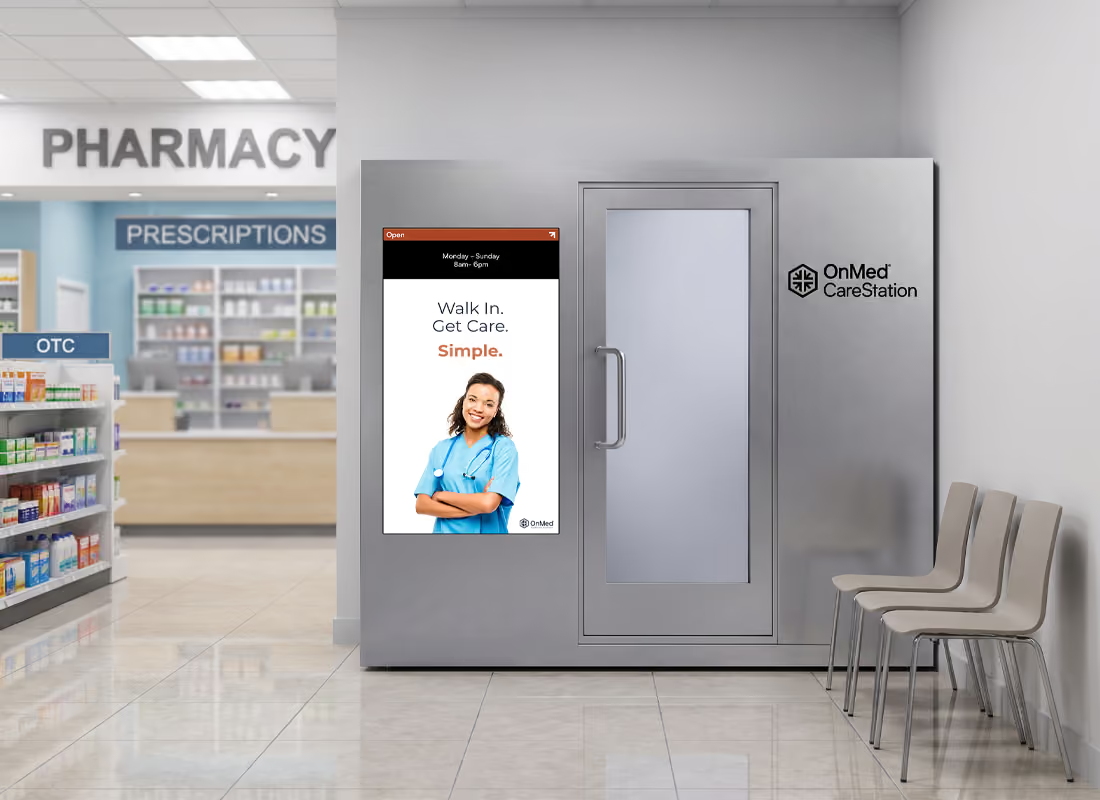
What makes the OnMed model distinctive is not any single point in the drug development lifecycle. It is the continuity. The CareStation is not a one-time screening event or a trial-specific recruitment tool. It is a permanent fixture in the community—a trusted medical home that people return to because it is the most accessible, most consistent healthcare they have ever had.
That continuity creates something the pharmaceutical industry has never had before: a managed relationship with a large, diverse, and growing population of patients across every phase of drug development. Pre-trial. During trial. Post-market. And beyond, into ongoing chronic disease management and wellness.
Every CareStation interaction generates structured clinical data. Every screening surfaces a candidate. Every follow-up visit strengthens the dataset. And every community where a CareStation is deployed becomes part of a network that, at scale, represents the most comprehensive and inclusive view of American health outcomes ever assembled.
Critically, none of this displaces the existing healthcare ecosystem. It augments it. Local health systems receive referrals from patients who would otherwise never have entered the system. Community pharmacies gain customers for the prescriptions the CareStation generates. Physicians gain patients who arrive earlier, with more data, and with established care histories. The CareStation is not a competitor to local healthcare. It is the front door.
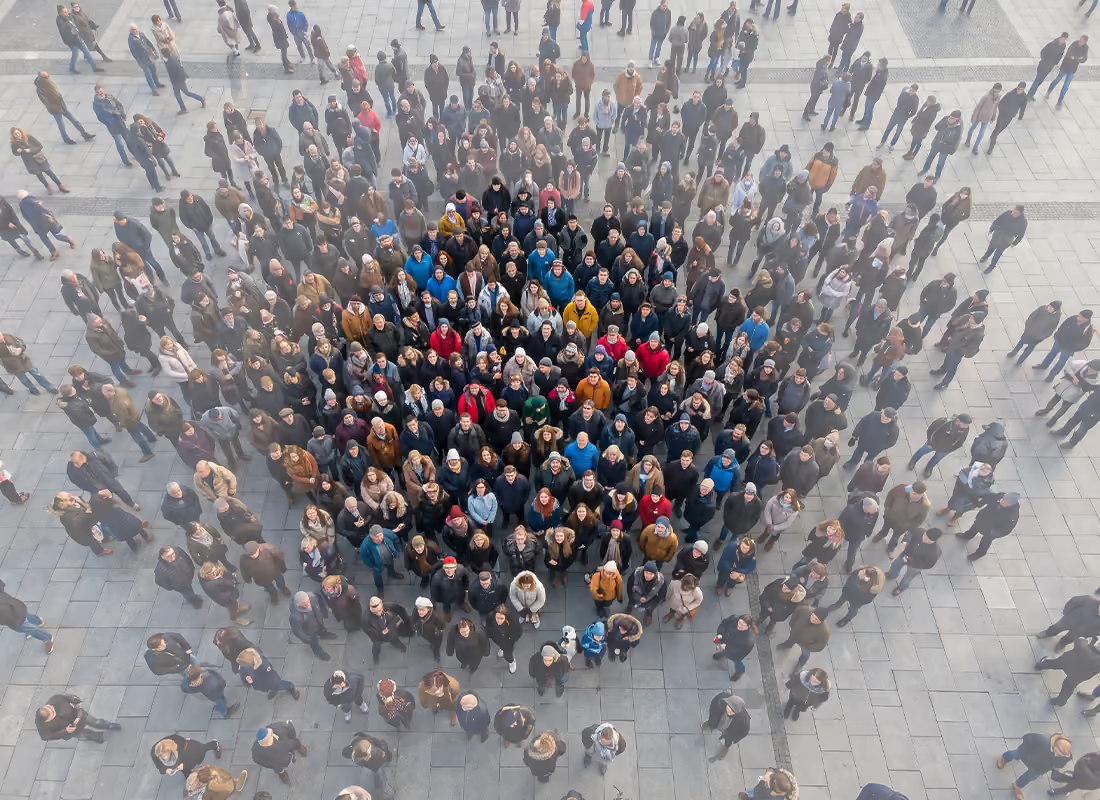
The United States is facing a healthcare crisis that cannot be solved by incremental improvement. Chronic disease rates are rising. The population is aging. Obesity, diabetes, and cardiovascular disease are accelerating—especially in the communities with the least access to care. At the same time, demand for healthcare services is outpacing the capacity of the system to deliver them, and costs are rising faster than any stakeholder can sustainably absorb.
Innovation is the only path forward. Not innovation in the traditional sense of a new drug or a marginally improved device, but structural innovation—a fundamentally different way of reaching patients, generating data, and delivering care at a scale the system has never achieved.
OnMed is that innovation. The CareStation exists at the intersection of every challenge the pharmaceutical industry is grappling with: diversity gaps in clinical trials, dropout rates, post-market data scarcity, and the unreached populations who need drugs the most but are hardest to serve. Solving those problems requires meeting people where they actually are—in their communities, where they live, work, learn, and shop. The CareStation is purpose-built to do exactly that: a scalable, affordable, and comprehensively capable platform that can screen, monitor, manage, and support patients across the full arc of drug development, in the places that have always been hardest to reach.
For pharmaceutical companies willing to think beyond the traditional trial site and reimagine what a patient relationship can look like, the CareStation offers a partnership unlike anything available today: a scalable, tech-enabled, always human-delivered infrastructure that turns the most underserved communities in America into an asset—for clinical research, for commercialization, and for the long-term health outcomes that define the value of every drug brought to market.
Ready to reach the patients your trials are missing?
Learn how OnMed partners with pharmaceutical companies →
Because trials are concentrated in fewer than 150 academic medical centers, which draw from patients who live near major research hospitals and already have an established relationship with the healthcare system—leaving rural, underserved, and disconnected populations largely absent from trial data.
The CareStation extends across the full drug development lifecycle—pre-trial patient identification and screening, in-trial monitoring to reduce dropout, and post-market real-world data collection—by embedding directly in underserved communities.
78% of people who use a CareStation have no primary care physician, and the CareStation becomes their first consistent point of medical contact.
No. It functions as a decentralized support layer that extends trial reach into communities, maintaining participant engagement between and around visits to the primary research site.
Follow along as we continue to redefine the healthcare landscape and bring the OnMed CareStation to communities across the U.S.