

How building owners are turning on-site clinical healthcare into a shared tenant benefit—and a recoverable operating cost.
Trophy office buildings once competed on rooftop terraces and barista bars. Then fitness centers became table stakes. Then tenant lounges. Each amenity cycle follows the same arc: novelty becomes expectation, expectation becomes baseline, and landlords scramble for the next differentiator. The next cycle is already here—and it isn't a new coffee program.
The buildings winning tenants in 2026 are solving problems that sit at the top of every CFO's agenda: the rising direct cost of healthcare benefits and a workforce that can't easily access care. On-site clinical access—deployable, tech-enabled, and recoverable as a shared operating expense—is the amenity gap every Class A and Class B+ building should be thinking about right now.
U.S. office attendance is at its highest point since the pandemic, and the momentum is accelerating. According to JLL, 54% of Fortune 100 employees are now subject to five-day office requirements—up from just 11% a year prior. Enforcement is rising fast: 37% of companies now actively track and enforce attendance, more than double the 17% who did so in 2024. The question for building owners is no longer whether employees are coming back. They are. The question is whether your building is worth the commute.
Trophy Class A buildings in amenity-rich locations are answering that question with consistent positive absorption. Buildings with strong amenity strategies generate roughly 2.5× the net operating income of non-upgraded peers.Tenants that relocate are prioritizing first-class amenities, and more than one-third plan to grow their footprint—but only for space that earns the trip in.

To understand why on-site clinical access resonates with employer tenants, you have to understand the pressure they're already under.
The headline problem is cost. Employer-sponsored healthcare averaged $17,496 per employee in 2025—and Mercer projects that figure will surpass $18,500 in 2026, the highest rate of increase in 15 years. This is a hard P&L line item that compounds annually, grows faster than inflation, and is largely outside employers' direct control. Every unnecessary ER visit, every specialist referral for something a primary care provider could have handled, every claims spike from delayed chronic disease management rolls up into that number. For self-insured employers it hits directly. For fully insured employers it shapes renewal rates. It is the cost CFOs lose sleep over.
The secondary problem—which amplifies the first—is productivity. The Integrated Benefits Institute estimates that illness-related lost productivity costs U.S. employers $575 billion annually. A single unplanned absence reduces team output by nearly 37%. These losses are real but harder to see on a balance sheet than a claims report. Healthcare cost reduction is the headline. Productivity recovery is the multiplier.
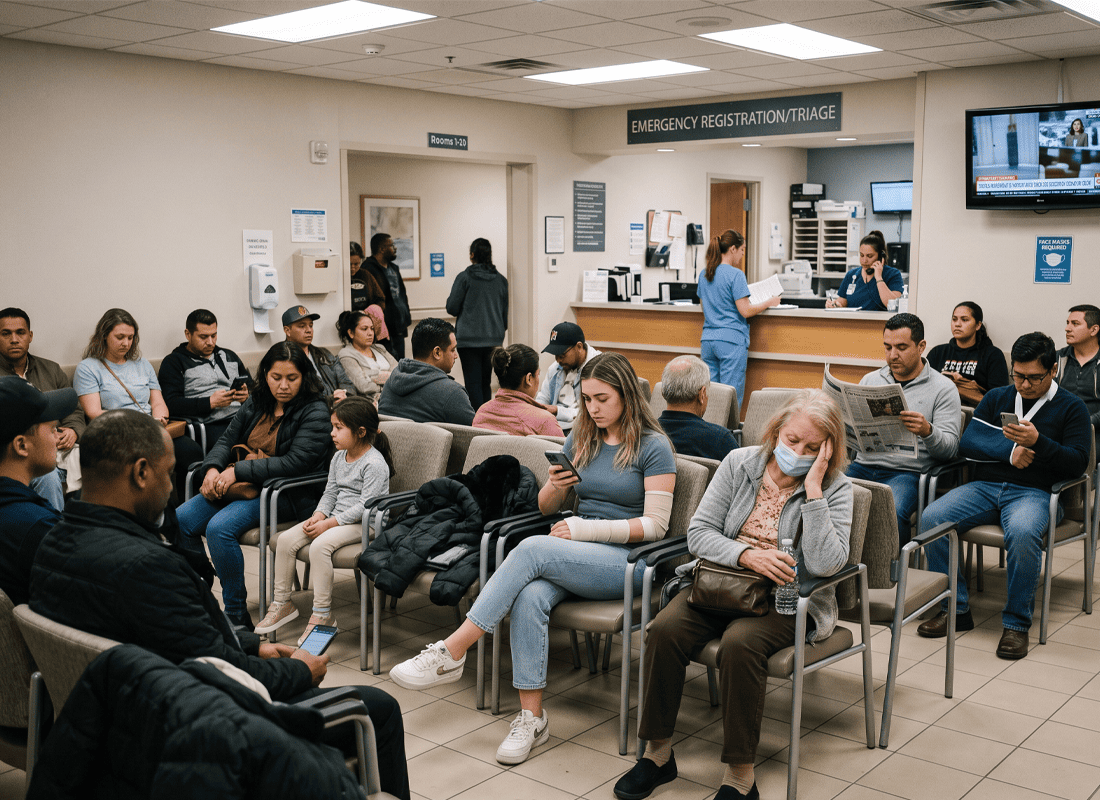
What makes both problems worse is access. The 78% of working Americans who have no primary care physician aren't avoiding care by choice—they're navigating a system that makes getting care slow, expensive, and disruptive. A same-day appointment takes weeks to schedule. Urgent care means half a day out of the office. An ER visit for a minor issue means thousands in unnecessary claims. The building that removes that friction on behalf of its employer tenants is solving something real—and the employers who benefit will notice.
When a building actively helps employers lower healthcare costs, the landlord stops being a space provider and becomes a benefits partner. That distinction creates stickiness that goes beyond the lease. Employees begin to use the on-site service, expect it, and factor it into their preference for coming in. Relocation carries a cost that shows up in retention conversations, not just real estate ones.
For the building itself, differentiation is immediate. "This building has clinical care in the lobby" is a broker story—the kind that gets forwarded and shapes tours. In a market where landlords compete on concessions, this lets you compete on value instead. And for buildings pursuing WELL or Fitwel certification, on-site clinical access is a meaningful contributor to the frameworks that institutional capital and major tenants are increasingly evaluating.
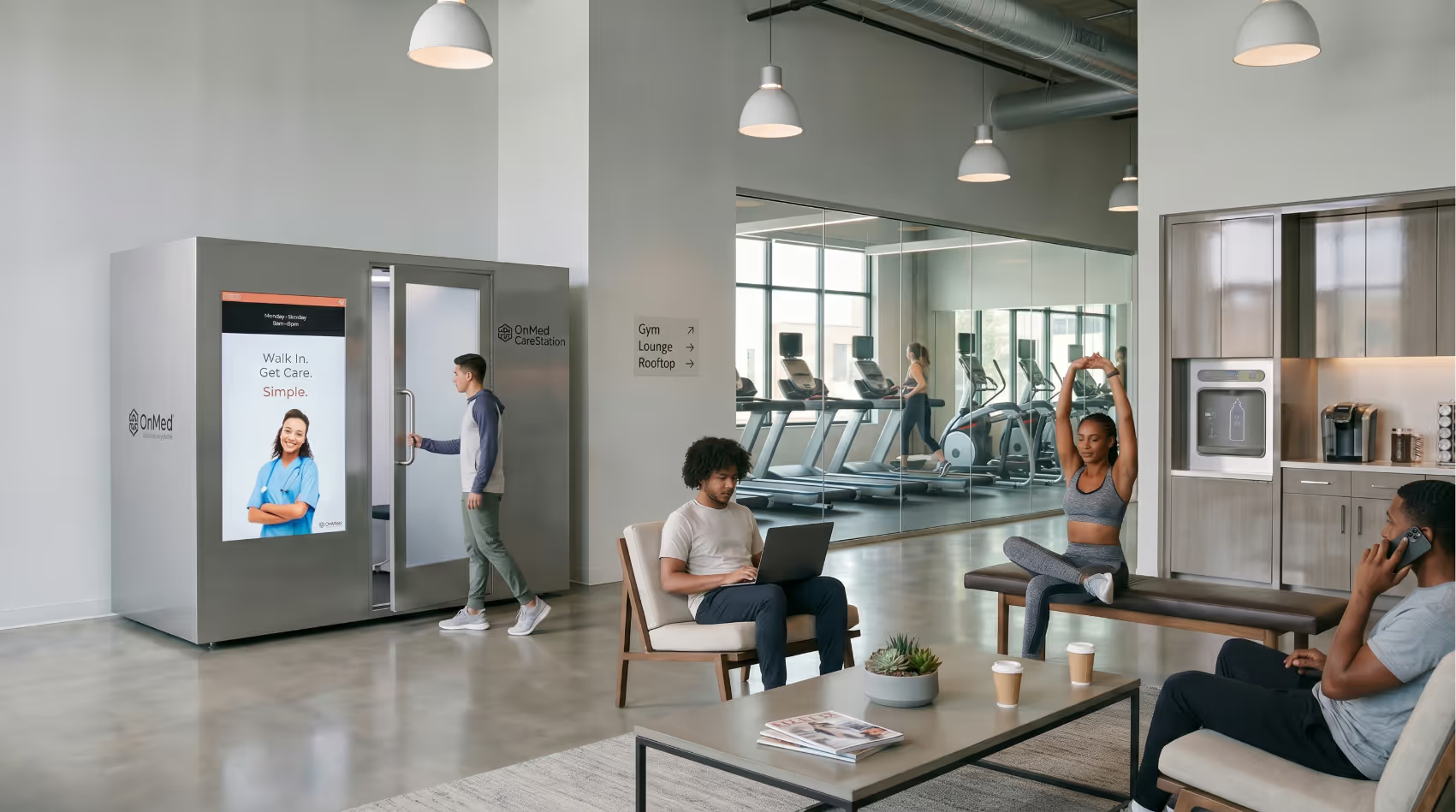
Unlike a fitness center renovation, on-site clinical deployment requires no construction, no dedicated staff, and no build-out. The OnMed CareStation™ is a patented 8×10 hybrid healthcare clinic—tech-enabled, AI-powered, always human-delivered—deployable anywhere with an electrical outlet. Contract to installation: 45 days.
The operating cost is structured as a shared amenity fee—allocated pro-rata across tenants, consistent with how buildings already recover costs for building-wide Wi-Fi and common area services. In a multi-tenant building with hundreds or thousands of employees across floors, the per-employee cost becomes nominal. What no individual employer could deploy alone becomes available to all of them—through the building.
The OnMed CareStation connects patients with live, licensed clinicians through a full diagnostic suite: digital stethoscope, HD cameras, blood pressure, pulse oximetry, thermal imaging, and otoscope. The outcomes reflect real utilization: 4.96/5 patient satisfaction, 86% of patients fully diagnosed without a specialist referral, 58% ER and urgent care diversion, and 78% of users who have no other primary care physician.
For self-insured employers, 58% ER diversion is a direct and measurable claims reduction. For fully insured employers, it improves utilization and renewal positioning. For HR and benefits leaders trying to defend their budget—it's a story they can finally tell.
Tenant expectations are rising, and quality is being redefined. Landlords who moved early on fitness centers captured a cycle of differentiation. The next cycle is health access—and it carries a value proposition that goes deeper than any gym ever did.
A building that lowers its tenants' healthcare costs and becomes part of the employee benefits story is no longer competing on amenities. It's competing on outcomes. That's a different conversation—and a different kind of lease.
Interested in deploying clinical access in your building? Learn how OnMed partners with commercial landlords, property managers, and asset owners to make it happen.
What amenities are Class A office buildings adding to attract tenants in 2026?
The amenity cycle in Class A office buildings has moved well beyond fitness centers and rooftop terraces. The buildings winning tenants in 2026 are solving problems that sit directly on the CFO's agenda—specifically, the rising cost of employer-sponsored healthcare and a workforce that struggles to access care during the workday. On-site clinical access, deployable as a shared tenant amenity without construction or dedicated staffing, is the differentiator separating trophy buildings from the rest. Buildings with strong amenity strategies generate roughly 2.5 times the net operating income of non-upgraded peers, and more than one-third of relocating tenants plan to grow their footprint, but only in space that earns the commute.
How does on-site healthcare help commercial landlords retain tenants?
When a building actively reduces its tenants' healthcare costs, the landlord stops being a space provider and becomes a benefits partner. That distinction creates stickiness that goes beyond the lease. Employees who use an on-site clinical service begin to expect it and factor it into their preference for coming in, which means relocation carries a cost that shows up in retention conversations, not just real estate ones. The outcomes are measurable: 58% of patients who use an on-site CareStation would otherwise have gone to an emergency department or urgent care clinic, representing a direct and quantifiable claims reduction for self-insured employer tenants and improved utilization positioning for fully insured ones.
How do building owners recover the cost of on-site clinical access?
Unlike a fitness center renovation or tenant lounge build-out, deploying on-site clinical access requires no construction, no dedicated staff, and no permanent infrastructure. The OnMed CareStation™ is deployable anywhere with an electrical outlet in 45 days. The operating cost is structured as a shared amenity fee, allocated pro-rata across tenants, consistent with how buildings already recover costs for building-wide Wi-Fi and common area services. In a multi-tenant building with hundreds or thousands of employees across floors, the per-employee cost becomes nominal. What no individual employer could afford to deploy alone becomes available to every tenant through the building.
What is the ROI of on-site healthcare for employer tenants?
Employer-sponsored healthcare averaged $17,496 per employee in 2025 and is projected to surpass $18,500 in 2026, the highest rate of increase in 15 years. The claims pattern driving that cost is almost entirely access-driven: employees who cannot get a timely primary care appointment end up in emergency departments and urgent care clinics, generating claims that are 3 to 12 times more expensive than the primary care visit that should have come first. On-site clinical access addresses that pattern directly. The CareStation resolves 86% of conditions on-site without specialist referral, diverts 58% of unnecessary ER and urgent care visits, and carries a 4.96 out of 5 patient satisfaction score. The Integrated Benefits Institute estimates illness-related lost productivity costs U.S. employers $575 billion annually, making healthcare access not just a claims strategy but a productivity recovery strategy as well.
The amenity cycle in Class A office buildings has moved beyond fitness centers and rooftop terraces. The buildings winning tenants in 2026 are solving problems that sit directly on the CFO's agenda: the rising cost of employer-sponsored healthcare and a workforce that struggles to access care during the workday. On-site clinical access, deployable as a shared tenant amenity without construction or dedicated staffing, is the differentiator separating trophy buildings from the rest. Buildings with strong amenity strategies generate roughly 2.5 times the net operating income of non-upgraded peers, and more than one-third of relocating tenants plan to grow their footprint, but only in space that earns the commute.
Unlike a fitness center renovation or tenant lounge build-out, deploying on-site clinical access requires no construction, no dedicated staff, and no build-out. The OnMed CareStation deploys anywhere with an electrical outlet in 45 days. The operating cost is structured as a shared amenity fee, allocated pro-rata across tenants, consistent with how buildings already recover costs for building-wide Wi-Fi and common area services. In a multi-tenant building with hundreds or thousands of employees across floors, the per-employee cost becomes nominal. What no individual employer could afford to deploy alone becomes available to every tenant through the building.
Follow along as we continue to redefine the healthcare landscape and bring the OnMed CareStation to communities across the U.S.
.png)