See how one structural challenge impacts healthcare costs, outcomes, and workforce stability.


The OnMed Access Gap report ties mounting appointment delays to real economic and health consequences, and points to the OnMed CareStation® as a working example of care brought closer to home.
OnMed published The Access Gap, a report examining the real-world toll of delayed healthcare access across the United States. The report’s starting point is stark: an estimated 120 million Americans currently lack adequate access to care, and across six specialties in 15 major U.S. metros, new patients now wait an average of 31 days for an appointment—a delay that has grown 19% since 2022.
Drawing on published research alongside OnMed’s own care delivery data, the report makes the case that delayed access doesn’t stay contained. Manageable conditions worsen, treatment settings get more expensive, and the fallout reaches families, employers and hospitals well beyond the original delay.
OnMed CEO Karthik Ganesh explained:
“No one should have to lie awake wondering whether a symptom is serious, then spend the next morning calling for an appointment they cannot get. The numbers in this report help show how much is at stake when that experience becomes a familiar part of life for so many people.”
Two of the report’s figures put a dollar value on delayed care, and two describe why the delays are happening in the first place:
$575 billion in illness-related lost productivity. An Integrated Benefits Institute analysis estimated poor health cost U.S. employers $575 billion in lost productivity in 2019.
At least $220 billion in medical debt. A 2024 KFF analysis of federal survey data found Americans owed at least $220 billion in medical debt by the end of 2021.
31–90 days to get an appointment. AMN Healthcare’s 2025 survey found new patients waited an average of 31 days for a physician appointment, with waits stretching past 90 days in some specialties and markets.
202,800 additional physicians needed to close the gap. A 2024 AAMC analysis estimated the U.S. would have needed roughly 202,800 more physicians in 2021 for underserved communities to get care at the same rate as better-served populations.
The access gap raises a different question for every organization. Health systems need to expand capacity without new construction. Employers need coverage that employees can actually use, not benefits that go unused while costs and lost productivity climb. Payors need to identify risk earlier, before it becomes an avoidable, costlier claim. Colleges and universities need to support student retention and well-being without straining campus health resources. Correctional facilities, and rural and underserved communities, need clinician-led care brought directly to where people already are.
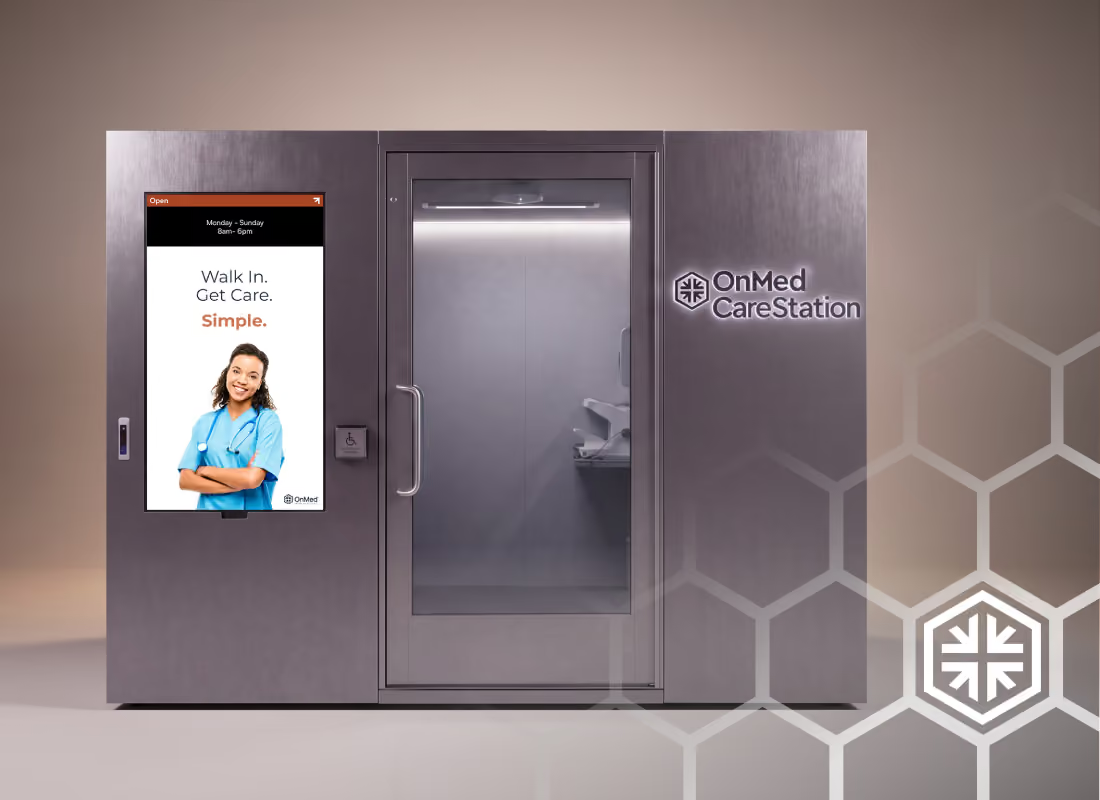
The CareStation offers a real-world look at what closing that gap can look like. According to OnMed data, 80% of CareStation users have no primary care provider, so for many, the CareStation becomes their medical home, resolving 86% of visits without escalation. Together, the two numbers describe a model that reaches people the traditional system has missed and resolves most of their care needs without a referral.
The CareStation functions as a quarterback of care: a steady, familiar presence built around prevention and follow-through. Clinicians collect vital signs, deliver preventive care, manage chronic conditions, document findings centrally, and coordinate referrals and follow-up, so patients get continuity instead of disconnected visits.
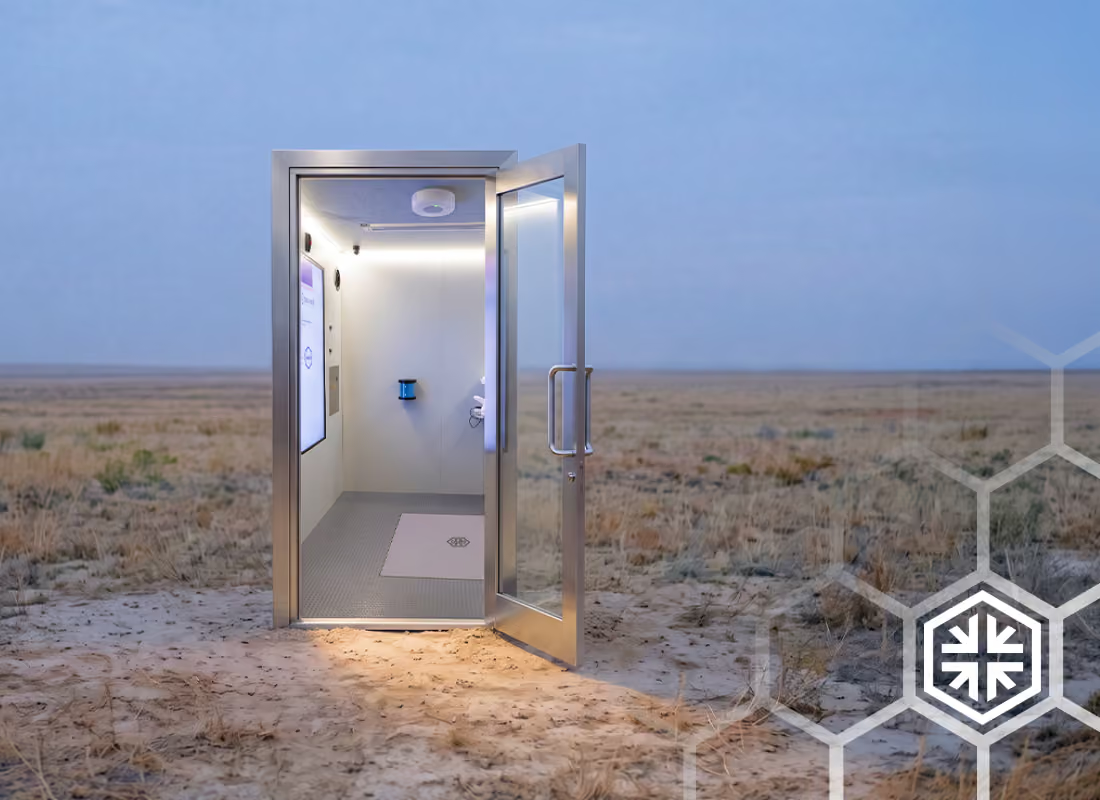
Each CareStation is a private space inside community facilities, workplaces and college campuses, where a patient connects live with a licensed clinician over video. Integrated diagnostic tools, including digital stethoscopes, exam cameras and vital sign monitors, support the clinician through to a treatment plan and, when appropriate, a prescription or referral. Altogether, CareStations serve as physical access points inside a distributed care delivery platform connecting technology, clinical information and human-delivered care.
Karthik added:
“A dependable place to get care can change what happens next for a patient. The future of healthcare isn’t replacing primary care. It’s making primary care available again where people already are.”
For complete findings, download The Access Gap Report.
Trying to close the access gap for the people you serve? See how the OnMed CareStation® can help your organization bring care closer.
OnMed is transforming how the world accesses healthcare. With its patented OnMed CareStation®, an 8×10 foot “Clinic-in-a-Box,” OnMed delivers comprehensive, immediate care wherever people live, work, and learn.
The OnMed CareStation® is a tech-enabled, AI-powered, and human-delivered platform that blends the comprehensiveness of traditional in-person care with the rapid scalability of telemedicine. Each CareStation serves as a local access point within a scalable, connected grid that delivers everyday healthcare at scale.
Powered by public-private partnerships across insurers, healthcare providers, governments, employers, and educational institutions, OnMed is redefining healthcare access, closing critical gaps, restoring trust, and strengthening the health and economic resilience of communities everywhere. Learn more at onmed.com.
Follow along as we continue to redefine the healthcare landscape and bring the OnMed CareStation to communities across the U.S.