Every day, most of what happens at an OnMed CareStation™ is everyday healthcare: sore throats, prescription refills, follow-ups on a condition someone has managed for years. 86% of visits are resolved on-site, without a referral, a transfer, or another visit somewhere else. The three most common diagnoses are hypertensive diseases, acute upper respiratory infections, and metabolic disorders. The most frequently prescribed treatments are cold and allergy medications, pain management, and antibiotics.
That everyday reliability is what earns trust. A CareStation becomes someone's default source of care by treating a refill with the same consistency as something serious, and that trust is what leads a patient to mention a symptom they've been ignoring or come back when something feels wrong.
A patient came in with a routine upper respiratory infection: productive cough, congestion, a sore throat, no other medical history to speak of. It's one of the most common reasons anyone visits a CareStation, and by itself it wouldn't be worth telling as a story.
Using the stethoscope built into the CareStation, the clinician listened to her lungs and heart, standard practice for a visit like this one. The lungs showed exactly what was expected: congestion consistent with the infection. The heart showed something no one was looking for: a new murmur, with no prior history of one.
The clinician treated the infection and explained the murmur directly. A referral to a cardiologist followed, and she left understanding both parts of what had happened in that one visit.
Nothing about this visit was unusual until it wasn't. A complete exam treats more than what a patient came in for. A visit isn’t comprehensive unless it can also surface what they didn't know to mention.
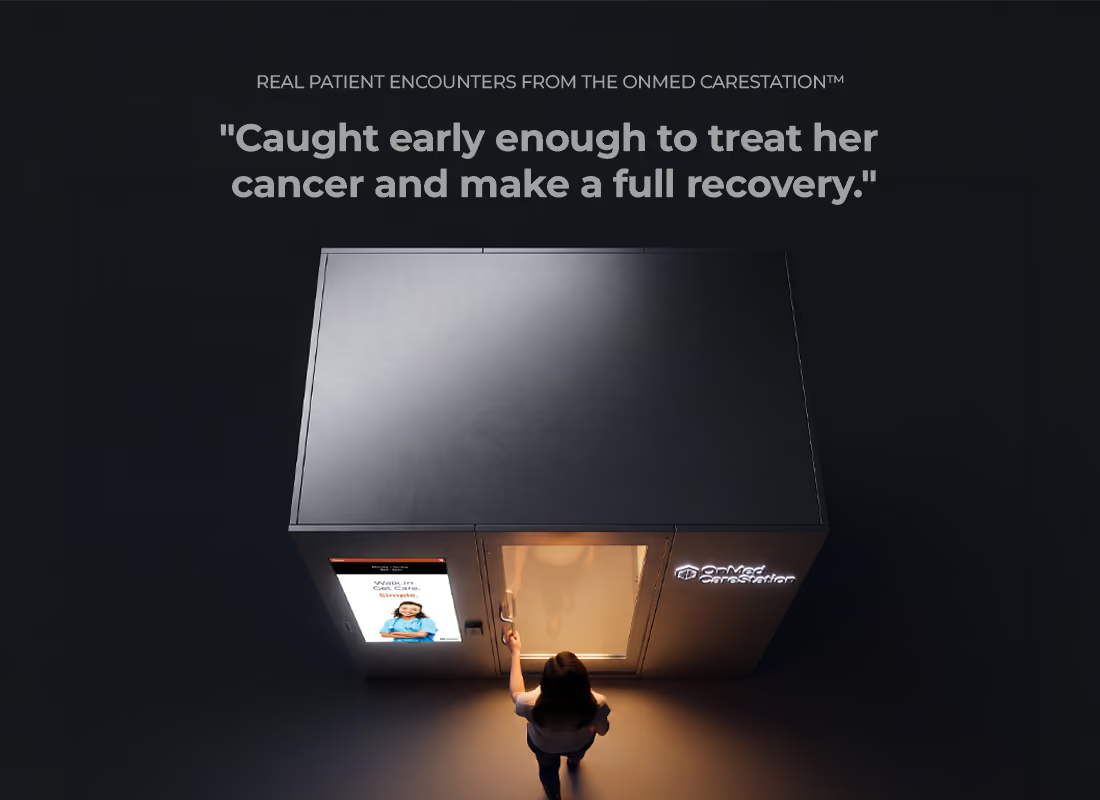
A returning patient arrived at a CareStation with intense stomach pain and gastrointestinal bleeding. She hoped it was nothing and thought about waiting it out, but her Care Manager wasn't willing to take that chance.
The Care Manager pushed for further testing right away. That led to a diagnosis no one wants, a cancerous mass.
After chemotherapy and radiation, she is cancer-free. She credits her Care Manager, and the OnMed CareStation™, with catching it early enough to treat, and helping her make a full recovery.
A patient was out of town visiting family, away from his regular doctor, when he started feeling unwell and stopped by a nearby CareStation to get checked out. During intake, a care team member noted his oxygen saturation at 70%, a level low enough to be a medical emergency on its own.
Signs of respiratory distress confirmed it. EMS was activated, and he was transported to a local hospital, where he was diagnosed with a COPD exacerbation and pneumonia.
After treatment, he was discharged home in much-improved condition, with instructions to follow up closely with his primary care provider. Being away from his regular doctor didn't stop him from getting checked out due to the convenience and availability of the CareStation. The CareStation was close by, open, and didn't require an appointment, and that ease is what got him seen in time to catch two serious conditions before either one could get worse.

None of these three visits looked the same going in. One was a routine infection. One was a returning patient with a trusted relationship and history already in place. One was an emergency recognized because care was easily accessed by a patient away from his regular doctors and medical routine.
What they share is what made each outcome possible, a live clinician, integrated diagnostic tools, and a model built to catch what a telehealth conversation alone would likely miss.
For organizations and communities interested in the CareStation, the emergencies are only part of the picture. The same model that catches them is also resolving 86% of all visits on-site, keeping chronic conditions managed instead of left to worsen, and handling concerns that would have otherwise sent 58% of those patients to urgent care or the emergency room. The CareStation brings consistent care that catches most problems while they're still small. The emergencies are what get noticed. The everyday visits are what keep most problems from becoming emergencies at all.
Interested in bringing an OnMed CareStation™ to your organization or community? Connect with our team today.
To protect patient privacy, identifying details in these stories, including names, exact ages, and specific locations, have been changed or removed. Each account reflects a real encounter at an OnMed CareStation™.
Follow along as we continue to redefine the healthcare landscape and bring the OnMed CareStation to communities across the U.S.