

For decades, primary care has been the foundation of an effective healthcare system: better outcomes, lower costs, stronger chronic disease management, and more preventive care caught early. A 2026 report from the Robert Graham Center, co-funded by the Milbank Memorial Fund and The Physicians Foundation, found that adults with chronic disease who have a regular source of primary care have a 20% lower hospitalization rate and nearly 54% lower total healthcare costs than those who don't. The data backs up what the industry has argued for years: when primary care works, everyone benefits.
The challenge today is not that primary care has failed. The challenge is that patients increasingly can't get to it.
Across the United States, employers, health plans, health systems, and government agencies are facing a growing disconnect between the model that delivers the best outcomes and the reality of how patients access care. Provider shortages, rising demand, physician burnout, and a fragmented care landscape have created an access crisis that touches every population these organizations serve.
The question is no longer whether primary care is valuable. The question is how organizations restore access to it at scale.
Historically, primary care physicians served as the central coordinator of a patient's healthcare journey. They knew the patient. They understood the history. They managed preventive care, chronic conditions, referrals, and follow-up, and they connected the dots across specialists and facilities that never talked to each other directly.
Primary care used to be the quarterback every specialist reported back to. For years, HMOs reinforced this: patients selected a primary care physician who acted as the gateway to specialty care. That model had real limitations, but it created an expectation that someone owned the patient's overall healthcare experience.
Today, much of that structure has disappeared.
As PPOs, high-deductible plans, retail clinics, virtual care vendors, urgent care centers, and direct-to-consumer platforms have proliferated, healthcare has become more convenient in some ways and far more fragmented in others. Patients now piece care together from urgent care centers, retail clinics, telehealth providers, specialists, emergency departments, and independent physician groups. Each interaction may solve a specific problem. Few coordinate the bigger picture.
The result is that many patients have no quarterback of care at all. No one is consistently tracking preventive screenings, chronic disease management, medication adherence, care transitions, or emerging health risks. Healthcare has become a collection of transactions instead of a coordinated journey, and for employers, health plans, government organizations, and health systems, that fragmentation carries real financial and clinical consequences.
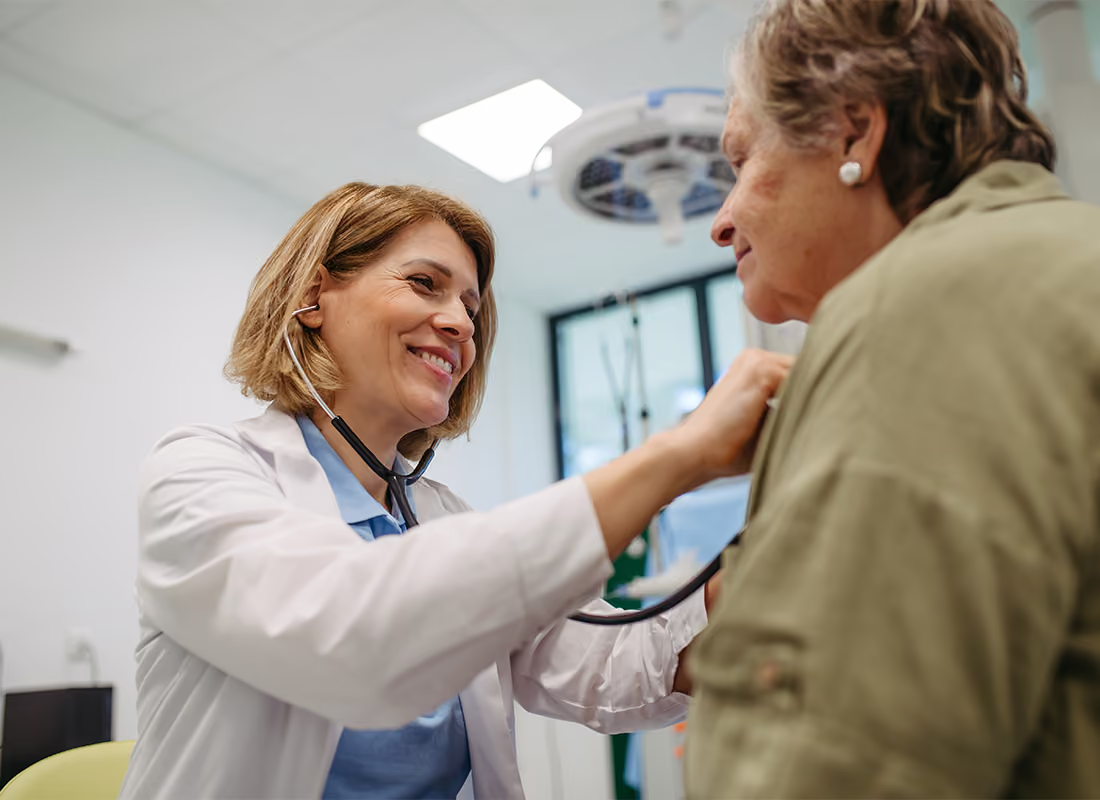
Even patients who want a primary care relationship often can't establish one. The AAMC's most recent workforce projections estimate a shortage of 86,000 physicians by 2036, driven largely by population growth and an aging patient base. At the same time, demand keeps climbing: more chronic disease, more behavioral health need, and more insured lives competing for the same shrinking pool of providers.
The result, as we've documented across our own modality research, is that patients wait 31 to 90 days to see a physician, if they can get an appointment at all. As the shortage widens, more physicians are closing their panels to new patients entirely. For many people, primary care has become theoretically available but operationally inaccessible.
When patients can't access primary care, healthcare doesn't stop. It shifts elsewhere.
A worker develops respiratory symptoms. A student notices recurring migraines. An employee starts showing early signs of diabetes or hypertension. In an ideal system, each of them gets seen quickly, evaluated, and started on a treatment plan. Instead, they run into long wait times, transportation limitations, work schedule conflicts, and providers who aren't taking new patients. Many delay care. Some eventually land in urgent care. Others end up in the emergency department. Many do nothing until the condition worsens on its own.
What could have been resolved early becomes more complicated, more expensive, and harder to manage later. This is one of healthcare's most significant and least discussed cost drivers: not inappropriate care, but delayed care.
Most healthcare leaders agree on one thing: primary care remains the most effective and lowest-cost model available. The traditional challenge is that expanding primary care capacity takes time. Organizations have to build facilities, recruit physicians, hire staff, and stand up entire networks, a process that can take years while demand keeps accelerating.
Healthcare needs a way to extend the reach of primary care without waiting for large-scale physical expansion. That's where hybrid care delivery is changing the conversation.
Hybrid care combines the strengths of traditional primary care with modern, technology-enabled access. Rather than forcing patients to choose between in-person and virtual care, hybrid models integrate both into one connected experience: virtual clinician consultations, integrated diagnostic tools, vital sign collection, preventive care, chronic disease management, care coordination and navigation, follow-up support, and centralized documentation across every visit.
Most importantly, hybrid care restores what healthcare has increasingly lost: a consistent point of access and guidance. Instead of sending patients down disconnected pathways, hybrid models create a coordinated experience that helps people reach the right level of care at the right time.
The healthcare industry doesn't need to replace primary care. It needs to make primary care accessible again.
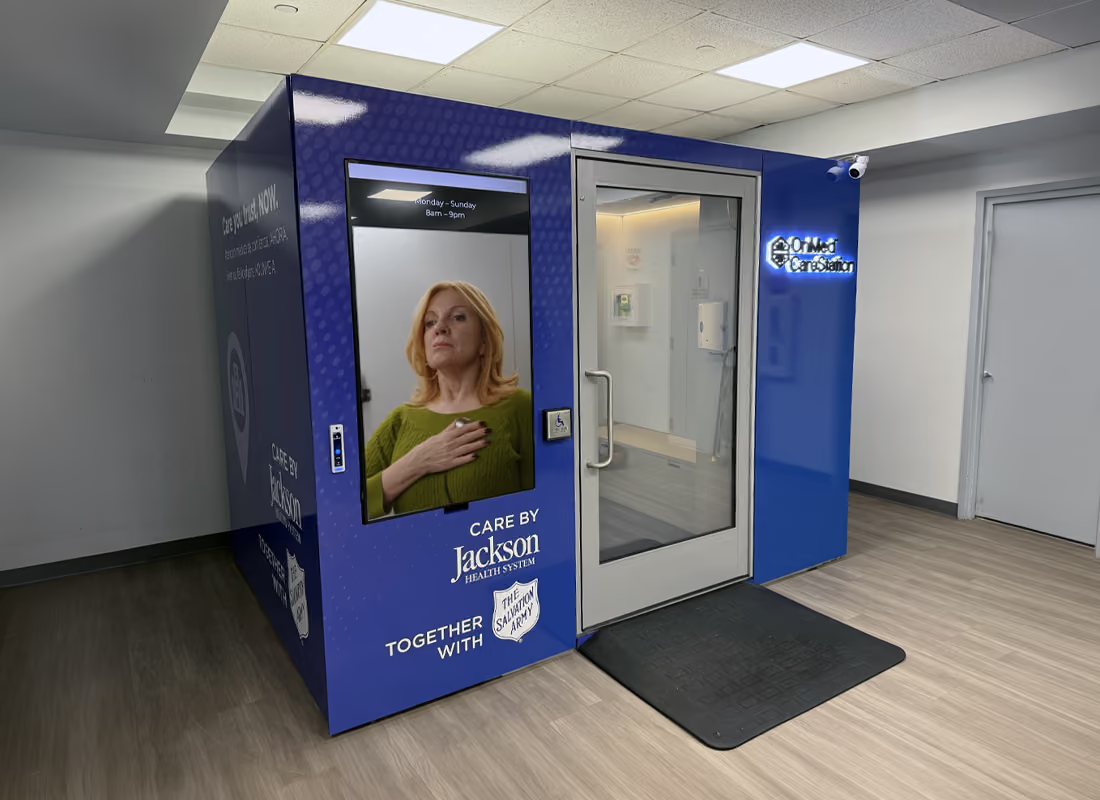
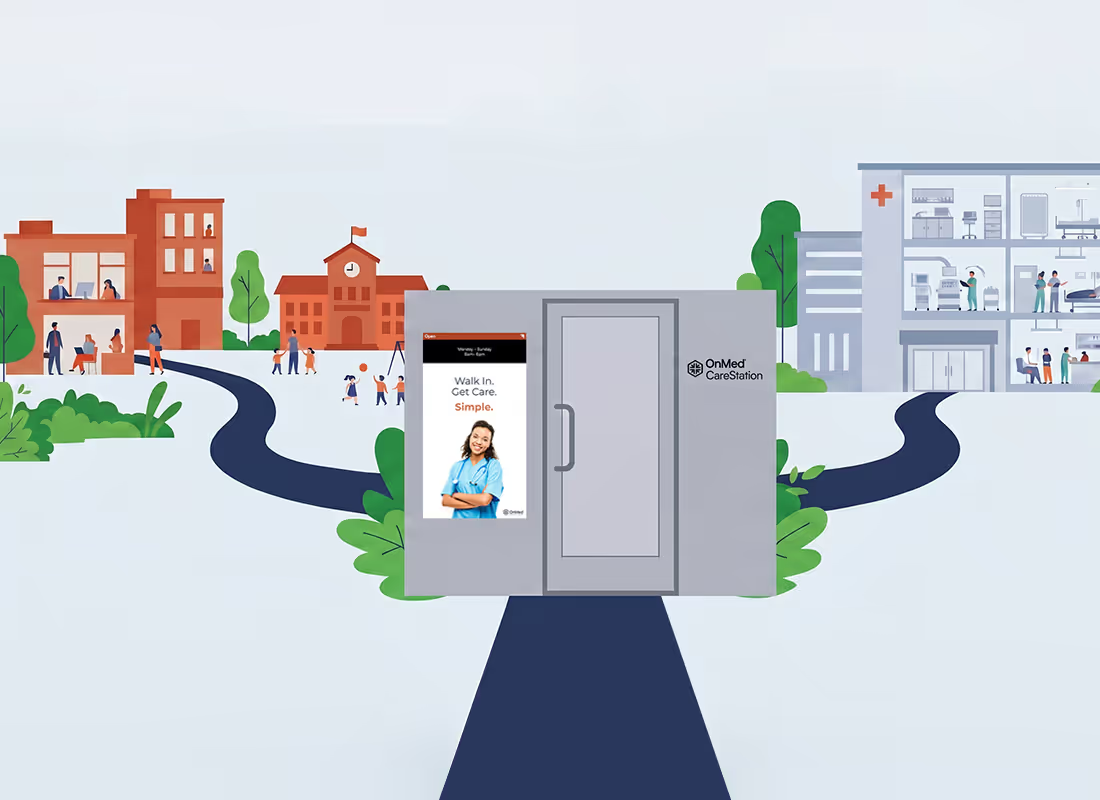
The OnMed CareStation® is an 8×10-foot "Clinic-in-a-Box" that combines real-time visits with licensed clinicians and integrated diagnostic tools, including high-definition clinical exam cameras, a digital stethoscope, an otoscope, calibrated blood pressure monitoring, pulse oximetry, and thermal imaging, in a private, walk-in environment deployed where people live, work, learn, and gather. It's a tech-enabled, AI-amplified, and always human-delivered platform, and unlike traditional clinic expansion, it can be deployed in as little as 45 days, requiring only an electrical outlet.
For employers, health plans, government organizations, educational institutions, and health systems, we help restore what primary care was always meant to deliver: earlier intervention, better preventive care, stronger chronic disease management, and fewer avoidable trips to the ER.
.avif)
Healthcare doesn't have a primary care problem. It has an access problem.
As physician shortages continue to widen and traditional capacity struggles to keep pace with demand, organizations need new ways to connect people with timely, coordinated care. Hybrid healthcare models are emerging because they extend the reach of primary care without sacrificing quality, and our CareStation combines real-time clinician access, integrated diagnostic tools, and population-scale deployment in a single model.
The future of healthcare isn't replacing primary care. It's making primary care available again.
Connect with our team to see how the CareStation is being deployed across employers, health systems, universities, and communities to close the gap between primary care's value and its access.
Follow along as we continue to redefine the healthcare landscape and bring the OnMed CareStation to communities across the U.S.
.avif)