A consent decree is a court-approved, legally binding settlement agreement that requires a jail, prison system, or corrections department to fix specific, documented failures in the medical or mental health care it provides to incarcerated people. Decrees typically arise after a class-action lawsuit—often brought under the Eighth Amendment's ban on cruel and unusual punishment—finds that care was so inadequate it caused serious, preventable harm.
A 2026 academic review of 121 U.S. prison healthcare lawsuits from 1970 to 2022 found that consent decrees and settlements have been entered in 39 states and the federal system, most commonly addressing general medical care, mental health, and dental services, and typically mandating changes to staffing, budgets, facility infrastructure, and training, backed by an independent court-appointed monitor. Decrees frequently reference National Commission on Correctional Health Care (NCCHC) accreditation standards as a compliance benchmark, and the federal Prison Litigation Reform Act has made new consent decrees harder to obtain since the 1990s, concentrating the ones that remain on the most severe, longest-running cases. These agreements can run for years: Illinois's Lippert v. Hughes consent decree, covering medical and dental care for roughly 30,000 incarcerated people, has been in effect since 2019 and isn't expected to expire until 2029, with 2026 monitor reports still citing severe physician and nursing vacancies. The same academic review found that, beyond general medical care, consent decrees have reshaped treatment protocols for specific conditions including HIV, Hepatitis C, and COVID-19, and similar decrees have reshaped mental health care in Alabama's prisons (Braggs v. Dunn). These agreements stay active for years after they're entered: 2026 monitor reports on Fulton County, Georgia's jail consent decree (entered 2025) and a 2022 Massachusetts mental-health settlement both cited continued compliance shortfalls rather than closing the cases out.
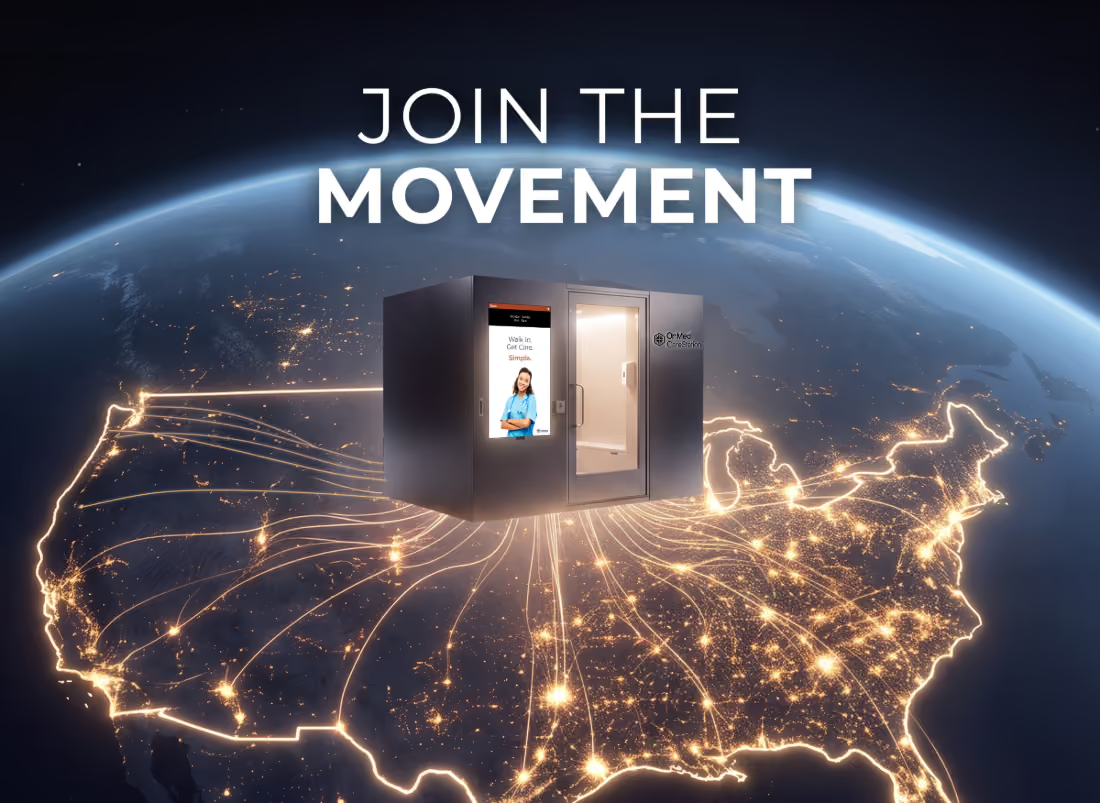
A deployable, clinician-staffed model like the OnMed CareStation® offers one way to address the staffing and access gaps consent decrees are typically written to fix—see OnMed's piece on a smarter model for correctional facility healthcare for more.
A 2026 academic review found that 121 U.S. prison healthcare lawsuits between 1970 and 2022 resulted in a consent decree or settlement, spanning 39 states and the federal system. The agreements most commonly address general medical care, mental health, and dental services, and typically mandate changes to staffing, budgets, facility infrastructure, and training. Most are backed by an independent court-appointed monitor who tracks compliance over time.
Years, in many cases. Illinois's Lippert v. Hughes decree has been in effect since 2019 and isn't expected to expire until 2029, with 2026 monitor reports still citing severe physician and nursing vacancies. The federal Prison Litigation Reform Act has made new consent decrees harder to obtain since the 1990s, which tends to concentrate the ones that remain on the most severe, longest-running cases.
A deployable, clinician-staffed model like the OnMed CareStation® offers one way to address the staffing and access gaps consent decrees are typically written to fix. Because it doesn't require recruiting a full-time on-site physician the way a traditional clinic expansion would, it can add clinical capacity faster than the staffing timelines most consent decrees struggle to meet.
Every term here points to the same gap in healthcare access. See how the CareStation closes it.
Talk to Our Team