OnMed CareStation® requests advance across multiple states as rural health leaders look to scalable, technology-enabled models to expand access and combat workforce and infrastructure constraints.
OnMed, a leader in tech-enabled healthcare access, today reported growing momentum for the OnMed CareStation® across the U.S. as states begin deploying $50 billion in federal Rural Health Transformation Program (RHTP) funding. Health systems and local partners in more than 25 states have submitted requests for the technology-enabled model, as rural health leaders look to expand access and combat workforce and infrastructure constraints.
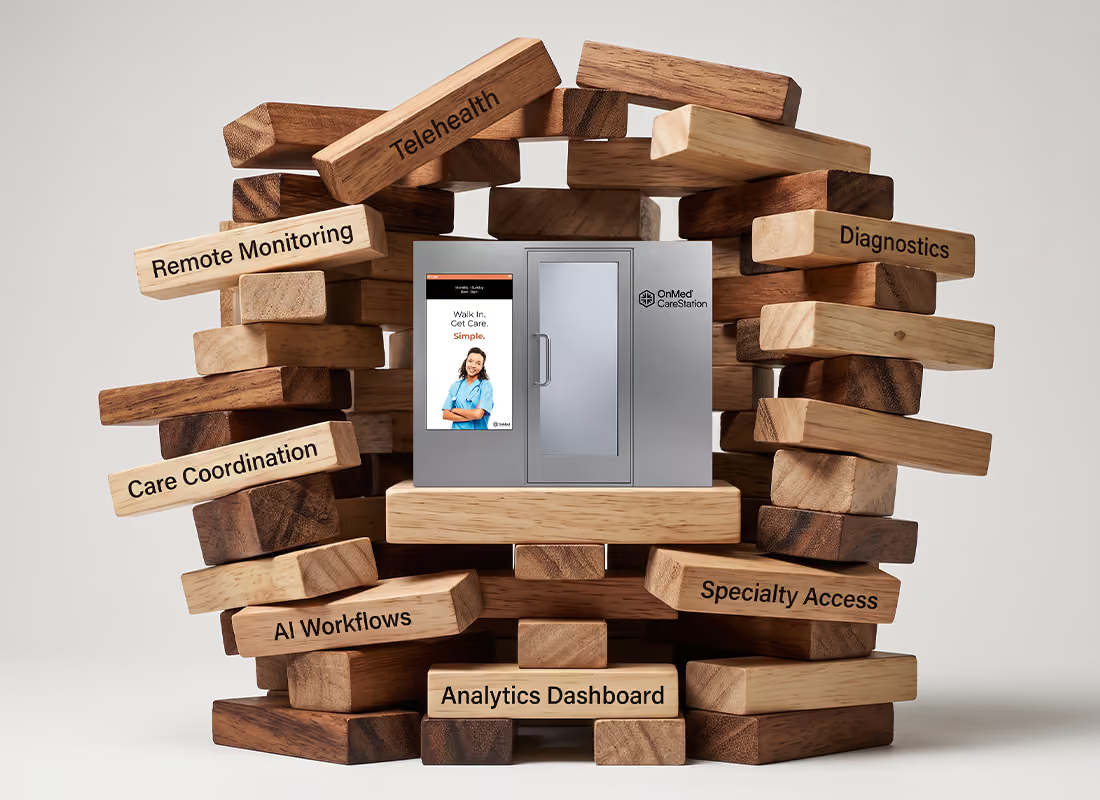
The 8x10 foot “Clinic-in-a-Box” is a private care environment, bringing licensed clinicians and diagnostic tools together through a fully integrated platform. Remote clinicians can examine a patient, assess symptoms and provide treatment and e-prescriptions, blending the comprehensiveness and comfort of a traditional doctor’s visit with the rapid scalability of virtual care. OnMed’s tech ecosystem and scalable infrastructure are designed to be deployed in communities where people live, work and gather, bringing access to healthcare without requiring the time, staffing and physical footprint of a traditional clinic.
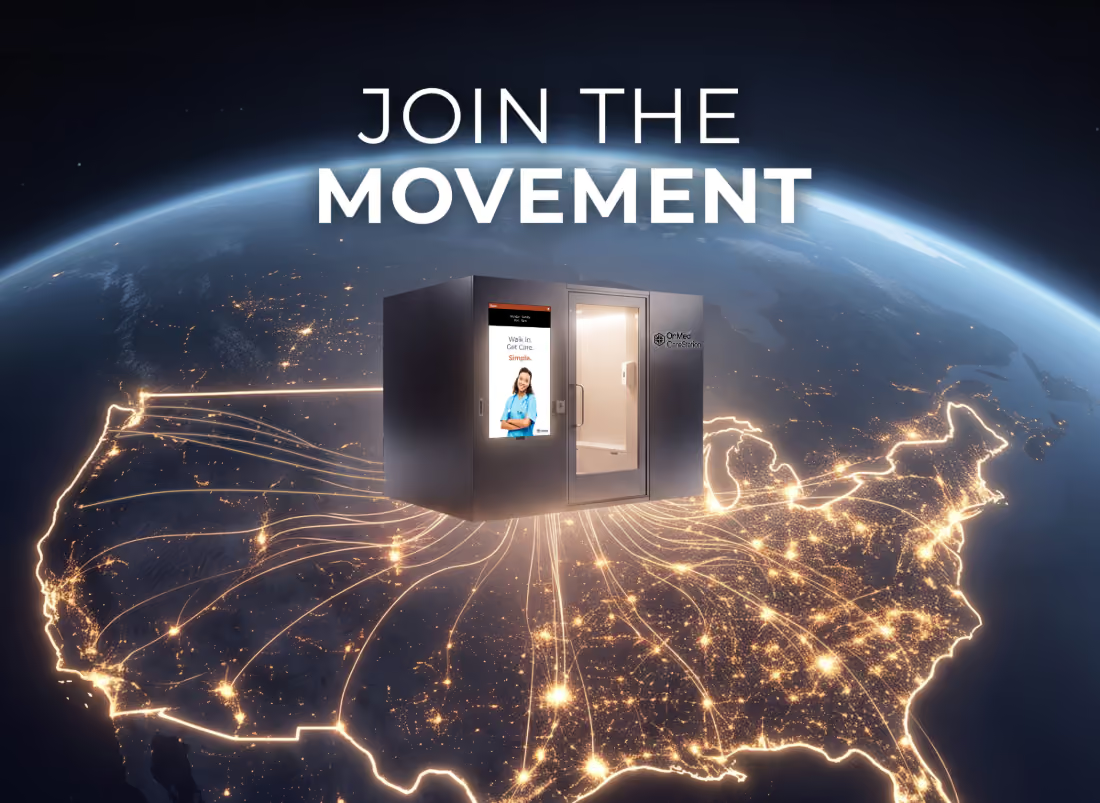
OnMed CareStation® requests have been submitted by multiple health systems and local partners across more than 25 states, with additional opportunities advancing nationwide. Rather than relying solely on traditional brick-and-mortar expansion, states are increasingly exploring distributed, technology-enabled models that:
OnMed CEO Karthik Ganesh explained:
“Rural health transformation cannot simply mean rebuilding the same system with new dollars. This is an opportunity to rethink where healthcare happens and how we get it to people. The momentum we’re seeing reflects a simple reality: rural communities need care that can reach people where they are, while keeping human clinicians at the center of the experience.”
In partnership with Auburn University’s Rural Health Initiative, OnMed’s CareStation in LaFayette, Alabama has already made a measurable impact:
Hollie C. Cost, Ph.D., Auburn University Assistant VP of University Outreach & Public Service, said:
“Over 98% walk out and say their needs were met. OnMed has been hands down the best partner that I’ve ever worked with. This OnMed CareStation® is literally saving lives.”
David A. Tam, MD, MBA, CPHE, FACHE, President & CEO of Beebe Healthcare, said:
“In rural Delaware, we see every day how distance, transportation, and competing work and family responsibilities can make it difficult for people to access the health care they need. The OnMed CareStation® is an innovative way to expand access by bringing trusted health care services closer to home. It complements the care and partnerships already in place across our communities while helping connect patients to the local providers, specialists, and support resources they need to achieve better health.”
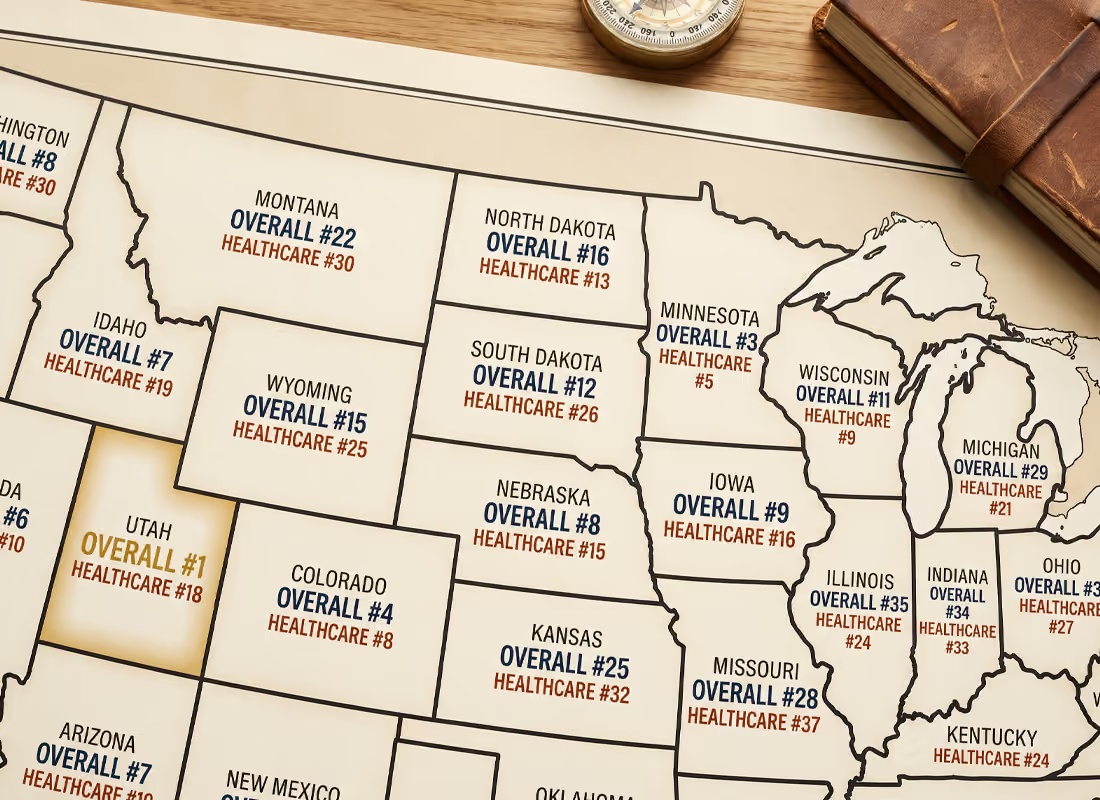
As states decide how to put $50 billion in rural health investment to work, growing CareStation momentum across more than half the country points to a broader change in healthcare infrastructure. These states include:
Lonnie Wills, Executive Director of the Jerry Ambrose Veterans Council of Mohave County, said:
“For rural Arizonans, healthcare access is measured not only in miles, but also in months. Local physicians and specialists are overwhelmed, and patients can face waits of three to eight months for an appointment—even when they have an immediate medical concern. Technology-enabled access points such as the OnMed CareStation® could provide a faster route into care, timely evaluation, and appropriate referrals while supporting—not replacing—the local providers already carrying more patients than they can reasonably serve.”
In Arizona, the Jerry Ambrose Veterans Council of Mohave County has submitted a proposal that includes OnMed CareStations to help expand rural healthcare access.
Jolene Zografos, VP and Chief Nursing Officer Executive of Ambulatory Care at Lee Health, said:
“The future of healthcare depends on our ability to bring care closer to the people who need it. Technology-enabled care models help expand access in a practical and scalable way, ensuring patients can receive timely care in locations that are convenient and familiar while remaining connected to trusted healthcare providers.”
With $50 billion in federal funding now moving from allocation to implementation, the decisions being made in rural communities like these have nationwide implications. The growing adoption of the OnMed CareStation® signals that rural health transformation may not be defined by building more of the same, but by creating a more distributed model of care that brings clinical capacity directly into communities. OnMed is currently working with state agencies, health systems and community organizations to identify communities where CareStations can support state Rural Health Transformation priorities.
For complete details, including all executive statements, read the full press release.
OnMed is transforming how the world accesses healthcare. With its patented OnMed CareStation®, an 8x10 foot “Clinic-in-a-Box”, OnMed delivers comprehensive, immediate care wherever people live, work, and learn. The CareStation is a tech-enabled, AI-powered, and human-delivered platform that blends the comprehensiveness of traditional in-person care with the rapid scalability of telemedicine. Learn more at www.onmed.com.
Putting Rural Health Transformation funding to work?
See how the OnMed CareStation® can support your state's rural health priorities.
Talk with OnMed →
Heather Tidwell
onmed@mww.com
Follow along as we continue to redefine the healthcare landscape and bring the OnMed CareStation to communities across the U.S.