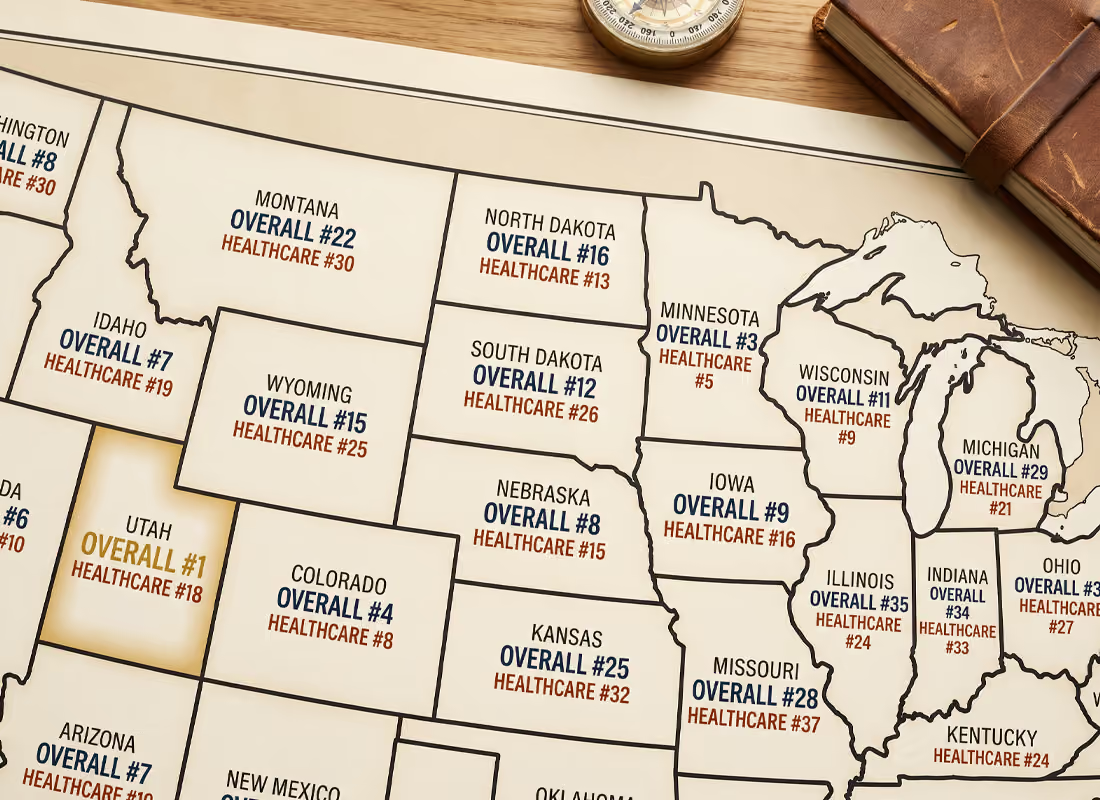
For the fourth year in a row, U.S. News & World Report named Utah the best state in America, citing a strong economy, sound fiscal management, and a young, growing workforce. On healthcare specifically, the same report ranks Utah 18th—a solid result, and a reminder that even top-performing states have room to grow when it comes to healthcare specifically. It's a pattern seen across the rankings: delivering healthcare well is a distinct challenge, one that doesn't always move in lockstep with a state's broader success.
Running a state well touches dozens of systems at once: schools, roads, budgets, public safety. Healthcare delivery is its own discipline entirely. It has its own workforce pipeline, its own facility and equipment requirements, and its own geography problem that a strong economy doesn't automatically solve. A state can manage its finances well and still find that getting a physician into a small town, or keeping wait times reasonable in a fast-growing metro area, is a genuinely different kind of problem to solve—one that takes years of deliberate planning rather than a strong budget alone.
The rankings back this up. Hawaii ranks among the best in the country for overall healthcare, access, quality, and public health alike. Massachusetts ranks in the top five for both overall healthcare and access specifically. For states like these, strong healthcare delivery and strong overall performance tend to move together. But it isn't automatic. Other states with solid economies and effective governance overall still find healthcare delivery specifically to be their hardest system to get right.
Delivering healthcare well is its own challenge. It takes more than a strong economy to solve it.
This is exactly the problem the federal Rural Health Transformation Program (RHTP) was built to address. In December 2025, the Centers for Medicare & Medicaid Services approved all 50 states for a share of $50 billion in funding over five years, aimed at strengthening rural healthcare delivery. What's notable is how the program is structured: CMS didn't simply distribute checks. Every state had to submit its own transformation plan, laying out how it would improve access, expand its workforce, and adopt new care delivery models suited to its own communities.
That requirement says something important. Even with $50 billion on the table, the federal government recognized that funding alone wasn't the answer. States still have to design how care would actually reach people—whether through new technology, new workforce strategies, or new access points built into daily life. Money made the transformation possible. It didn't make the transformation automatic.
RHTP is focused on rural America, where the delivery challenge is often most visible: long drives to the nearest clinic, hospitals operating on thin margins, and a shrinking pool of providers willing to relocate. That work matters, and closing the rural care gap is real, necessary progress.
But the same delivery challenge shows up in underserved communities well beyond rural zip codes. Delayed appointments, provider shortages, transportation barriers, and capacity constraints increasingly reach suburban and urban neighborhoods too. A hospital being nearby doesn't guarantee the people around it can get in the door.
In America's 15 largest metro areas, the average wait just to get an appointment scheduled is 31 days, and for some specialists it can run as long as 67. Somewhere inside that wait is a family living a few blocks from a nationally ranked hospital, facing many of the same barriers as someone in a county with no hospital at all. The specific challenge looks different depending on where you are. The underlying problem—actually delivering care to the people who need it—is the same one.
The consequences show up everywhere. Employees delay care because they can't spend half a day driving to an appointment or can't predict work schedules months in advance. Students miss valuable classroom time for routine healthcare needs. Rural residents turn to emergency departments for issues that should have been addressed much earlier. Health systems face growing pressure from workforce shortages and burnout, while communities struggle to attract and retain providers. Delivery gaps aren't just healthcare problems—they're productivity problems, education problems, and economic problems.
If delivering healthcare well takes more than funding and more than a strong economy, then closing the gap takes a model built specifically for that job: one that can show up wherever people already are, rather than asking people to find their way to it. A rural town, an employer break room, the student union, the airport, or a nearby grocery store.
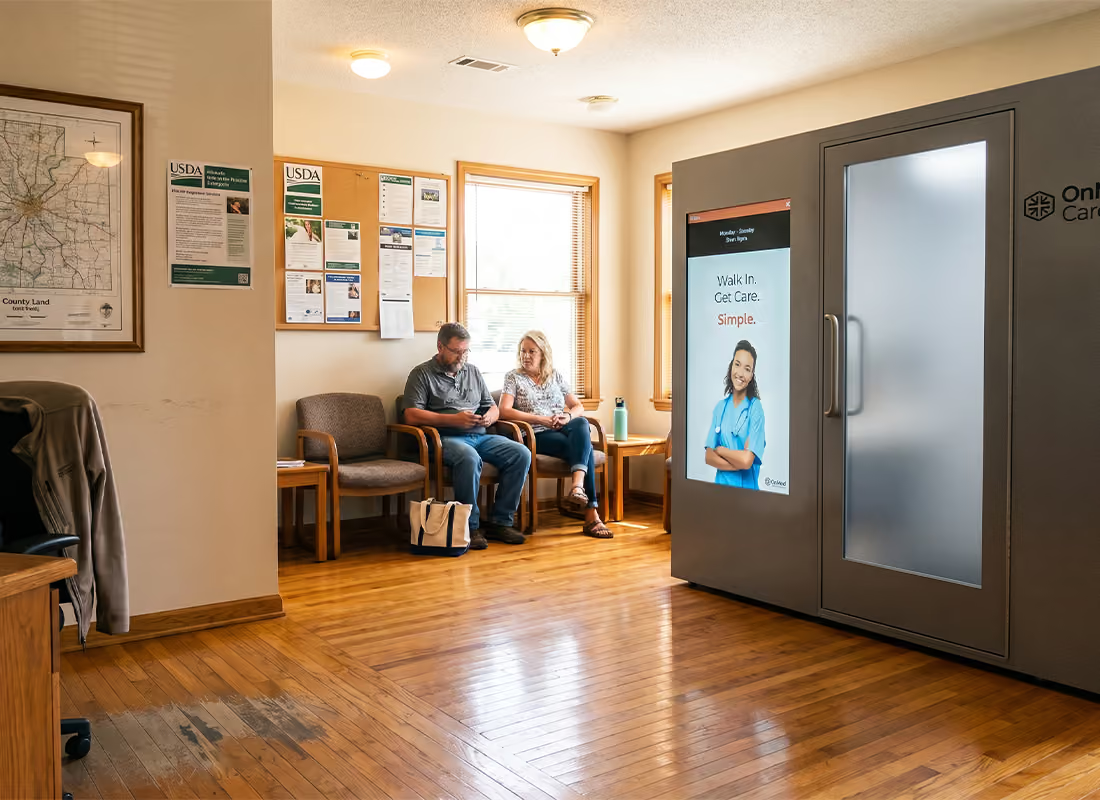
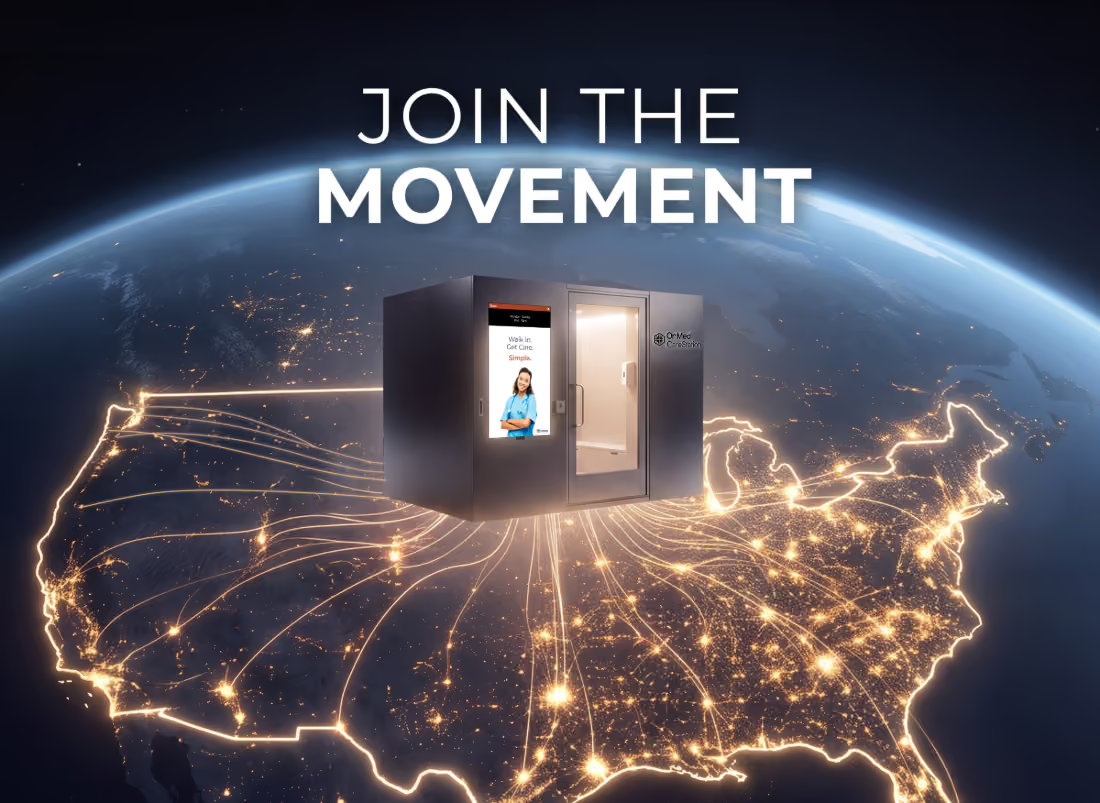
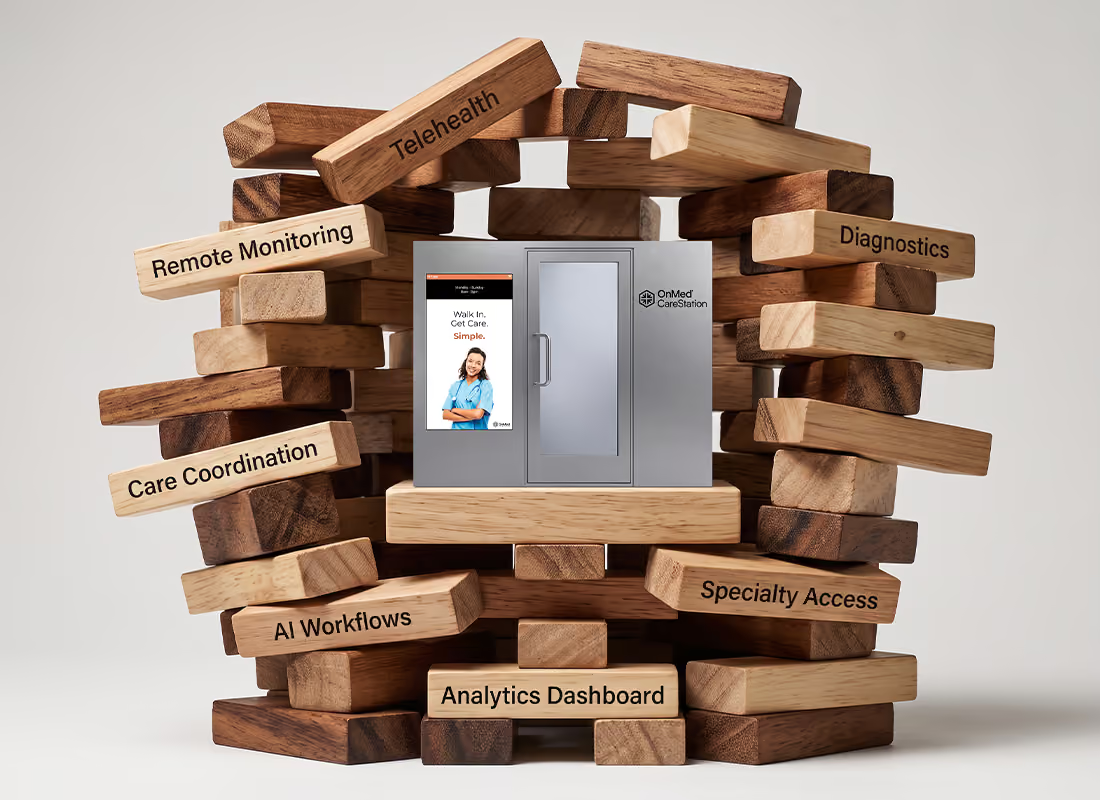
That's the idea behind the OnMed CareStation™. Tech-enabled. AI-powered. Human-delivered. Think of it as a "Clinic-in-a-Box": 8-by-10-foot, equipped with diagnostic tools and connected in real time to a licensed clinician, deployable in as little as 45 days, almost anywhere there's a power outlet, and built for exactly the kind of care delivery innovation programs like RHTP are designed to support.
For many of the patients who use it, the CareStation is the first consistent point of care they've had. 80% arrive with no primary care provider on record. 86% of visits are resolved on-site, while patients requiring additional care are connected to the appropriate next step. Those numbers don't move because a state's economy grows, or because a new hospital opens across town. They move because something showed up where people already were, instead of asking people to find their way to where the care already was.
The rankings will come out again next year, and states will keep working to close the gap between their overall performance and their healthcare performance. That work is already underway, through programs like RHTP and through states and organizations rethinking how care gets delivered in the first place.
Delivering healthcare well isn't automatic, even for the states doing everything else right. It takes deliberate investment, a workforce strategy, and a delivery model built to reach people wherever they are.
To learn more about how OnMed is building the missing platform that allows healthcare access at scale, contact us.
Follow along as we continue to redefine the healthcare landscape and bring the OnMed CareStation to communities across the U.S.