Fifty billion dollars may be enough to fix rural healthcare access. It is not enough to fix it twelve disconnected vendors at a time.
Look at how the Rural Health Transformation Program is actually being spent, and the pattern is already clear. A telehealth hub here. A remote monitoring platform there. A care-coordination tool. A chronic-disease analytics dashboard. Each piece solves something real. None of them, on its own, answers the question RHTP was funded to answer: can a rural patient walk through a door and leave with their care resolved.
The Rural Health Transformation Program put $10 billion a year on the table from 2026 through 2030, and states moved fast to spend it. That speed produced real ambition: telehealth hubs, remote monitoring expansions, AI-enabled patient engagement tools, longitudinal record platforms, and predictive analytics for chronic disease all showed up in state RHTP plans within months of the funding opening. Every one of those categories addresses something real. None of them, on their own, is built to be the place a patient actually goes.
This is not a hypothetical risk. It is already the default pattern in healthcare technology. A 2023 survey of health system CIOs and clinicians found that 55% of organizations run between 50 and 500-plus separate software applications just to operate. Separately, industry research shows 74% of large employers now report significant fatigue managing their point-solution vendor stack, and 61% say those point solutions cannot demonstrate verifiable financial return on their own. The response has been swift: over half of large employers are now actively consolidating vendors rather than adding more.
Rural health systems are walking toward the exact sprawl that employers and health systems elsewhere are walking away from—at the exact moment they have a five-year window to build it right the first time.
Point solutions aren't wrong. They're incomplete by design, and the physics of that incompleteness shows up in a few consistent places.
Research comparing telehealth and in-person visits found that more than half of the follow-up tests and specialist referrals ordered during a telehealth visit are never completed within the recommended window. That gap exists because a referral made without a hands-on exam is easier to deprioritize or fall through the cracks on—and every one of those gaps sends the patient right back to the access problem RHTP was built to close.
Remote patient monitoring solves data collection, not the visit itself. Wearables and at-home devices are excellent at flagging a trend between visits—a rising blood pressure reading, a missed glucose check. But a flagged trend still has to turn into a diagnosis, a prescription, and a next step. Without a connected point of care attached to it, the data becomes another stream someone has to act on manually, not a resolved encounter.
Diagnostics solve one piece of the exam, not the encounter.Standalone diagnostic hardware gives a facility a piece of clinical capability—a device that captures a reading or an image. But a device isn't a visit. It still needs a clinician to interpret it, an exam room to house it, and a workflow to connect it to everything else the patient needs that day.
Care coordination and AI-assisted workflows solve visibility and friction, not care. Longitudinal records and predictive dashboards help a health system see where chronic disease risk is concentrated. Scheduling assistants and chatbots can get a patient to an appointment faster than a phone tree can. Both are useful. Neither one examines a patient or delivers a diagnosis—they support the visit from the outside without ever becoming it.
Layer these together—as many state RHTP plans are now doing—and the result is not a rural health system. It is a stack. Every rural facility that adopts it inherits the same burden Bipartisan Policy Center research has flagged across state plans: tight budgets, limited interoperability, and fragmented data systems that were supposed to be the problem RHTP fixes, not the shape RHTP takes.
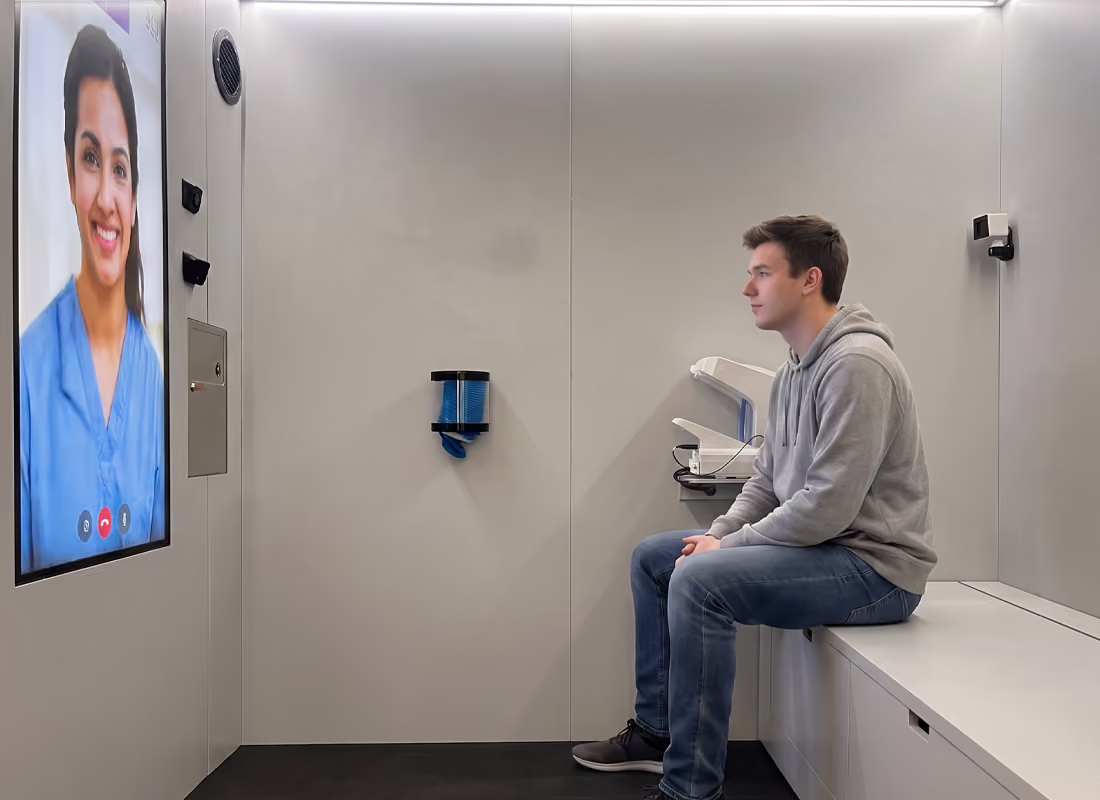
Access alone isn't the finish line. Someone has to call the play. The OnMed CareStation® triages every walk-in, treats the majority on the spot—86% of patients are fully resolved without a specialist referral—and routes the rest to exactly the right destination: a specialist, EMS or the ER when it is truly warranted. It reads the situation and directs where the patient goes next, so the right care happens in the right place.
Just as important, it does this as an extension of the local health system, not a competitor to it. 80% of CareStation users arrive with no primary care provider on record—patients the local system never had a way to reach. The CareStation catches them, keeps their care local, and refers them back into the network that serves their community. RHTP is trying to strengthen rural health systems, not scatter their budgets across a dozen disconnected vendors. One front door that resolves care, captures the unaffiliated, and coordinates where care goes next does that job in a single deployment.
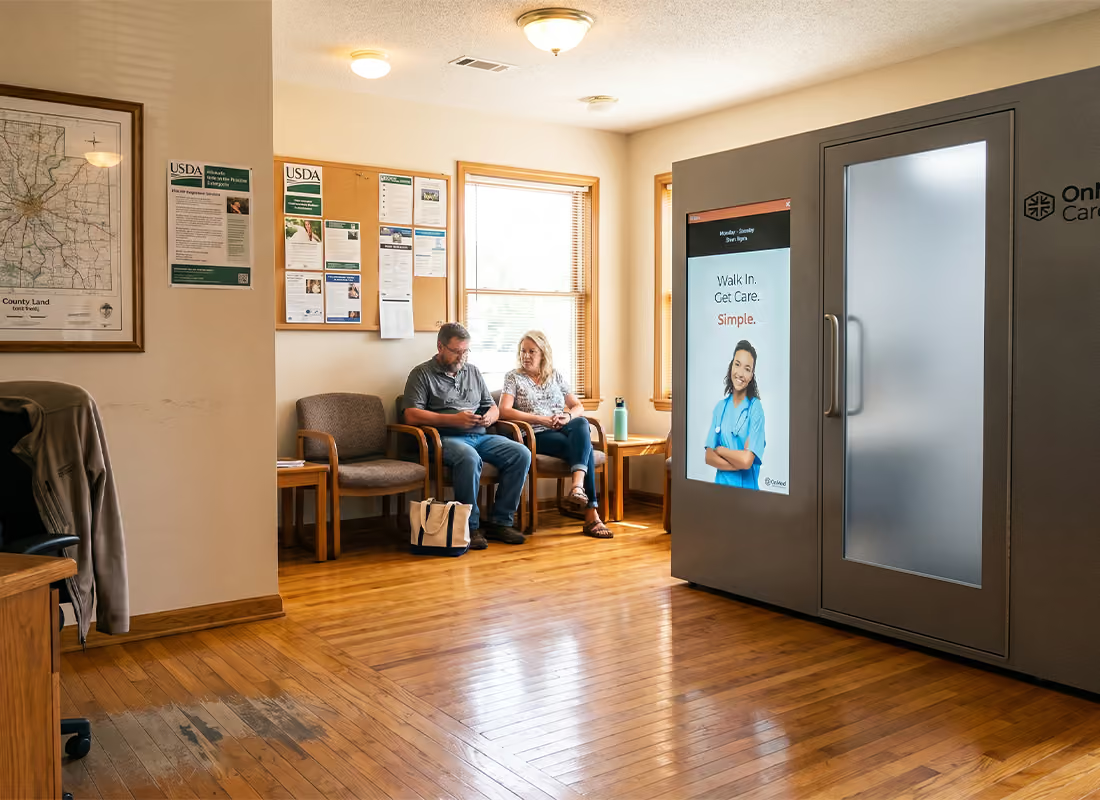
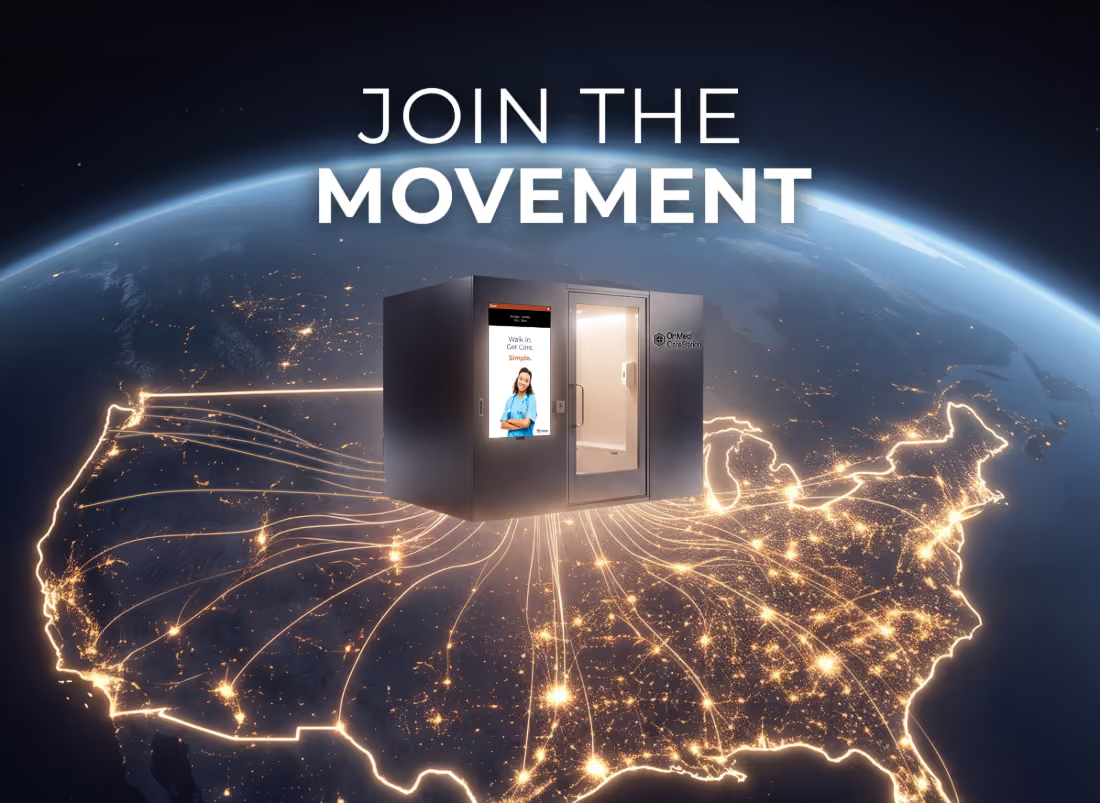
The CareStation answers the fragmentation question with a fundamentally different design. It is an 8×10 foot "Clinic-in-a-Box" that needs only a power outlet, installs in as little as 45 days with no construction, and folds telehealth, integrated diagnostic tools, care coordination, and a permanent local access point into a single deployment—rather than asking a rural facility to procure, integrate, and maintain them separately.
A patient walks in, presses start, and within moments is connected to a licensed clinician on a large screen. The door locks and the glass fogs for complete privacy. Integrated diagnostic tools capture weight, blood pressure, heart rate, oxygen, and temperature; an HD camera and digital stethoscope let the clinician conduct a real exam; and the visit ends the way care should—with a diagnosis, an e-prescription, and next steps, in about twenty minutes, no appointment required. It is tech-enabled, AI-powered, and always human-delivered. Not a bundle of point solutions stitched together after the fact. One connected point of care, built that way from the start. Each CareStation is a node in an intelligent and connected platform that allows healthcare access at scale. AI powers the efficiency, intelligence, and scalability to deliver faster, data-informed care while maintaining an intimate human-delivered experience.
The difference shows up in the data. Patients come back—more than 37% are repeat users within 12 months—and they rate the experience 4.96 out of 5. 78% of users call the CareStation their medical home. You don't earn that word with a dashboard. You earn it by being the place someone actually goes.
Everything RHTP is trying to fix—outcomes, cost, workforce strain, the slow disappearance of local care—sits downstream of one question: can a patient walk through a door and leave with their care actually resolved? A telehealth platform can't fully answer that alone. Neither can a monitoring device, a diagnostic tool, or a coordination dashboard. Each closes one gap and leaves the rest open.
So the choice states and communities face isn't which point solution to fund next. It's whether to keep building a stack or build the connected point of care that stack was always meant to add up to.
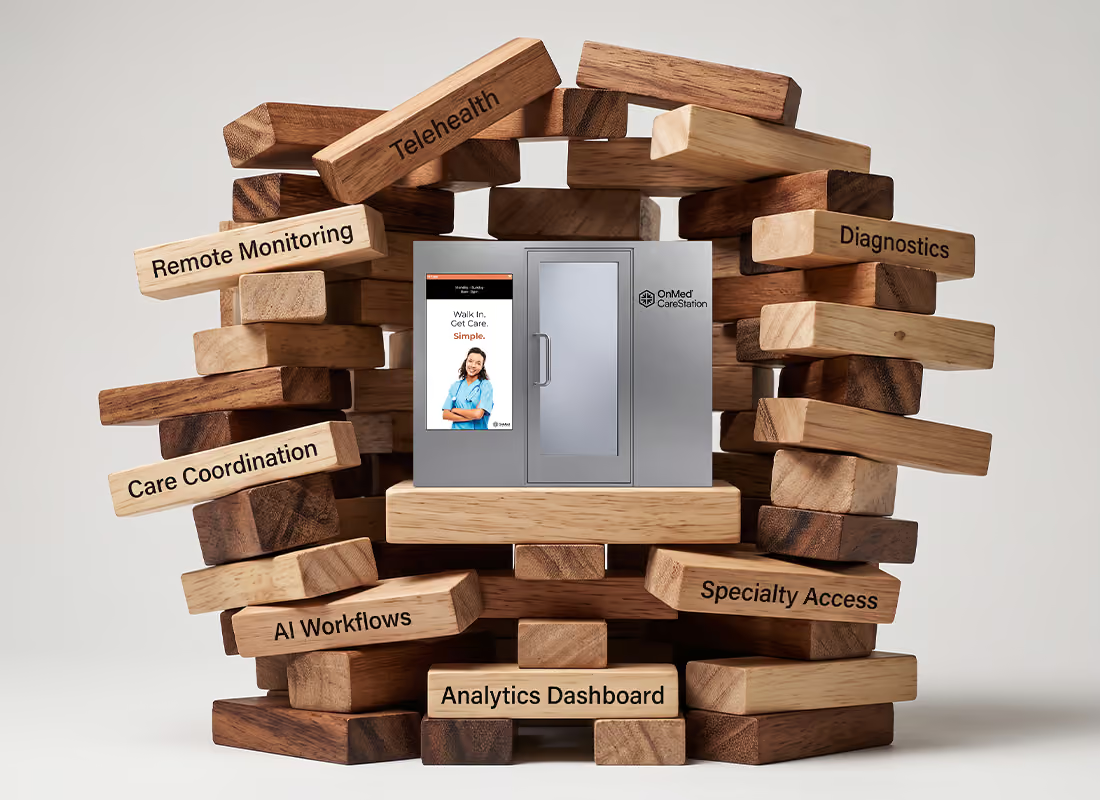
The CareStation combines telehealth, diagnostic tools, care coordination, AI-assisted workflows, remote monitoring, specialty access, and a permanent community access point in a single deployment.
| Care Type | Services Provided | Gaps |
|---|---|---|
| Telehealth & specialty access | Virtual clinician visits and virtual specialist consults over video, without an in-person exam | No physical exam capability; higher rate of required in-person follow-up; specialty access still means scheduling a separate virtual referral; broadband connection required for effective video |
| Remote patient monitoring | Continuous at-home data capture between visits—blood pressure, glucose, weight, and similar readings | Data alone isn't a diagnosis; still requires a separate provider and visit to act on what the device reports |
| Diagnostics | Clinical-grade diagnostic hardware for use inside an existing facility | Hardware only; still requires a clinician, an exam room, and separate integration to become a full visit |
| Care coordination & AI-assisted workflows | Longitudinal records, scheduling assistants, and predictive analytics that support the visit from the outside | Administrative and reporting layer only; never touches the actual patient encounter these tools are meant to support |
| OnMed CareStation® | A full clinical encounter in one visit—licensed clinician, integrated diagnostic tools, e-prescription, specialty routing, and care coordination, from a single permanent deployment | None for the 86% of visits resolved on-site; the remainder are appropriately escalated to a specialist or emergency department rather than left unresolved |
Ready to bring rural communities one connected point of care instead of another vendor to manage? Contact us to learn how OnMed partners with states and rural health systems on RHTP.
States are funding telehealth and specialty access, remote patient monitoring, diagnostics, and care coordination or AI-assisted workflows—each addressing one piece of rural care access rather than the full patient encounter.
Telehealth connects a patient to a clinician without a physical exam, so conditions that need a hands-on assessment often still require an in-person follow-up—one study found this happens after 6.2% of video visits, compared to 1.3% of in-person visits.
Point solution fatigue is the administrative and financial strain of managing many disconnected vendors instead of one integrated system. Research shows 74% of large employers report significant fatigue from this pattern, and rural health systems risk building the same fragmented stack under RHTP.
The CareStation combines telehealth, integrated diagnostic tools, and a permanent on-site access point in a single deployment, resolving 86% of visits without a specialist referral—rather than requiring a rural facility to procure and integrate multiple separate vendors.
The CareStation is operational in as little as 45 days from contract signing, requiring only a power outlet and broadband or satellite connectivity—no construction or permits.
Follow along as we continue to redefine the healthcare landscape and bring the OnMed CareStation to communities across the U.S.