In LaFayette, Alabama, the math on healthcare had stopped working. Two primary care physicians served the entire town, both nearing retirement. No urgent care facility. No local pediatric services. Maternal health resources so limited the firehouse was filling gaps it was never built for. Nearly half of households living on $30,000 a year or less, and the nearest real options 30 to 45 minutes away.
This isn't a failure of effort. It's a failure of access, and it's exactly the gap the Rural Health Transformation Program (RHTP) was created to close. CMS has already pointed to one deployment as proof the model works.
Quick answer: A three-year OnMed CareStation™ deployment in LaFayette, Alabama, resolved care for the majority of patients on-site, reached 76% of the town's population, and cut emergency room and urgent care use by 67%. CMS later cited the deployment in the RHTP Notice of Funding Opportunity as a model for the program's sustainable access goal.
Rural communities have tried the standard playbook. Recruiting physicians to towns of 2,700 people is a multi-year effort with no guarantee of success. Building a new clinic takes capital and years most communities don't have.
Telehealth alone helps with a phone screen but can't run a comprehensive exam, and standalone kiosks skip the clinician entirely.
In many rural communities, broadband limitations create an additional barrier to accessing virtual care. With nearly 70 million people lacking adequate internet access, healthcare organizations increasingly rely on satellite-based connectivity solutions where traditional infrastructure is inconsistent. But connectivity alone doesn't solve the challenge of delivering comprehensive care where the patient actually is, in a single visit.
That's the gap RHTP funding is designed to close, and it's why speed and resolution, not just presence, are the metrics that matter to the states and health systems deploying it.
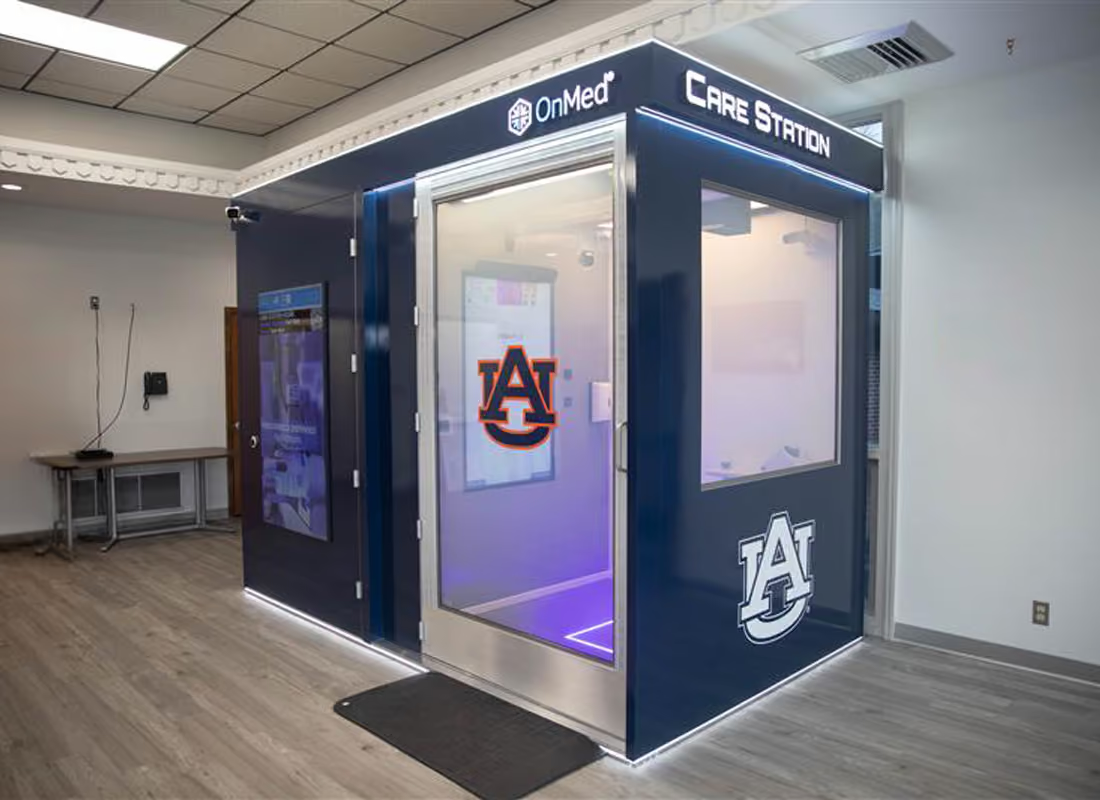
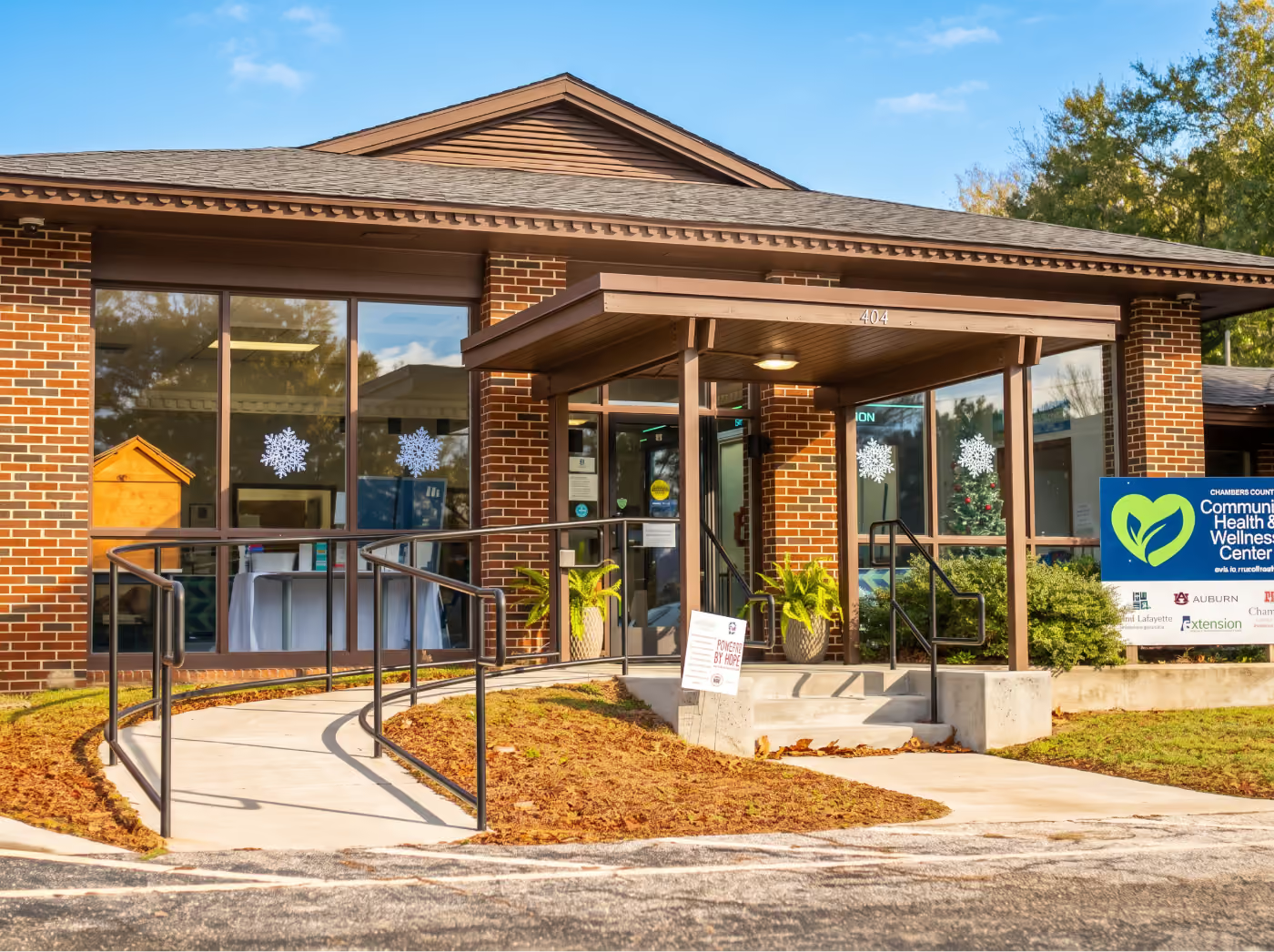
Auburn University's Rural Health Initiative partnered with OnMed to place a CareStation inside the Chambers County Community Health and Wellness Center. The OnMed CareStation™ is built around the same standard that made this deployment work everywhere else it's been placed.
It's an 8' × 10' “Clinic-in-a-Box” that brings clinic-grade, clinician-led care supported by diagnostic tools directly into communities.
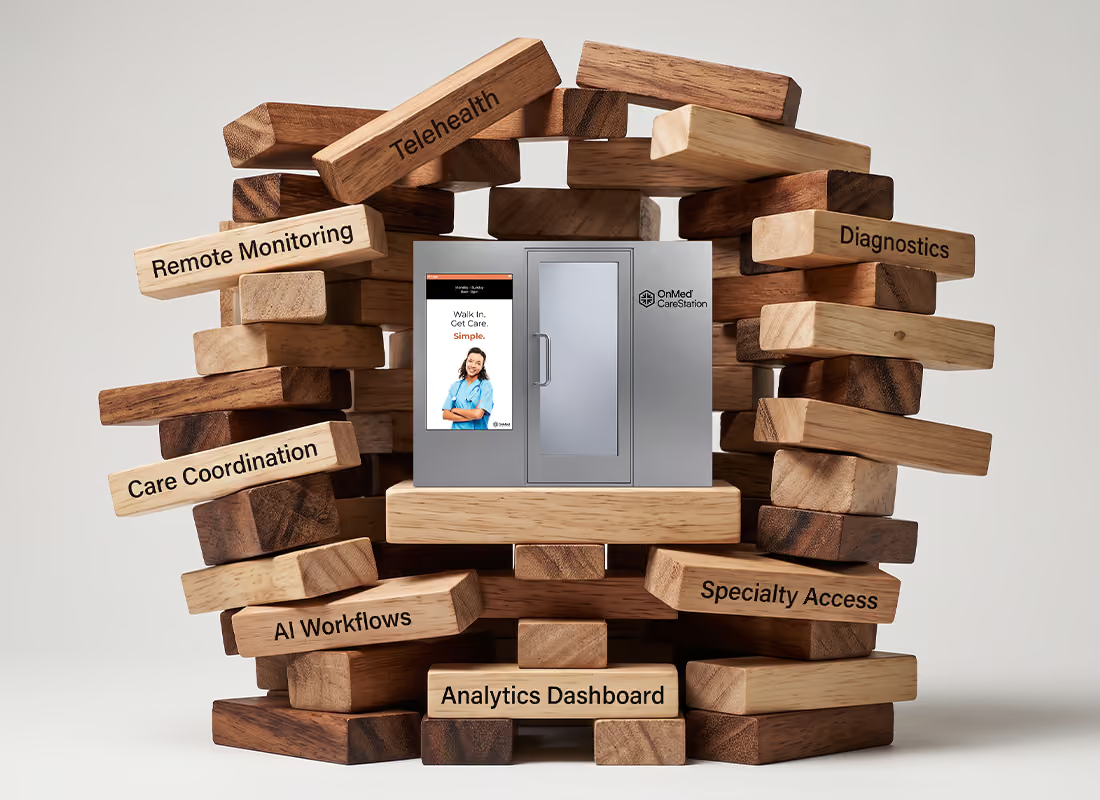
Unlike traditional telehealth kiosks, the CareStation combines live virtual care with on-site diagnostic tools, eliminating long travel times and the need for permanent facilities while delivering a higher standard of reliable, resolved care.
Designed as a community-based healthcare hub, the CareStation supports and augments providers, pharmacies, and health systems, without competing with them.
From March 2023 through February 2026, the LaFayette deployment produced:
Behind every number is someone who didn't lose a day of work, drive 45 minutes each way, or skip care altogether because the nearest option was out of reach.
Reaching three-quarters of a town's population wasn't a technology outcome. It came from trusted community partnerships, Auburn University's ongoing involvement, Extension programming, and steady community outreach and word-of-mouth adoption, the same groundwork states and health systems should plan for wherever a CareStation is deployed.
“When we first started this project we of course wanted to help increase the health of our citizens,” said Rachel Snoddy, Chambers County Extension Coordinator. “We wanted to meet a need, increase the healthcare access here in LaFayette and Chambers County as a whole. And we've done that.”
Jim Doody, Chief of Fire and EMS for the City of LaFayette, put it even more simply: “I would love to see a CareStation in every community across the United States, especially in rural communities where the need is really great.”
Hollie C. Cost, Ph.D., Auburn University's Asst. VP of University Outreach & Public Service, has seen the impact firsthand: “Over 98% walk out and say their needs were met. OnMed has been hands down the best partner that I've ever worked with. This OnMed CareStation is literally saving lives.” Watch her full testimonial.
LaFayette is the blueprint Auburn is now scaling to other rural communities. CMS cited this exact deployment as a model in the RHTP Notice of Funding Opportunity, under the Appendix's “Rural health regional excellence initiative” example within the “Sustainable access” goal. Virginia and Nebraska have already named OnMed directly in their own RHTP applications, and CareStations are active in seven states and Puerto Rico today.
The LaFayette deployment demonstrates how the CareStation can align with RHTP's objectives around sustainable rural healthcare access.
Read how the OnMed CareStation™ is gaining momentum as states deploy RHTP funding.
LaFayette offers states and health systems evaluating RHTP dollars a rare thing: three years of real utilization data, real cost savings, and a model CMS has already validated in writing.
Read the full LaFayette case study → to see exactly how the deployment came together, or explore the Rural Health Transformation Program solution to see how it fits your state's funding timeline.
RHTP is a federal funding initiative designed to help states close persistent access gaps in rural healthcare, including physician shortages, hospital closures, and long travel distances to care.
OnMed is the leader in tech-enabled hybrid-healthcare company expanding access to care through the patented OnMed CareStation™, an 8' × 10' "Clinic-in-a-Box" that brings licensed clinicians and diagnostic tools together through a fully integrated device and human platform. Remote clinicians can examine a patient, assess symptoms, and provide treatment and prescriptions, blending the comprehensiveness and comfort of a traditional doctor's visit with the rapid scalability of virtual care. OnMed's technology and scalable infrastructure are designed to be deployed in communities where people live, work, and gather, bringing access to healthcare without requiring the time, staffing, and physical footprint of a traditional clinic.
The OnMed CareStation™ is an 8' × 10' "Clinic-in-a-Box" that connects patients in real time with licensed clinicians and diagnostic tools through a fully integrated device and human platform. Patients walk in and get a diagnosis, treatment plan, and e-prescription, with no appointment and no waiting room, just immediate care when and where it's needed most.
Yes. CMS cited OnMed's Alabama deployment through the Auburn Rural Health Initiative as a model in the RHTP NOFO, under the “Rural health regional excellence initiative” example within the “Sustainable access” goal.
A CareStation is typically operational within 45 days of contract signing, requiring only an electrical outlet and connectivity, no construction and no permits, which matters for states working against RHTP application and funding windows.
Over three years, the CareStation logged 3,877 visits, reached 76% of the town's population, achieved a 4.97/5 patient satisfaction score, and delivered a 67% emergency room and urgent care diversion rate in 2025.
The OnMed CareStation™ has earned recognition from TIME Best Inventions, the Edison Awards, the Stevie Awards, Fierce 50, Fast Company, and Inc. 5000 for advancing a new model of healthcare access. Together, these honors recognize innovation, measurable impact, and OnMed's commitment to expanding access to everyday healthcare for everyone, everywhere.
Follow along as we continue to redefine the healthcare landscape and bring the OnMed CareStation to communities across the U.S.