The Bureau of Justice Assistance (BJA)—part of the U.S. Department of Justice's Office of Justice Programs—funds grants that help state, local, and tribal governments improve corrections, reentry, and behavioral health outcomes within the criminal justice system. Several BJA programs fund healthcare-adjacent services delivered directly inside correctional facilities, including substance-use treatment, crisis-response training, and mental health collaboration between courts, corrections, and community providers.
In August 2026, BJA opened more than $211 million across five FY2026 grant opportunities for reentry, substance use, and behavioral health programs, with application deadlines running from late September through mid-October 2026. One of the largest, the Comprehensive Opioid, Stimulant, and Substance Use Site-Based Program, explicitly funds expanding access to naloxone, diversion programs, and treatment and recovery services both in the community and inside correctional facilities. BJA's Justice and Mental Health Collaboration Program similarly funds partnerships to improve care for people with mental illness or co-occurring substance-use disorders cycling through jails and prisons—care that, in many counties, correctional facilities now provide more of than community-based providers do. Eligible applicants include state, local, and tribal governments and nonprofits working inside corrections systems, and awards are frequently split into separate urban, suburban, and rural tracks so smaller counties aren't competing against large metro jails for the same dollars. BJA's broader corrections portfolio also includes the Second Chance Act's reentry and family-based substance-use treatment programs, the Justice Reinvestment Initiative, and the Edward Byrne Memorial Justice Assistance Grant (JAG) formula program, which gives states and localities flexible funding that many jurisdictions direct toward behavioral health and reentry healthcare services rather than enforcement alone.
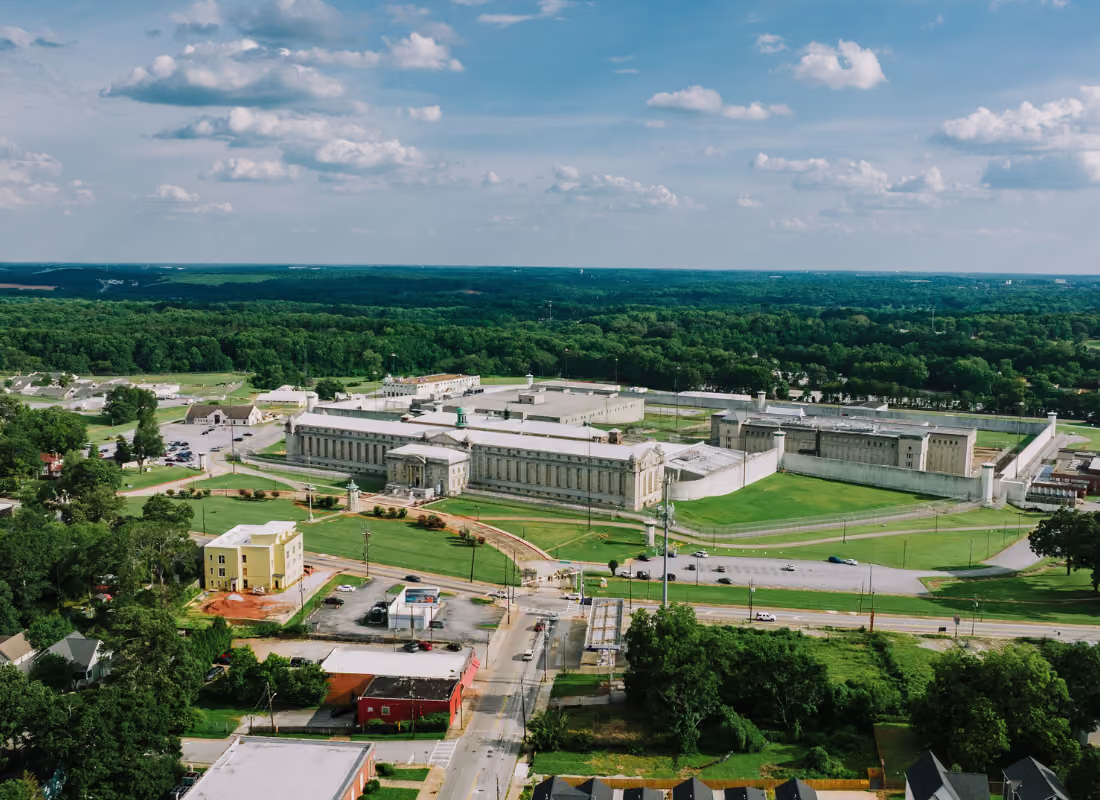
Nevada's Department of Corrections, for example, selected the OnMed CareStation® to expand correctional healthcare with on-site clinical care across three facilities—a concrete example of on-site care already being deployed across correctional systems to meet exactly this kind of need.
In August 2026, the Bureau of Justice Assistance opened more than $211 million across five FY2026grant opportunities covering reentry, substance use, and behavioral health programs. Application deadlines run from late September through mid-October 2026. Eligible applicants include state, local, and tribal governments, and awards are frequently split into separate urban, suburban, and rural tracks so smaller counties aren't competing against large metro jails for the same dollars.
Yes. The Comprehensive Opioid, Stimulant, and Substance Use Site-Based Program explicitly funds expanding access to naloxone, diversion programs, and treatment and recovery services both in the community and inside correctional facilities. BJA's Justice and Mental Health Collaboration Program similarly funds partnerships to improve care for people with mental illness or co-occurring substance-use disorders who are cycling through jails and prisons.
Yes. Nevada's Department of Corrections selected the OnMed CareStation® to expand correctional healthcare with on-site clinical care across three facilities, a concrete example of on-site care already being deployed across a state corrections system. It illustrates how BJA-adjacent funding priorities—reentry, behavioral health, and substance-use treatment—are increasingly delivered through on-site clinical infrastructure rather than through referrals to outside providers.
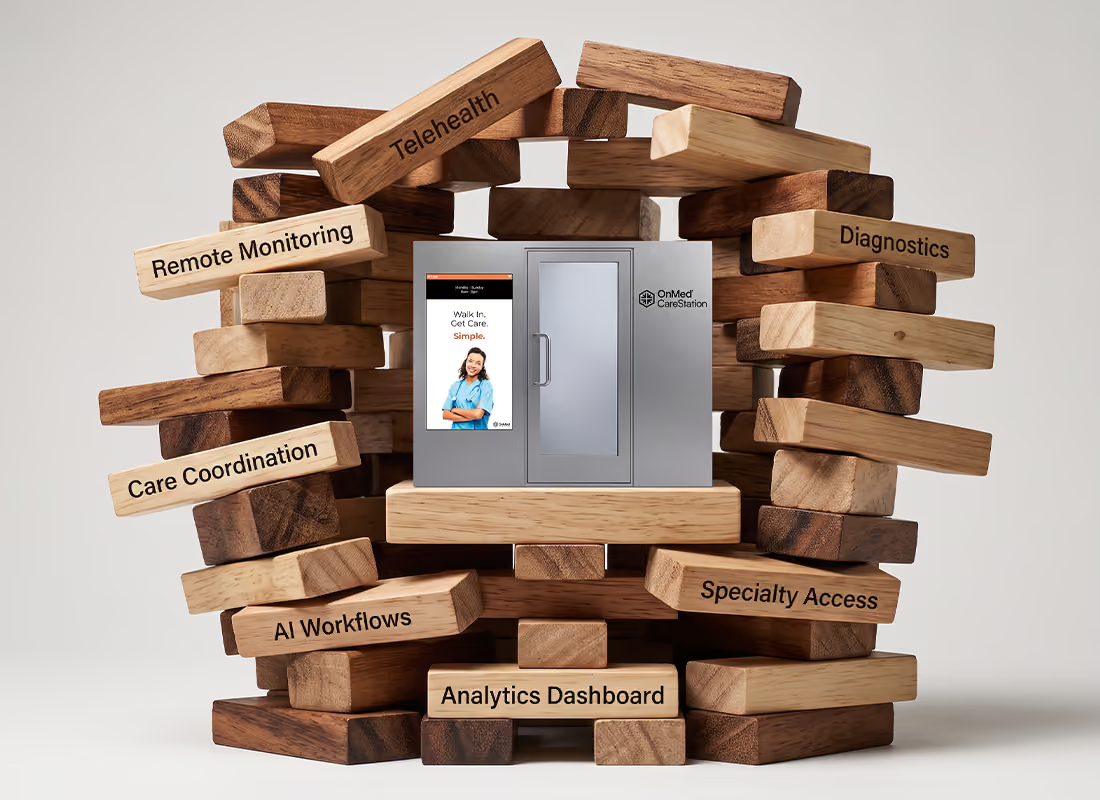
Every term here points to the same gap in healthcare access. See how the CareStation closes it.
Talk to Our Team