
A Federally Qualified Health Center (FQHC) is a community-based healthcare provider that receives federal support and enhanced reimbursement to deliver comprehensive primary, dental, and behavioral healthcare in medically underserved communities, regardless of a patient's ability to pay. FQHCs qualify for funding under Section 330 of the Public Health Service Act, and the designation traces back to 1965's community health center movement, though the formal FQHC status was created by the Omnibus Budget Reconciliation Act of 1990 and took effect October 1, 1991.
To qualify as an FQHC, an organization generally must receive (or be recommended by HRSA to receive, as a "look-alike") a Section 330 grant; serve a medically underserved area or population; operate with a sliding fee scale tied to income; maintain a governing board on which at least 51% of members are patients of the center; and run an active quality improvement program, per HRSA's Health Center Program Compliance Manual. In exchange, FQHCs receive several concrete federal benefits: cost-based reimbursement under the FQHC Prospective Payment System for Medicare and Medicaid, eligibility to purchase outpatient drugs at reduced cost through the 340B Drug Pricing Program, malpractice liability coverage through the Federal Tort Claims Act, and automatic designation as a Health Professional Shortage Area. "Look-alike" health centers meet all the same Health Center Program requirements but do not receive direct Section 330 grant dollars—they still receive the enhanced reimbursement and 340B benefits.
FQHCs are a foundational piece of the rural and underserved-community safety net: by HRSA's own figures, roughly one in eleven people in the U.S. relies on an FQHC or community health center for care, and the model was specifically built to reach populations—migrant and seasonal agricultural workers, people experiencing homelessness, residents of public housing—that conventional fee-for-service practices are structurally unlikely to serve. FQHCs are also eligible applicants under the HRSA Rural Health Care Services Outreach Program, giving them a direct path into additional rural funding.
An FQHC is a community-based healthcare provider that receives federal support and enhanced reimbursement to deliver comprehensive primary, dental, and behavioral healthcare in medically underserved communities, regardless of a patient's ability to pay. The designation was created by the Omnibus Budget Reconciliation Act of 1990 and took effect October 1, 1991.
FQHCs receive cost-based reimbursement under the FQHC Prospective Payment System for Medicare and Medicaid, eligibility to purchase outpatient drugs at reduced cost through the 340B Drug Pricing Program, malpractice coverage through the Federal Tort Claims Act, and automatic Health Professional Shortage Area designation.
A look-alike health center meets all the same Health Center Program requirements as an FQHC but does not receive direct Section 330 grant dollars—it still receives the enhanced reimbursement and 340B drug pricing benefits.
Roughly one in eleven people in the U.S. relies on an FQHC for care, per HRSA's own figures, with the model specifically built to reach populations like migrant workers, people experiencing homelessness, and public housing residents.
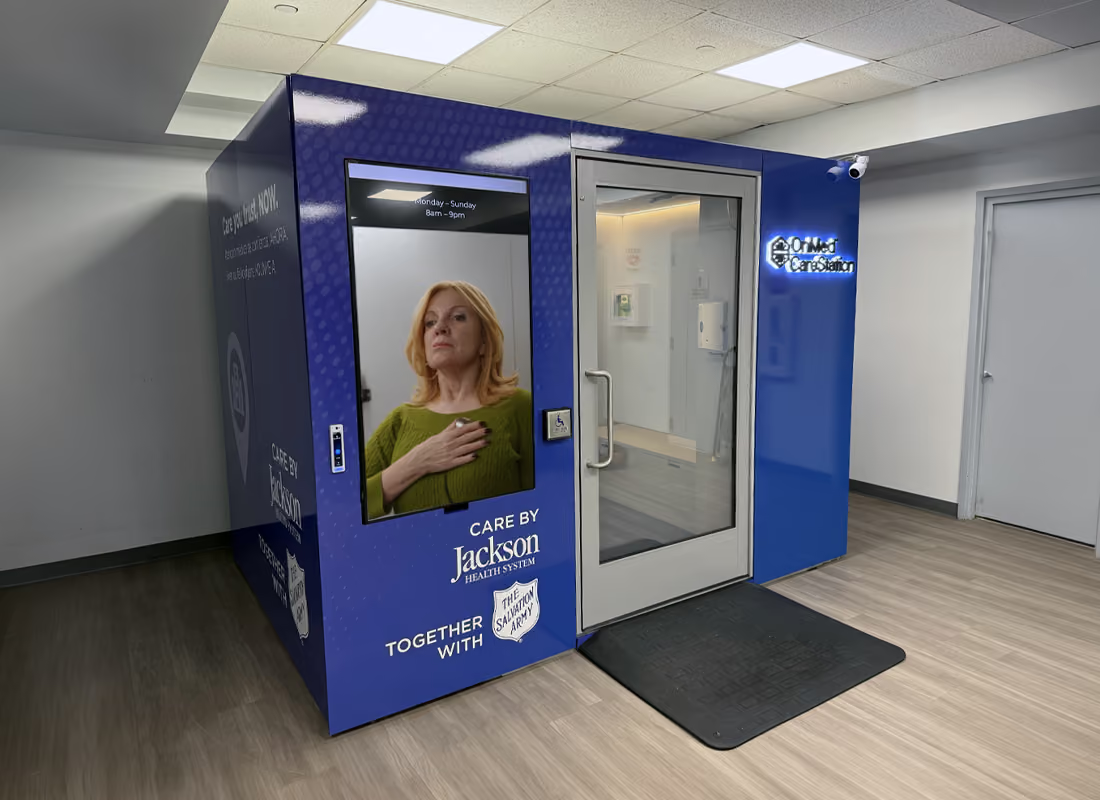
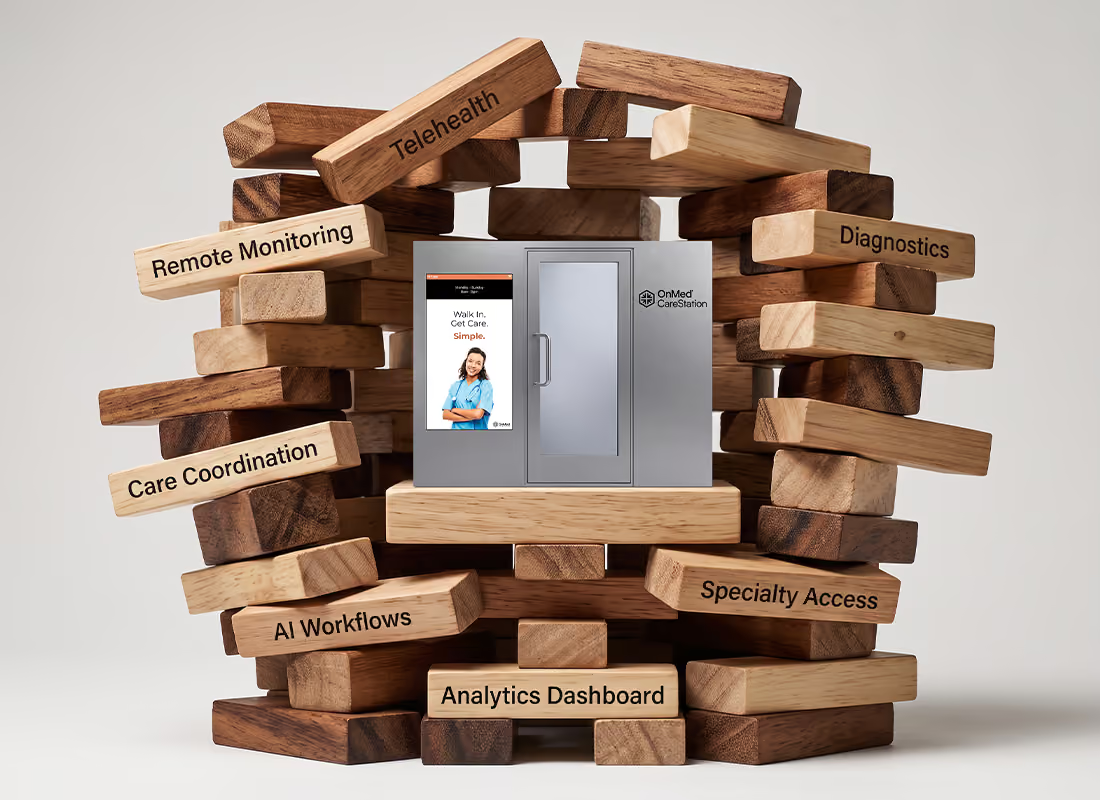
Every term here points to the same gap in healthcare access. See how the CareStation closes it.
Talk to Our Team