See how one rural Alabama community got same-day care without building a clinic.

When the Rural Health Transformation Program (RHTP) was announced, many healthcare leaders asked the same question: What will transformation actually look like?
The answer is beginning to emerge.
The Centers for Medicare & Medicaid Services (CMS) released its first report on Rural Health Transformation Program (RHTP) spending from December 29, 2025, through July 31, 2026. It offers an early look at how states are investing their share of the program's $50 billion commitment to rural healthcare. Covering the period the report details first-year funding obligations and provides insight into the strategies states are prioritizing to expand access, strengthen healthcare infrastructure, and improve rural health outcomes through September 2027.
One theme stands out above all others: states are investing in healthcare access, not just healthcare facilities.
For decades, rural communities have faced persistent barriers to care, including provider shortages, hospital closures, long travel distances, and healthcare deserts.
The first wave of RHTP investments suggests states are increasingly focused on solutions that bring care directly into communities. Across the country, funding is being directed toward community-based care models, telehealth infrastructure, care coordination programs, chronic disease management initiatives, and regional healthcare networks that help people access care closer to where they live.
The message is clear: healthcare transformation is increasingly being defined by access.
Healthcare workforce shortages remain one of the most significant challenges facing rural communities.
Many states are directing substantial RHTP investments toward recruitment, retention, training, and workforce expansion initiatives. That reflects a growing reality across rural America: many communities simply cannot recruit enough physicians, nurses, behavioral health professionals, and specialists to meet growing demand, a gap OnMed CEO, Karthik Ganesh, has written about as a core healthcare infrastructure challenge.
Successful transformation will require more than adding providers. It will require extending the reach of existing clinicians and creating new ways for patients to access care without requiring a provider to be physically present in every location.
The report also highlights a strong focus on chronic disease prevention and management.
That trend is not surprising. Three out of four American adults live with at least one chronic condition, making ongoing engagement, preventive care, and continuity of care essential to improving long-term health outcomes.
States are increasingly investing in care coordination, preventive health programs, and innovative models that help patients stay connected to care between traditional office visits. The goal is not simply treating illness. It is helping people stay healthier for longer.
While telehealth has expanded access for many patients, rural healthcare leaders understand that connectivity alone does not solve the challenges facing underserved communities.
Many rural areas continue to face provider shortages, healthcare deserts, transportation barriers, and limited healthcare infrastructure. Access to a video visit is important, but meaningful transformation requires solutions that create a lasting presence within the community.
The strongest models combine technology, care coordination, and human-delivered care to help connect patients to the right level of care at the right time.
Another trend emerging from early RHTP investments is the growing emphasis on community-based healthcare hubs. Across the country, states are funding hub-and-spoke models, regional care networks, community health hubs, and other initiatives designed to bring care closer to where people live.
Rather than requiring every service to be delivered through a hospital or traditional clinic, these models create local access points that help residents connect to healthcare services while reducing barriers related to geography, transportation, provider shortages, and limited healthcare infrastructure.
These investments reflect a broader shift in rural healthcare strategy: building stronger connections between communities and the healthcare system through permanent, convenient, and locally accessible points of care. The goal is not simply to deliver more care, but to make care easier to reach, easier to navigate, and easier to sustain over time.
The first wave of RHTP funding suggests that transformation is not being defined by larger facilities or more construction projects.
Instead, states are investing in solutions that:
For healthcare organizations, government leaders, and community stakeholders, the takeaway is clear: the future of rural healthcare belongs to solutions that make care easier to access, easier to sustain, and easier to integrate into everyday life.
Because transformation is not simply about building healthcare.
It is about ensuring people can actually reach it.
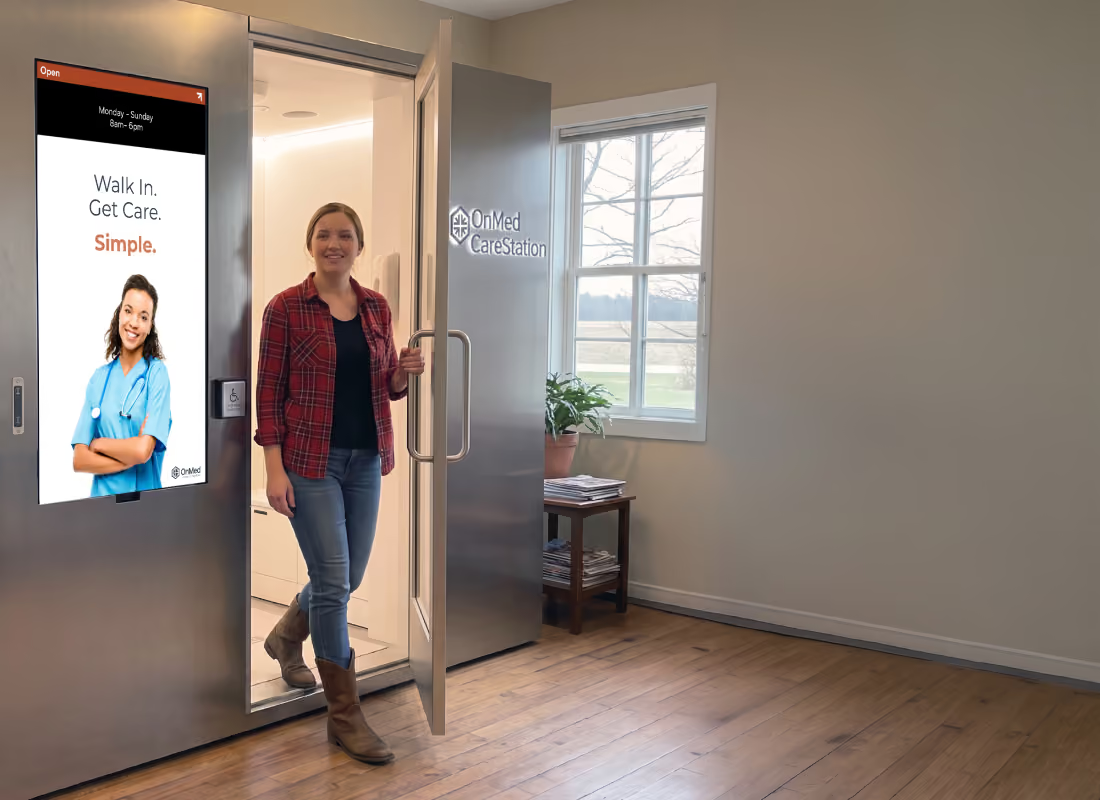
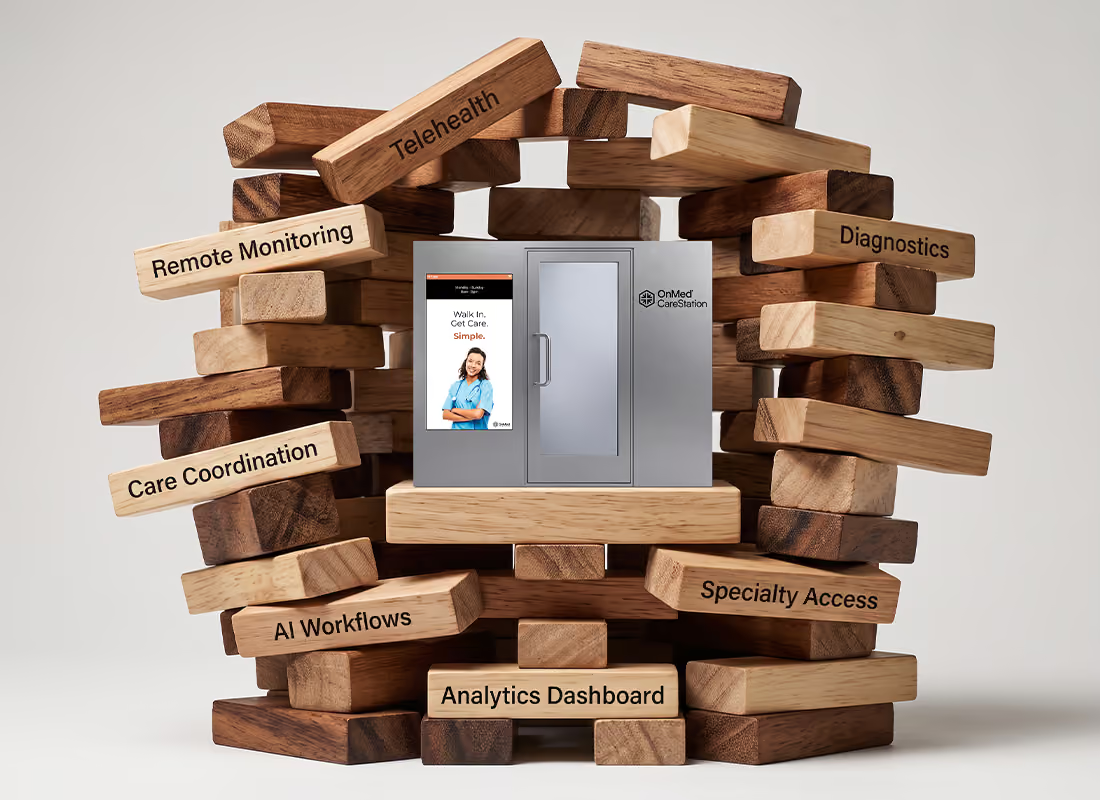
The OnMed CareStation® was built around a simple idea: healthcare should be available where people are. As an 8-by-10-foot "Clinic-in-a-Box," the OnMed CareStation® helps communities establish permanent points of care that can be deployed in approximately 45 days without constructing a new healthcare facility. By combining live, licensed clinicians, integrated diagnostic tools, care coordination, and referral support, the CareStation helps communities address healthcare deserts, workforce challenges, and gaps in access while bringing care closer to where people live, work, learn, and gather.
Why communities are choosing the OnMed CareStation®:
Unlike traditional telehealth kiosks, the CareStation combines live virtual care with integrated diagnostic tools, helping clinicians gather the clinical information needed to support diagnosis, treatment, referrals, and follow-up care. By creating a permanent point of care within the community, the CareStation helps reduce long travel distances and expand healthcare access without requiring the construction of a new healthcare facility.
Ready to learn how the OnMed CareStation® can help your community expand healthcare access? Contact us to explore how a permanent point of care can support your rural health transformation goals.
OnMed, the leader in tech-enabled hybrid-healthcare, is expanding access to care through the patented OnMed CareStation®, an 8x10 foot "Clinic-in-a-Box" that brings licensed clinicians and diagnostic tools through a fully integrated device and human platform. Remote clinicians can examine a patient, assess symptoms and provide treatment and prescriptions, blending the comprehensiveness and comfort of a traditional doctor's visit with the rapid scalability of virtual care. OnMed's tech ecosystem, and scalable infrastructure are designed to be deployed in communities where people live, work and gather, bringing access to healthcare without requiring the time, staffing and physical footprint of a traditional clinic. Learn more about OnMed and what we’re building.
The OnMed CareStation® is an 8-by-10-foot "Clinic-in-a-Box" that connects patients in real time with licensed clinicians and integrated diagnostic tools through a fully integrated device and human platform. Patients can walk in and receive a diagnosis, treatment plan, and e-prescription, often without an appointment or waiting room. Unlike traditional telehealth, the CareStation combines virtual care with diagnostic tools, real-time scans, and vital sign monitoring to support comprehensive clinical evaluations where care is needed most. See how a CareStation visit works.
CMS cited the OnMed CareStation® in the RHTP Notice of Funding Opportunity (NOFO) as a Rural Health Regional Excellence Initiative example demonstrating how innovation can expand access to healthcare. Read how states are deploying RHTP funding with the CareStation.
Both mobile clinics and fixed care sites can expand healthcare access, but they serve different purposes. Mobile clinics are effective for outreach, screenings, and periodic services, while fixed, always-on care sites provide a permanent point of care that supports continuity, chronic condition management, follow-up care, and ongoing patient engagement. Because RHTP is focused on sustainable healthcare access and long-term transformation, many communities are evaluating solutions that remain available year-round rather than only when a mobile unit is scheduled to visit. Read the full comparison of mobile clinics and always-on care.
Yes. CMS cited OnMed’s Alabama deployment through the Auburn Rural Health Initiative as a model in the RHTP NOFO, under the “Rural health regional excellence initiative” example within the “Sustainable access” goal. Read how states are deploying RHTP funding with the CareStation.
Follow along as we continue to redefine the healthcare landscape and bring the OnMed CareStation to communities across the U.S.