Chronic disease is one of the largest and most expensive challenges facing the U.S. healthcare system.
Three in four American adults live with at least one chronic condition, and more than half manage two or more, according to the CDC. Prevalence rises with age—more than 90% of adults 65 and older live with at least one chronic condition—but it isn't confined to older populations: 75% of adults ages 35 to 64 and 60% of adults ages 18 to 34 are affected as well.
Chronic diseases are the leading cause of death and disability in the United States, and they are a leading driver of the nation's $5.3 trillion in annual healthcare costs. Left unmanaged, a chronic condition doesn't stay contained: it typically requires ongoing monitoring, medication management, and periodic adjustment. Chronic conditions rarely worsen overnight. More often, they progress when gaps in care go unaddressed, eventually resulting in higher-cost interventions, emergency care, or hospitalization.

For organizations, chronic disease isn't an abstract public health statistic. It shows up directly in cost, utilization, and productivity, and the traditional healthcare system is struggling to keep up with it.
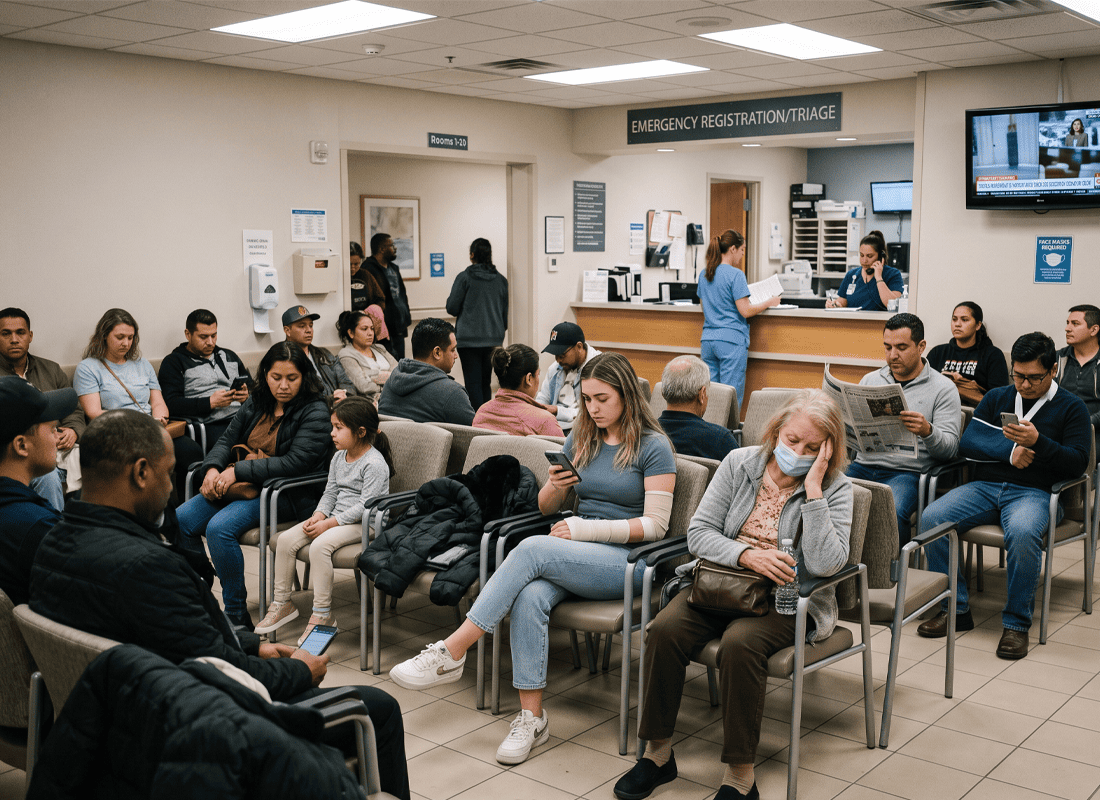
Access is the first breakdown point: half of all Americans delay care, and 120 million do so specifically because they lack adequate access. Eighty percent of U.S. counties are considered healthcare deserts, and the physician shortage is on track to exceed 200,000. Even where a provider is available, the average wait time to see a doctor runs 31 to 90 days.
Telehealth has closed some of that distance, but not all of it. 1 in 5 Americans can't access telehealth at all, and even a successful video visit can't take a blood pressure reading, listen to a heart, or run a lab test—so many chronic care visits still end in a referral or a follow-up appointment instead of a resolved concern.
Here's what that means by population:
Employers. Healthcare costs have increased by 50% over the past decade. Employers are spending more on healthcare than ever before, yet many continue to face rising costs, growing catastrophic claims, avoidable emergency department utilization, health-related productivity losses, and billions of dollars in unrealized value from underutilized wellness initiatives.
Poor employee health costs U.S. employers an estimated $575 billion annually in lost productivity, driven substantially by chronic conditions that go unmanaged during the workday. When employees can't get to care during business hours, conditions progress, absenteeism rises, and healthcare costs compound into next year's premium.
Government and rural health agencies. Rural and underserved communities face the primary care shortage most acutely, with some residents facing hours of travel for basic chronic care. That's part of why the CMS Rural Health Transformation Program—a $50 billion federal investment distributed to all 50 states over five years—explicitly names chronic disease prevention and management as an approved use of funds.
Educational institutions. Campus health centers face significant chronic-condition management pressures, with less staff and after-hours coverage, and students managing chronic conditions for the first time without a hometown provider nearby. Today's students are managing a broader range of interconnected physical, behavioral, hormonal, and reproductive health needs than any previous generation, often without a trusted provider nearby and while learning how to navigate the healthcare system on their own.
Health plans and payors. Unmanaged chronic disease is one of the most preventable drivers of avoidable utilization and rising specialty pharmacy spend. Every gap between a member and consistent care is a gap where a manageable condition can turn into an emergency claim.
Providers and health systems. With the physician shortage compounding every year, EDs increasingly absorb chronic care needs that were never meant to be treated there—straining capacity, driving up costs, and adding to clinician burnout.
None of this is solved by traditional care modalities. It's solved by rethinking how care gets delivered in the first place.
As chronic disease rates continue to rise, organizations are increasingly looking beyond traditional healthcare delivery models. Alternative care models are designed to bring care closer to the populations they serve, helping reduce barriers, improve engagement, and support earlier intervention.
These models can take many forms, including virtual care, remote monitoring, workplace healthcare solutions, community-based care programs, and provider-directed care locations embedded directly within the environments people use every day.
By bringing healthcare closer to where people live, work, learn, and gather, alternative care models can help organizations improve chronic disease management, strengthen population health , and address persistent gaps in care.
The common goal is simple: make it easier for people to engage with care consistently before a manageable condition becomes a costly health event.
But not all alternative care models are created equal. While many improve convenience, they don't always provide the clinical depth needed to evaluate, diagnose, and treat patients in a single encounter. Effective chronic disease management requires more than a connection to care. It requires access to licensed clinicians supported by diagnostic tools, or chronic disease management technology, that allow them to assess health concerns, identify risks, and direct the appropriate next step.
That's where the next generation of care delivery models is beginning to differentiate itself.
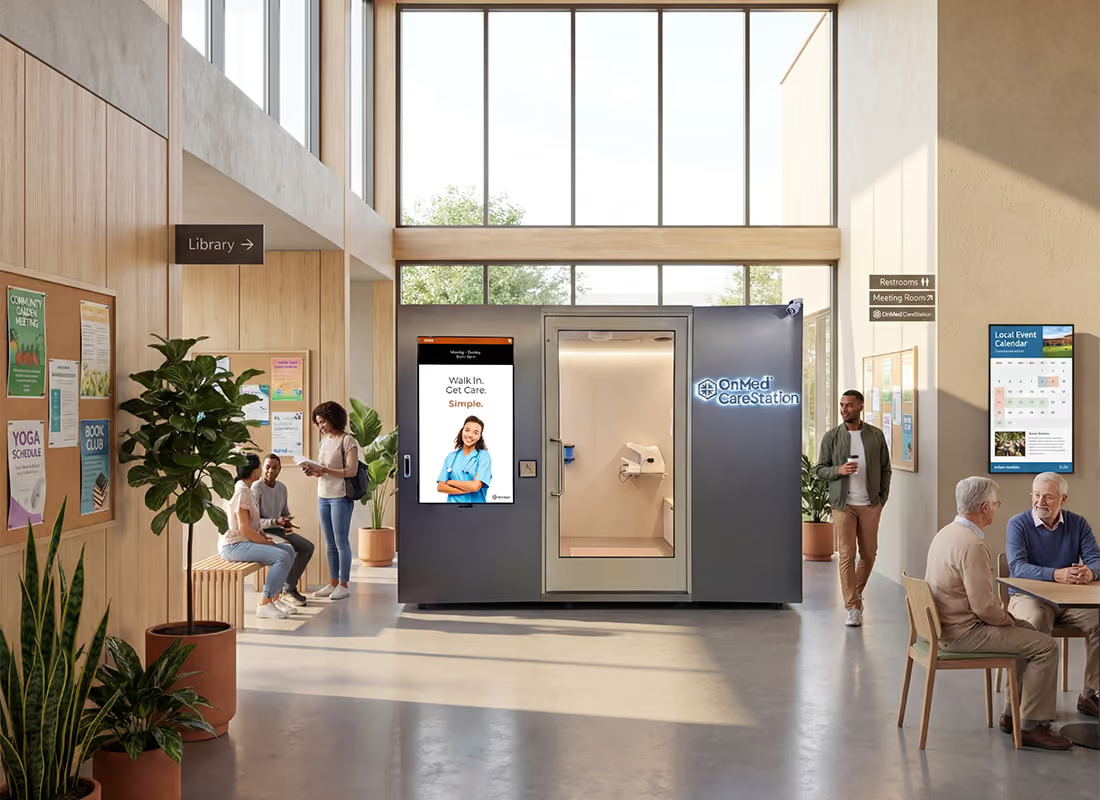
Closing this gap requires a model that puts a licensed clinician and real diagnostic tools directly where people already are.
That's what the OnMed CareStation™ is built to do. It's an 8×10 foot "Clinic-in-a-Box" that brings comprehensive, immediate care wherever people live, work, and learn—not by replacing traditional clinics or telehealth, but by filling the gap between them.
It also solves a second problem most benefits stacks and community health strategies never address: coordination. Most organizations already have good individual pieces in place—a telehealth line, a wellness app, a chronic disease program—but no one connecting what happens across them after the visit. The CareStation functions as the quarterback for everyday care: a convenient, consistent presence that focuses on prevention and ongoing care to facilitate continuity of care and long-term condition management. CareStation clinicians collect vital signs, deliver preventive care services, manage chronic conditions, guide patients throughout their care journey, centrally document every interaction and clinical finding, and provide care navigation, referrals, and follow-up support.
A patient walks in, presses Start, and connects in real time with a licensed clinician, guided through a private exam supported by integrated diagnostic tools: a temperature sensor, HD camera, otoscope, digital scale, blood pressure cuff (adult and pediatric), pulse oximeter, and stethoscope. It's tech-enabled, AI-powered, and always human-delivered. Because it needs only an electrical outlet—no construction, no permits—a new CareStation is operational in 45 days.
The results speak directly to the gaps above:
Mental health screenings for anxiety and depression are also available, in the same private encounter as physical care. Beginning Q4 2026, that scope expands to outpatient mental health visits with licensed mental health professionals.
The financial case follows the same pattern: employers running CareStations save north of $1,300 per employee before wellness programs are even fully rolled out, with significant returns once absenteeism and productivity gains are factored in. For health systems, providers describe the CareStation as a complement to their care team, not competition for it—extending clinical reach without adding to clinician workload. For government and rural agencies, it's deployable in less than two months, making it one of the fastest ways to put chronic disease funding directly to work in an underserved community.

Chronic disease isn't a future risk for the populations you serve. It's already the majority of them.
By connecting individuals with care earlier and helping guide them throughout their healthcare journey, the CareStation serves as a front door to care, supporting greater engagement, improved continuity, and more effective chronic disease management.
The CareStation gives employers, health plans, health systems, government agencies, and educational institutions a way to close that gap directly—bringing licensed, provider-directed, coordinated care to where people already live, work, and learn, before a manageable condition becomes a costly one.
Connect with OnMed to see how the CareStation can support your chronic disease management and population health strategy.
Everyday healthcare, anywhere.
Chronic disease management is the ongoing process of monitoring, treating, and managing long-term conditions such as diabetes, hypertension, asthma, obesity, and cardiovascular disease. Effective management requires consistent engagement with care before health concerns become costly health events.
Chronic diseases are a leading driver of healthcare costs, utilization, disability, and lost productivity in the United States. When gaps in care go unaddressed, chronic conditions can progress and result in higher-cost interventions, emergency care, or hospitalization.
Alternative care models are healthcare delivery approaches designed to bring care closer to the populations they serve. These models can include virtual care, remote monitoring, workplace healthcare solutions, community-based care programs, and provider-directed care locations.
By reducing barriers to care and supporting earlier intervention, alternative care models help people engage with care more consistently. Their goal is to address health concerns before a manageable condition becomes a costly health event.
While telehealth improves convenience, it does not provide the clinical depth needed to evaluate, diagnose, and treat many conditions in a single encounter. A video visit cannot take a blood pressure reading, listen to a heart, or run a lab test.
The OnMed CareStation combines licensed live clinicians with integrated diagnostic tools to help individuals engage with care where they live, work, and learn. It supports preventive care, chronic condition management, care coordination, and ongoing patient engagement.
By connecting individuals with care earlier and helping guide them throughout their healthcare journey, the CareStation serves as a front door to care. This supports greater engagement, improved continuity, and more effective chronic disease management.
The CareStation supports employers, health plans, health systems, government agencies, and educational institutions looking to improve chronic disease management, strengthen population health strategies, and close gaps in care.
Follow along as we continue to redefine the healthcare landscape and bring the OnMed CareStation to communities across the U.S.

.png)