When a hospital closes, communities lose more than a building.
They lose a trusted access point. Patients may need to travel farther for care. Preventive care may be delayed. Existing providers are asked to serve more people with the same resources.
Because emergency departments remain obligated under EMTALA to evaluate and stabilize anyone seeking emergency care, they often absorb even more demand when other access points disappear.
The challenge isn’t simply replacing a hospital. The challenge is restoring access.
For years, hospital closures were seen as a rural story. New research says otherwise. A Harvard T.H. Chan School of Public Health study published in JAMA on October 8, 2026 tracked U.S. acute care hospitals from 2010 to 2025.
The country is losing hospitals faster than it can open new ones, in both rural and urban areas including in cities that function as healthcare deserts in their own right.
"Many policymakers have been treating hospital closures as a rural problem, but our data show it's a national problem."
— Thomas Tsai, M.D., Harvard T.H. Chan School of Public Health
By the numbers, from the JAMA research letter:
Yet these numbers tell only part of the story. They don’t capture the patient who skips a checkup because the drive got longer, or the care team trying to cover a growing community with the same number of clinicians.
The study also found that hospitals serving the most socially vulnerable communities closed at 10%, versus 3.4% for those serving the least vulnerable, and that safety-net hospitals and those serving high numbers of Medicaid patients rarely opened.
The communities most likely to lose a hospital were the least likely to gain a new one. And while policy has focused on rural hospitals, including the $50 billion Rural Health Transformation Program (RHTP), no comparable support has been enacted for urban safety-net hospitals.
Closures have slowed in 2026, with six planned hospital and emergency department closures counted as of October 2026, compared with 23 in all of 2025. But hospital association leaders say financial distress is now showing up as service-line cuts, rural emergency hospital conversions, and consolidations, and most expect closures to rise in 2027 as Medicaid cuts take effect and enhanced premium tax credits expire.
Each of those changes can leave a community with fewer places to get care, even though the hospital is still open.
The question is not whether health systems can respond. They always have. The question is how to extend the reach of the care they’ve already built.

The findings mirror a challenge many health systems are already confronting. A systematic review in Clinical and Experimental Emergency Medicinee, published in 2026, found that emergency department crowding is driven by a combination of limited primary care access, workforce shortages, boarding, and broader system-wide capacity constraints.
In other words, emergency department crowding often begins long before a patient arrives at the emergency department.
As communities lose healthcare access points, the pressure on remaining providers and emergency departments only increases. When patients cannot access timely primary care, when other care sites are unavailable, or when healthcare resources become harder to reach, the emergency department remains the healthcare system's 24/7 safety net.
The consequences extend far beyond longer wait times. The review linked crowding to delayed care, increased mortality, longer inpatient stays, more patients leaving without being seen, and lower patient satisfaction.
At the same time, an estimated $168 billion is spent annually on avoidable emergency department visits, while 63% of emergency department clinicians report burnout.
This isn't a failure of emergency medicine.
It's a growing gap between where care is needed and where care is available.
And as communities lose access points to care, that gap becomes increasingly difficult for emergency departments alone to bridge.
Historically, expanding access meant building: a new clinic, a satellite office, an urgent care center. Today, that isn't always practical. Construction costs are high. Workforce shortages persist, and every health system is competing for the same limited pool of clinicians. Meanwhile, communities need solutions sooner than a multi-year construction project can deliver.
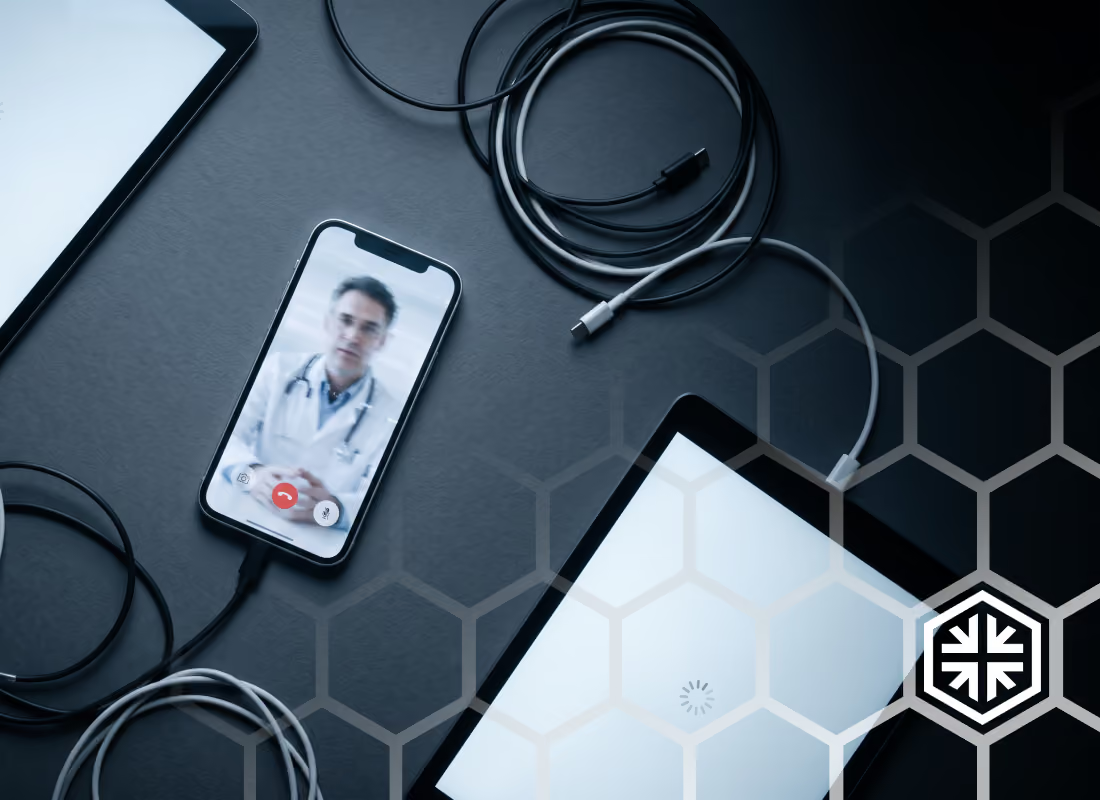
Telehealth has expanded access in meaningful ways. But a video visit alone often lacks the clinical information and diagnostic tools needed to support a more comprehensive evaluation. That leaves many health systems navigating a gap between traditional facilities and virtual care.
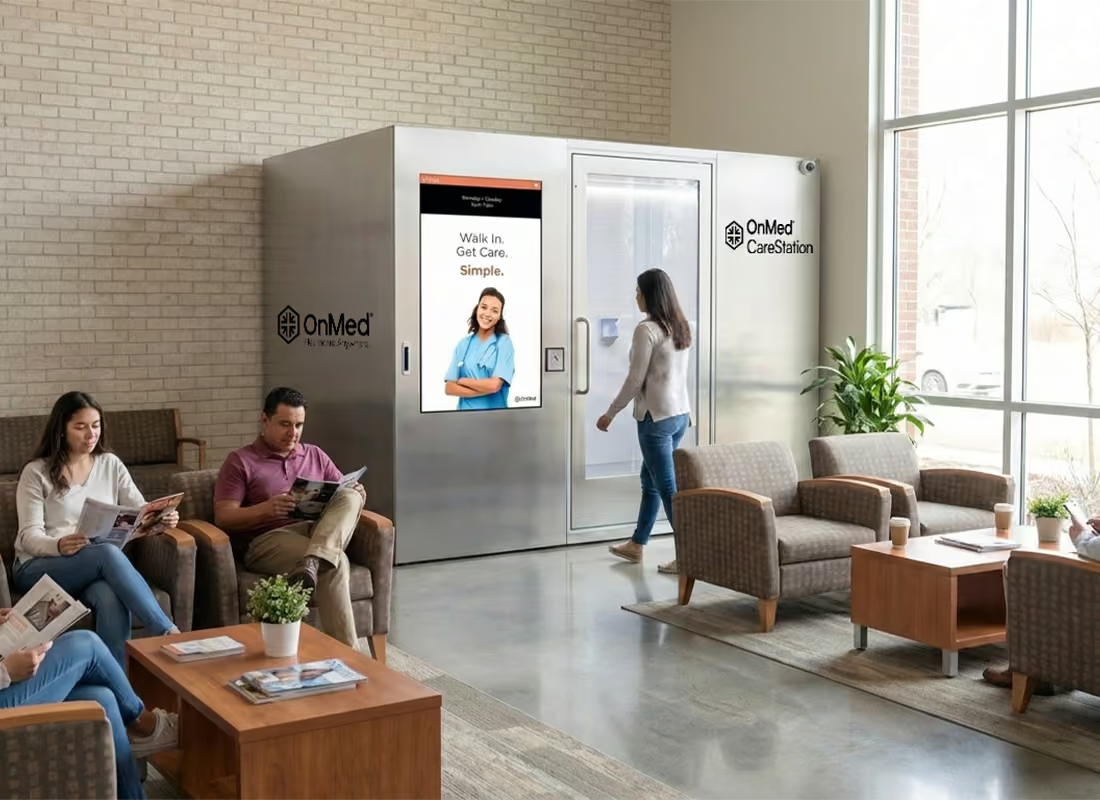
The OnMed CareStation® was designed to help bridge that gap.
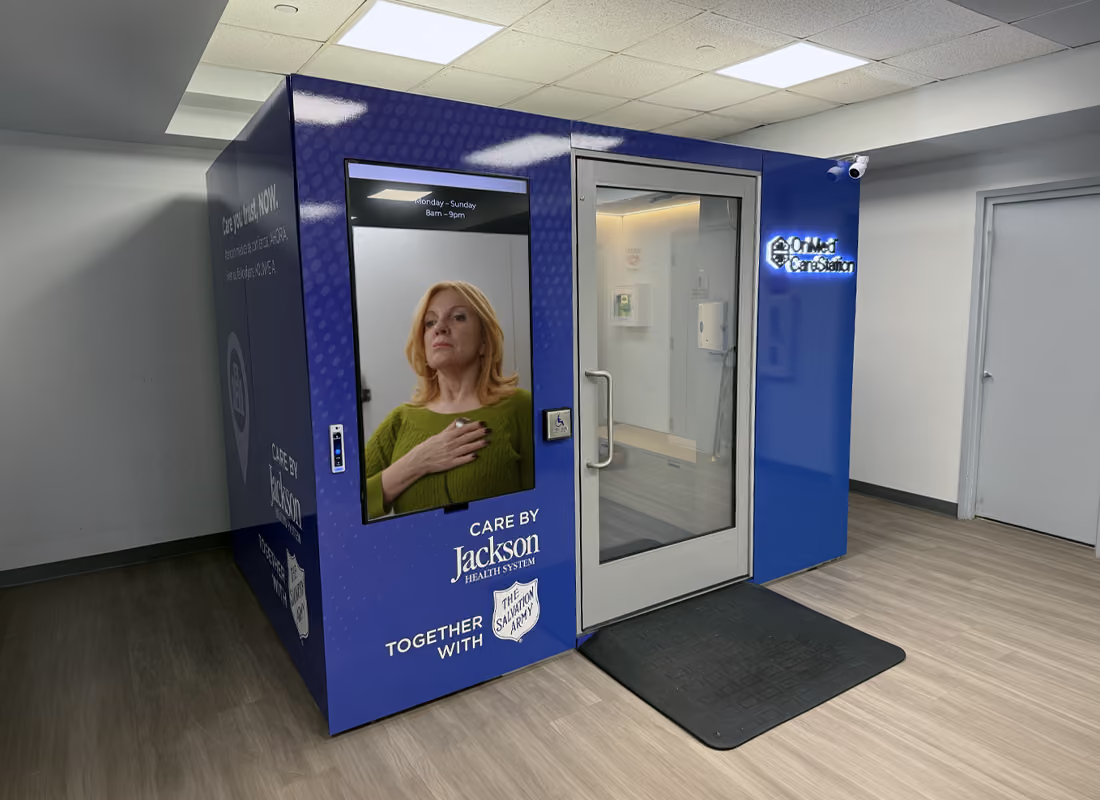
As an 8×10-foot "Clinic-in-a-Box," the CareStation combines live clinician care with integrated diagnostic tools to create a permanent healthcare access point in the community. It extends the reach of existing care teams without requiring another clinic, outpatient facility, or urgent care center.
For providers, that works in two directions.
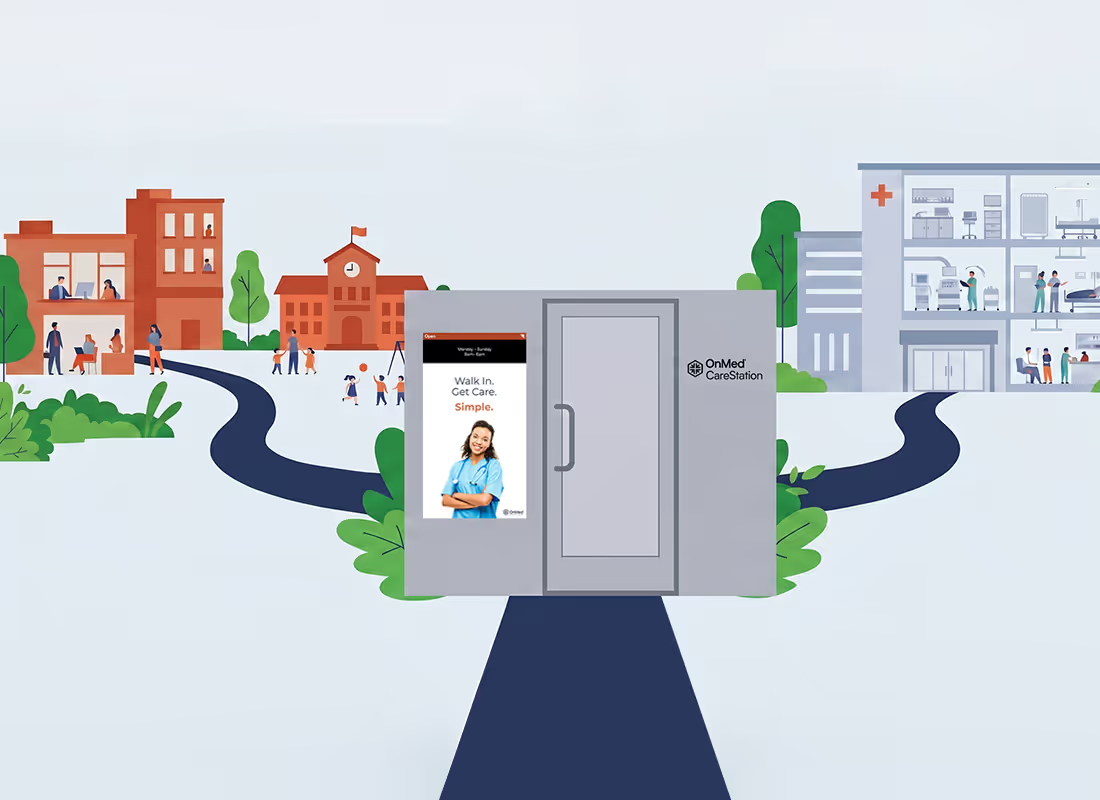
Inside your walls, a CareStation placed in or near the ED gives patients with non-emergent needs a dedicated pathway. The healthcare system keeps full control of triage and high-acuity cases stay in the ED. Following the appropriate medical screening process, eligible patients can be directed to the CareStation according to hospital protocols and Emergency Medical Treatment and Labor Act (EMTALA) requirements.
Beyond your walls, branded CareStations at employer sites, senior living communities, schools, retail locations, and community gathering spaces place care where people already live, work, learn, and travel, and connect them to follow-up care within your network.
For states and health systems exploring new ways to expand access, programs such as RHTP highlight a growing focus on care delivery models that reach patients beyond traditional facilities. That need isn’t limited to rural counties. Urban safety-net communities are losing access too.
Making care easier to reach does more than improve convenience. It creates the chance to connect with patients earlier, identify unmet needs, and bring people into ongoing care. OnMed data shows:
Many patients aren’t choosing between one provider and another. They’re choosing between getting care now, delaying it, or ending up in a higher-cost setting later. And 86% of CareStation patients can be treated without escalation to the emergency department, which keeps ED capacity available for the patients who need it most.
Communities across the country are facing growing healthcare access challenges. As health systems look for new ways to reach patients, extending care beyond traditional facilities is becoming increasingly important.
The OnMed CareStation® helps providers bring clinic-grade care closer to where people live, work, learn, and gather, while supporting continuity of care across the healthcare journey.
Learn how the OnMed CareStation® can help your organization extend access and strengthen connections to care. Contact us today to learn more.
No. A JAMA research letter from the Harvard T.H. Chan School of Public Health, published October 8, 2026, found that 9.1% of urban hospitals and 8.3% of rural hospitals closed between 2010 and 2025, nearly identical rates. Across the study period, 432 U.S. acute care hospitals closed and 216 opened.
Yes. Hospital association leaders report that financial distress is showing up as service-line cuts, rural emergency hospital conversions, and consolidations, and most expect closures to rise in 2027. Each of these can reduce the care available in a community without a hospital closing outright.
The OnMed CareStation® is an 8×10-foot "Clinic-in-a-Box" designed to expand healthcare access for the roughly 120 million Americans who lack adequate care. It combines one-on-one clinical consultation with the scalability of virtual care. Each CareStation includes diagnostic tools, real-time scans, and vital sign monitoring to deliver comprehensive visits at scale. About 80% of patients who use the CareStation do not have a primary care provider, and for many, it becomes their medical home. Our long-term vision is a national CareStation grid capable of serving up to 200 million lives annually by creating a scalable healthcare access infrastructure.
The CareStation is designed to integrate into established emergency department workflows. Following the appropriate medical screening process, eligible patients may be directed to the CareStation according to hospital protocols and regulatory requirements.
Yes. Health systems can deploy CareStations within or alongside emergency department workflows to support appropriate low-acuity patients while preserving resources for emergent care.
Follow along as we continue to redefine the healthcare landscape and bring the OnMed CareStation to communities across the U.S.