
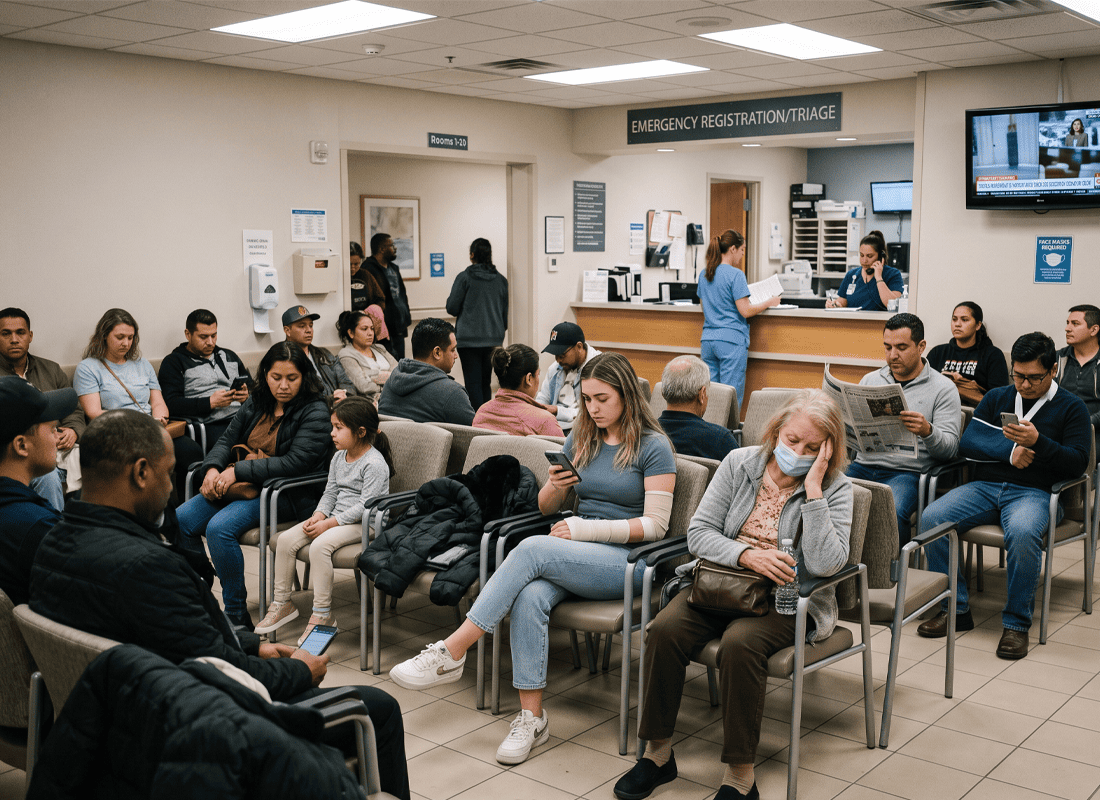
Healthcare Access Is Driving Patients to Higher-Cost Care
Jason wakes up with a persistent cough, chest congestion, and a fever.
He knows he should see a healthcare provider.
His primary care physician can't schedule an appointment for several weeks. The nearest urgent care center is a 30-minute drive away, and taking time off work means losing income.
So he waits.
A few days later, his symptoms worsen. What may have been manageable with earlier intervention now feels urgent.
Like millions of Americans, Jason isn't delaying care because he doesn't value his health.
He's delaying care because access isn't available when and where he needs it.
This challenge is becoming increasingly common across employers, health systems, universities, and communities. While emergency departments and urgent care centers remain essential parts of the healthcare ecosystem, many organizations are exploring hybrid care delivery models as a way to expand access, reduce avoidable utilization, and connect patients with care sooner.
The question is no longer whether patients need healthcare options.
The question is whether existing care models can consistently provide timely, convenient access before conditions become more serious and more expensive to address.
When patients can't access care through traditional channels, they often seek help through the two most available options: emergency departments and urgent care centers.
Both play important roles in healthcare delivery, but each was designed to solve a specific problem.
Emergency departments are built to manage acute, life-threatening conditions.
Urgent care centers are designed to treat non-emergency illnesses and injuries that require prompt attention.
The challenge is that many patients fall somewhere in between.
They need care quickly but not necessarily emergency care. They need evaluation, guidance, and treatment before their condition escalates.
When those options aren't readily available, healthcare organizations often see rising costs, avoidable utilization, and delayed treatment.
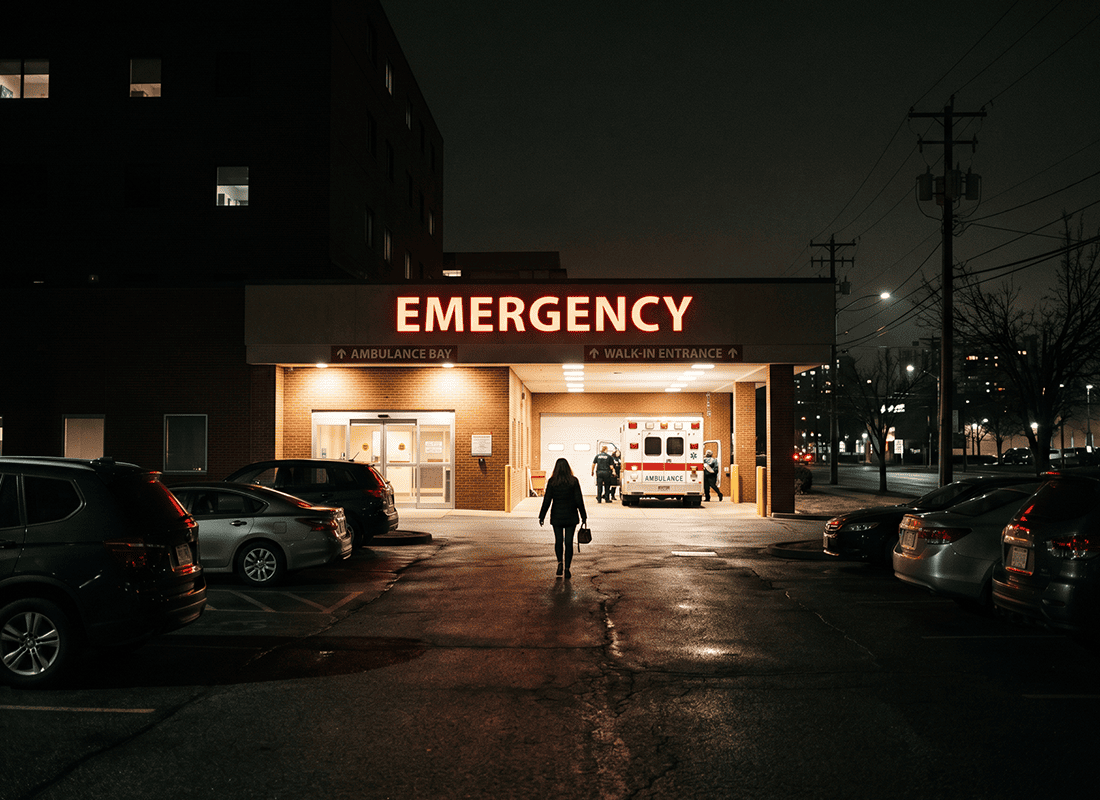
Emergency rooms serve as the front line for serious and life-threatening medical needs.
Patients should seek emergency care for conditions such as the following, per MedlinePlus's guide to recognizing medical emergencies:
- Chest pain
- Stroke symptoms
- Severe breathing difficulties
- Significant trauma
- Severe allergic reactions
- Uncontrolled bleeding
- Loss of consciousness
No alternative care model can replace the critical role of emergency departments.
However, emergency departments increasingly serve another function: the healthcare system's default access point.
For many patients, the ER is the only place where care is guaranteed regardless of appointment availability, office hours, or provider shortages. In fact, under the Emergency Medical Treatment and Labor Act (EMTALA), hospitals with emergency departments are required to provide a medical screening examination and stabilizing treatment for emergency medical conditions, regardless of a patient's ability to pay. These requirements have helped make the ER the most reliable point of access in healthcare, particularly when other care options are unavailable or difficult to navigate.
Healthcare organizations frequently encounter a difficult reality: patients often enter the healthcare system through the highest-cost setting because lower-acuity options were unavailable, inaccessible, or difficult to access.
- 24/7 availability
- Advanced clinical capabilities
- Access to specialty care
- Comprehensive emergency treatment
- High cost of care
- Long wait times for non-emergent conditions
- Overcrowding
- Limited focus on prevention and ongoing care
- Limited continuity of care and long-term condition management
- Not designed for routine healthcare needs
Emergency departments are exceptionally effective at treating emergencies. They are less effective as a scalable solution for everyday healthcare access and care delivery.

Urgent care centers help fill the gap between primary care and emergency medicine.
According to Mayo Clinic Health System, urgent care centers provide treatment for many common conditions, including:
- Respiratory infections
- Flu symptoms
- Ear infections
- Minor injuries
- Sprains and strains
- Allergic reactions
- Skin conditions
For patients seeking same-day care, urgent care centers offer a convenient alternative to the emergency room.
In many cases, they reduce costs and improve access compared to hospital-based care. However, urgent care is fundamentally designed around episodic treatment. Most visits focus on resolving an immediate issue rather than managing long-term health needs.
When additional evaluation, testing, or follow-up is needed, patients are often referred elsewhere.
- Faster access than many physician offices
- Lower cost than emergency care
- Walk-in convenience
- Treatment for many common illnesses and injuries
- Limited continuity of care
- Limited visibility into a patient's broader healthcare history and ongoing health needs
- Geographic access challenges
- Staffing constraints
- Additional referrals may be required
- Limited support for chronic condition management
Urgent care improves convenience. It does not always improve care continuity or long-term healthcare access.
Hybrid care delivery emerged in response to gaps that traditional healthcare models were never designed to solve independently.
Rather than relying exclusively on physical facilities or fully virtual encounters, hybrid care combines multiple elements into a more connected care experience.
Depending on the model, hybrid care may include:
- Virtual clinician consultations
- Real-time clinical evaluation
- Integrated diagnostic tools
- Vital sign collection
- Preventive care services
- Chronic condition management
- Guidance throughout the care journey
- Centralized documentation of patient interactions and clinical findings
- Care navigation, referrals, and follow-up support
While emergency departments are designed for acute intervention and urgent care centers focus on episodic treatment, hybrid care delivery is designed to expand convenient access to care while creating a more connected healthcare experience. By supporting preventive care, chronic condition management, centralized documentation of patient interactions and clinical findings, care coordination, and navigation across the healthcare system, hybrid models provide greater visibility across the patient journey and help individuals access the right level of care at the right time.
The goal is not to replace emergency departments or urgent care centers.
The goal is to help patients receive appropriate care earlier, before conditions become emergencies.
| Category | Emergency Room | Urgent Care | Hybrid Care Delivery |
|---|---|---|---|
| Best For | Life-threatening emergencies, severe injuries, and acute medical crises | Non-emergency illnesses and injuries requiring same-day care | Routine healthcare needs, preventive care, chronic condition management, and early intervention |
| Access | 24/7 availability | Walk-in convenience with varying hours | Convenient, technology-enabled access where people live, work, and learn |
| Clinical Capabilities | Advanced emergency treatment and specialty services | Treatment for common illnesses and injuries | Live virtual clinician consultations supported by integrated diagnostic tools and real-time clinical evaluation |
| Continuity of Care | Limited focus on ongoing care and long-term management | Primarily episodic care with limited continuity | Supports care coordination, centralized documentation, navigation, and follow-up |
| Cost | Highest-cost setting | Lower cost than ER visits | Supports earlier intervention before higher-cost care becomes necessary |
| Primary Advantage | Comprehensive emergency care, 24/7 | Fast treatment for non-emergent conditions | Combines convenience, clinical evaluation, and care coordination |
| Primary Limitation | Not designed for routine healthcare needs (long wait, expensive) | Limited visibility broader healthcare history and ongoing needs | Not appropriate for life-threatening emergencies |
While each model serves an important purpose, organizations are increasingly exploring hybrid care delivery as a way to expand access, improve care coordination, and help patients receive appropriate care earlier, before conditions become emergencies.
One of the greatest opportunities for hybrid care delivery is supporting earlier intervention.
Many common healthcare concerns begin as manageable conditions that become more complex when treatment is delayed.
Patients may postpone care because of:
- Distance to healthcare facilities
- Provider shortages
- Transportation challenges
- Work schedules
- Appointment wait times
- Limited local healthcare resources
When those barriers prevent timely treatment, costs often rise and outcomes may worsen. By creating convenient access to care and simplifying the patient journey, hybrid care models can help organizations bring healthcare closer to where people live, work, and learn.
.png)
Emergency rooms and urgent care centers will always play an important role in the healthcare ecosystem. But as organizations and communities face growing demand, provider shortages, and persistent access challenges, many are looking for new ways to bring care closer to the populations they serve.
The OnMed CareStation® was designed to expand access to care by combining real-time clinician visits with integrated diagnostic tools in a private, walk-in environment. Deployed where people live, work, learn, and gather, the CareStation helps remove common barriers to care, including distance, scheduling constraints, and limited provider availability.
CareStations require no appointment for patients and can be deployed in as little as 45 days, helping organizations expand healthcare access without the time, cost, and disruption of traditional construction.
Whether supporting employees, students, patients, or community members, the CareStation enables organizations to provide convenient access to primary and urgent care services without the infrastructure requirements of a traditional clinic.
Learn how the OnMed CareStation® is helping employers, health systems, universities, and communities expand healthcare access and meet people where they are.
Contact our team to learn more.
The OnMed CareStation® is an 8×10-foot "Clinic-in-a-Box" designed to expand healthcare access for the roughly 120 million Americans who lack adequate care. It combines one-on-one clinical consultation with the scalability of virtual care. Each CareStation includes diagnostic tools, real-time scans, and vital sign monitoring to deliver comprehensive visits at scale. About 80% of patients who use the CareStation do not have a primary care provider, and for many, it becomes their medical home. Our long-term vision is a national CareStation grid capable of serving up to 200 million lives annually by creating a scalable healthcare access infrastructure.
As per MedlinePlus's guide to recognizing medical emergencies, patients experiencing life-threatening symptoms such as chest pain, stroke symptoms, severe bleeding, major trauma, or significant breathing difficulties should seek emergency medical care immediately.
Urgent care centers primarily provide episodic treatment for non-emergency conditions. Hybrid care delivery combines convenient access with clinical assessment capabilities, preventive care services, and pathways for ongoing care.
Across non-education deployments, 37% of CareStation patients return voluntarily within 12 months with no reminder, no mandate, and nothing forcing their hand. In a healthcare system where urgent care follow-up rates are below 8% and retail clinic chains have shuttered nationwide after failing to earn continuity, that 37% is not a utilization metric. It is a trust metric. It represents patients who experienced care that felt worth returning to—care that resolved their condition, gave them clarity about next steps, and made them feel genuinely cared for. Trust built that return rate. And in a healthcare system that has failed for decades to earn continuity with underserved populations, trust is the outcome that precedes every other outcome.
CareStations are placed in trusted community locations that people already visit regularly. These include libraries, community and senior centers, employer sites, schools and government facilities. The platform is currently deployed across Alabama, Connecticut, Florida, Georgia, Texas, Nevada, South Carolina and Puerto Rico, with expansion underway. Access challenges extend beyond rural geography: approximately 80% of U.S. counties experience some form of healthcare access gap, including urban and suburban areas where long wait times, clinician shortages, high costs or cultural barriers limit access, so locations beyond rural areas are also a strong fit.
Follow along as we continue to redefine the healthcare landscape and bring the OnMed CareStation to communities across the U.S.