Indian Health Service (IHS) Facility & Access Grants are a set of federal programs that help federally recognized tribes build, expand, or modernize healthcare facilities serving American Indian and Alaska Native communities. The umbrella includes the Small Ambulatory Program—authorized under Section 306 of the Indian Health Care Improvement Act—which funds construction of ambulatory care clinics, the Capital Infrastructure Program, which funds efficiency upgrades to existing facilities, and the Joint Venture Construction Program (JVCP), under which a tribe funds construction itself while IHS commits to funding staffing and operations afterward.
IHS serves roughly 2.8 million American Indians and Alaska Natives across 575 federally recognized tribes in 37 states, and demand for facility investment consistently outpaces available funding—IHS's overall FY2026 budget totals $8.1 billion, but facility needs, including a backlog of roughly 3,675 sanitation facility projects requiring about $3.4 billion to complete, routinely exceed what Congress appropriates in a given year. To qualify for Small Ambulatory Program funding, a facility generally must serve at least 500 eligible AI/AN people annually and a service-area population of at least 2,000. Under a JVCP agreement, the tribe uses tribal, private, or other non-IHS funds to build or acquire a facility, and in exchange IHS requests that Congress fund 20 years of staffing and operations through a no-cost lease—a mechanism that, in 2025, expanded for the first time to cover long-term care and skilled nursing facilities, with projects selected in Idaho and Alaska. Proposals are reviewed and prioritized by each IHS Area Office before moving to national review. Many tribes now administer these programs themselves rather than relying on direct federal operation: under the Indian Self-Determination and Education Assistance Act, tribes currently administer more than half of all IHS resources through self-governance compacts and contracts, taking on the administrative and programmatic roles federal staff previously carried out.
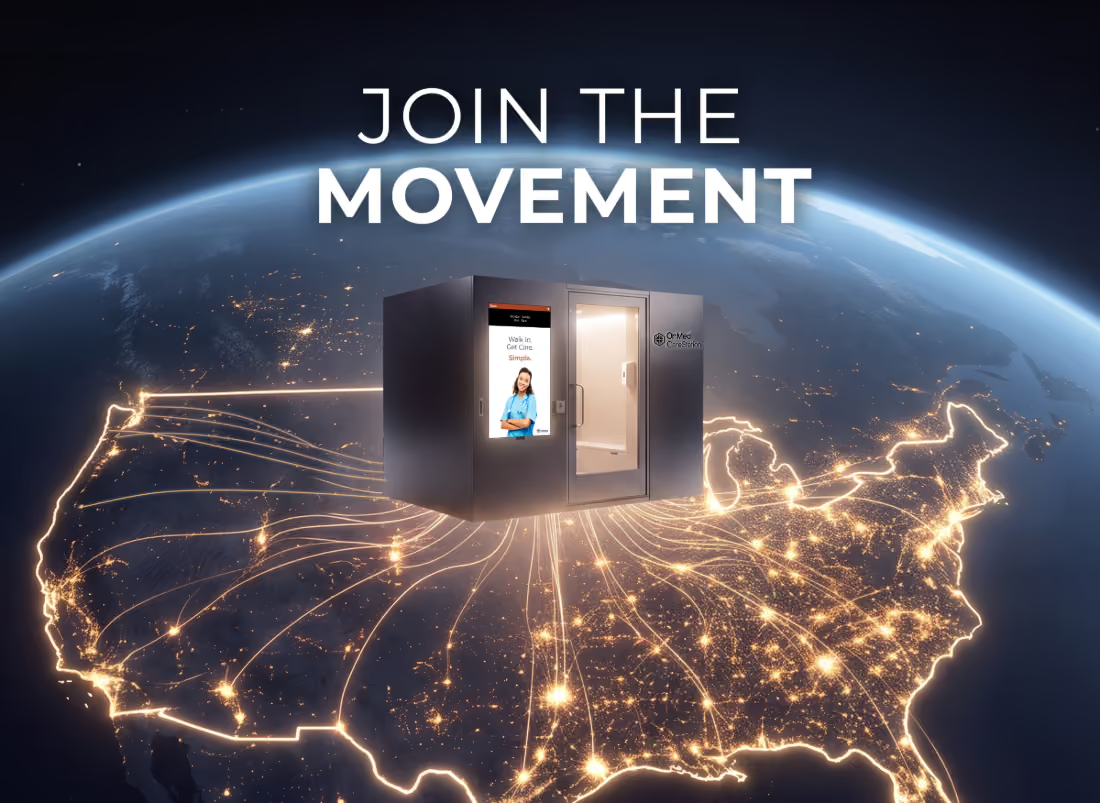
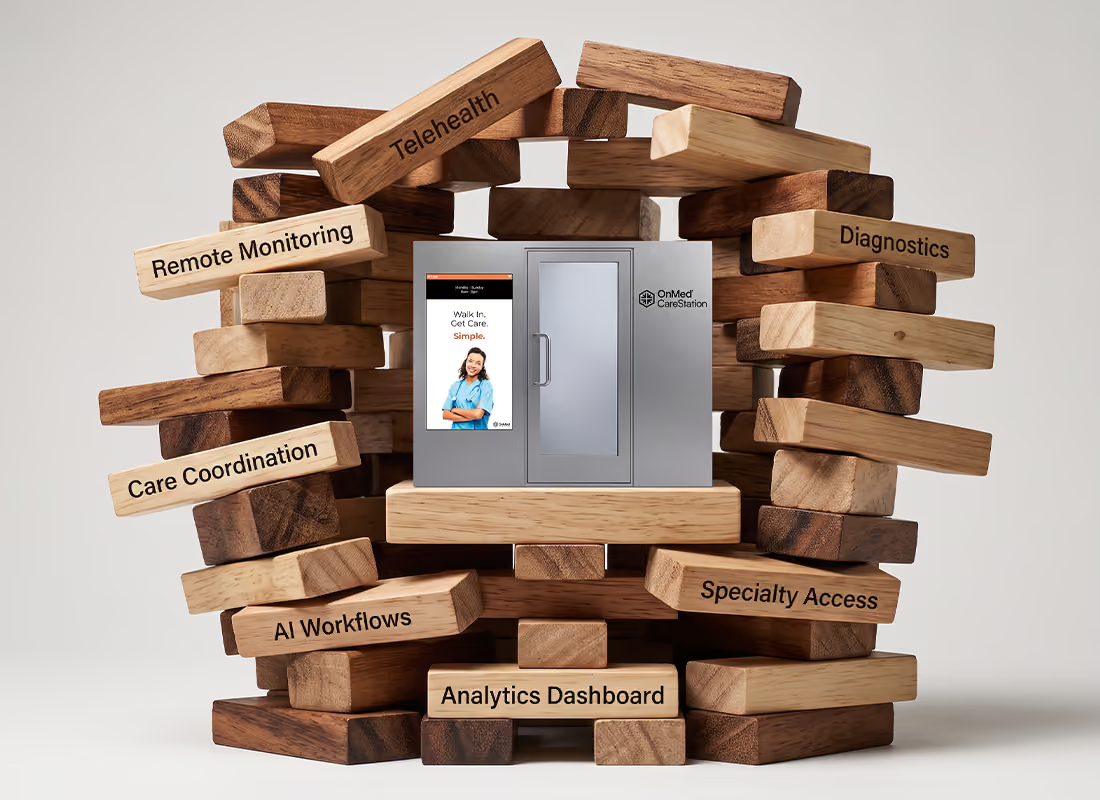
A deployable model like the OnMed CareStation® could extend healthcare access into tribal communities without new construction—OnMed's piece on building a healthcare model for Tribal Nations outlines how a model like this could support IHS/638, Medicaid, HUD, and RHTP-funded initiatives while keeping care under Tribal sovereignty. OnMed does not currently have an active CareStation deployment with a Tribal Nation.
IHS provides care to roughly 2.8 million American Indians and Alaska Natives across 575 federally recognized tribes in 37 states, through a network of more than 600 federal and tribal health facilities. The agency's FY2026 budget totals $8.1 billion, but facility needs—including a backlog of roughly 3,675 sanitation facility projects requiring about $3.4 billion to complete—consistently outpace what Congress appropriates in any single year.
A facility generally must serve at least 500 eligible American Indian/Alaska Native people annually, within a service area of at least 2,000 people, to qualify for Small Ambulatory Program funding. The program is authorized under Section 306 of the Indian Health Care Improvement Act and funds construction of ambulatory care clinics. Proposals are reviewed and prioritized by each IHS Area Office before advancing to national-level review.
A model like the OnMed CareStation® can deploy in about 60 days without new construction, giving a Tribal Nation a way to extend care into a housing development, school, or community center. This avoids competing for the same scarce provider workforce a new clinic would require, since the CareStation integrates with existing IHS and Tribal health teams rather than replacing them.
Every term here points to the same gap in healthcare access. See how the CareStation closes it.
Talk to Our Team