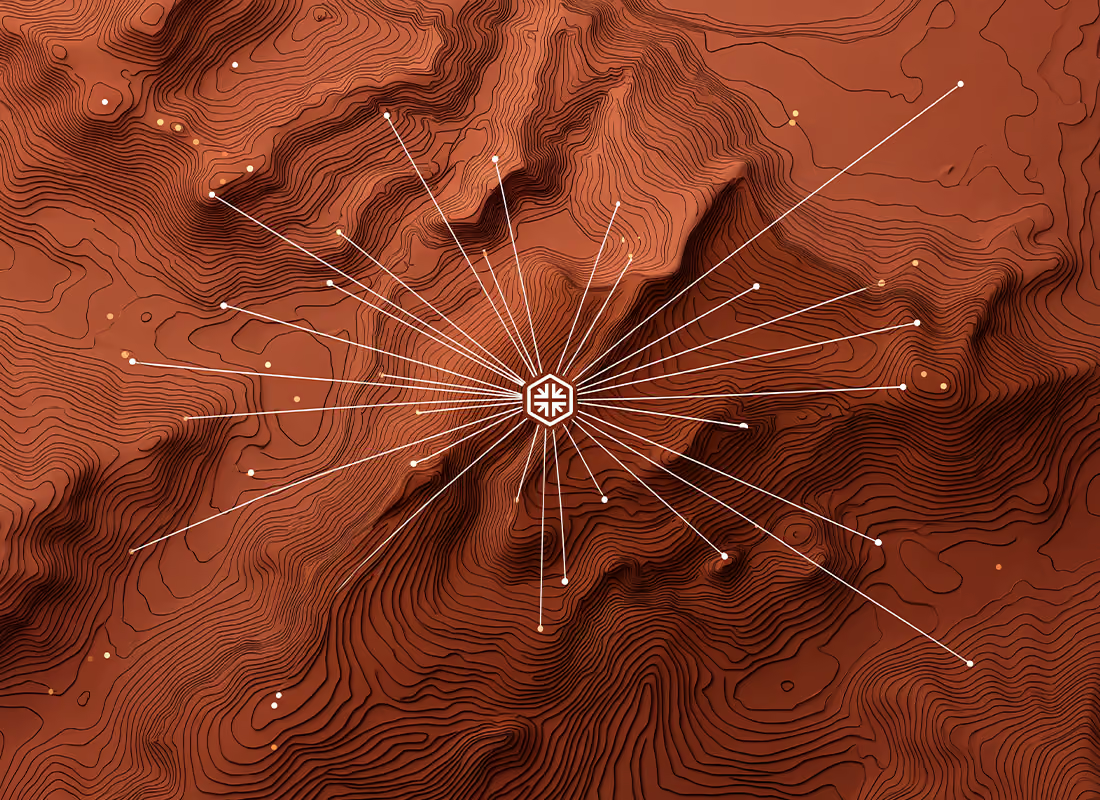
A Tribal Health Director looks over a map of the Nation, tracing the miles between communities and the care they need.
The challenge isn't identifying where care is needed. The challenge is reaching everyone who needs it. Every mile between a patient and care is a barrier no community should have to accept.
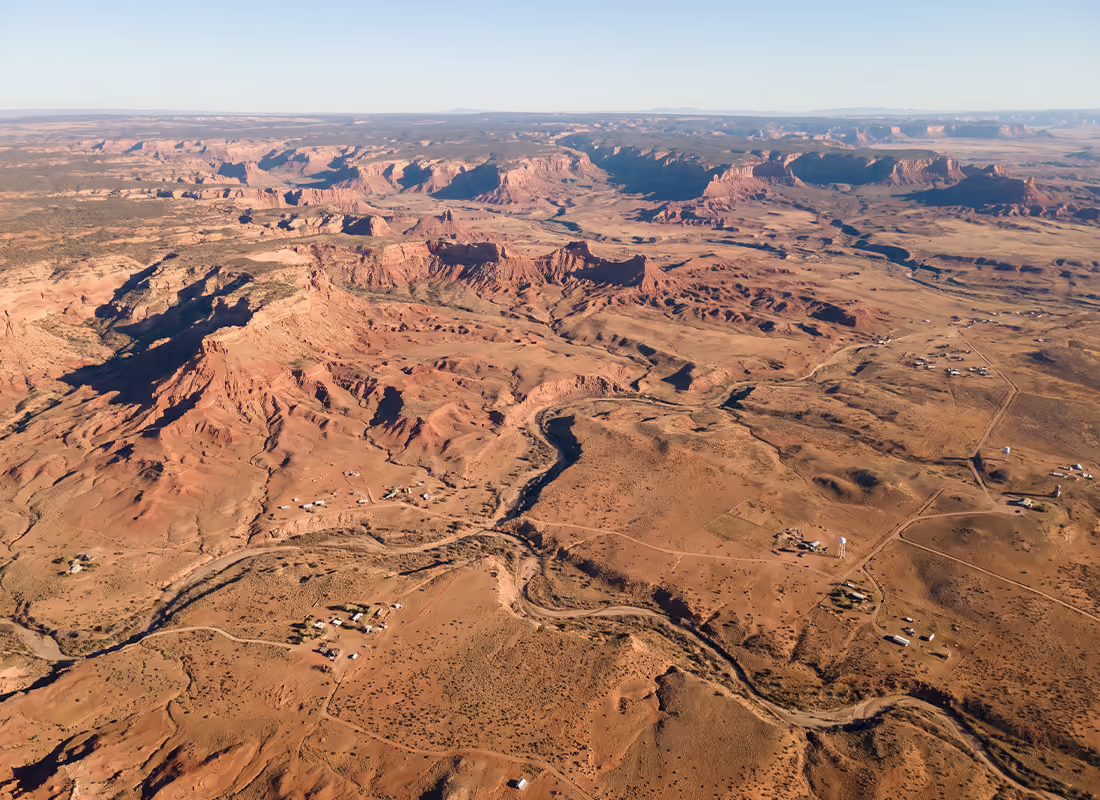
One community sits hours from the nearest clinic. Another struggles with transportation. Community Health Representatives are doing everything they can to connect residents with services, but there are only so many hours in the day. Existing providers are stretched thin, recruiting new clinicians remains difficult, and demand continues to grow.
For many Tribal Nations, this isn't a unique situation. It's a daily reality.
Across Tribal Nations, communities continue to face provider shortages, geographic isolation, transportation barriers, and generations of chronic underfunding. Indian Health Service spending remains roughly half that of Medicaid on a per-person basis, while physician vacancy rates continue to challenge many communities. These realities have contributed to some of the widest health disparities in the country.
By the numbers:
Yet these numbers tell only part of the story. They do not capture the resilience of Tribal communities or the trust that must be earned before any new healthcare initiative can succeed.
They also explain why so many Tribal Nations have taken healthcare into their own hands. More than two-thirds of federally recognized tribes now administer at least some of their own health programs, and more than half of the IHS budget is managed directly by tribes through self-governance authority. The effort to close these healthcare access gaps has increasingly been led by Tribal Nations themselves.
The question is not whether Tribal Nations can lead.
They already are.
The question is how to extend the reach of the care systems they have already built.
When communities need to expand Tribal healthcare access, the traditional answer is often to build another clinic.
But Tribal leaders know what comes with that approach: years of planning, construction costs, capital investment, staffing requirements, and competition for the same limited provider workforce that healthcare organizations across the country are already struggling to recruit.
Telehealth helps address some of these challenges, but telehealth alone has limitations. A video visit cannot listen to a patient's heart, take a blood pressure reading, perform a thermal scan, or support many of the assessments clinicians rely on to make informed decisions. And in many of the rural and remote communities that need care most, reliable broadband for even a basic video visit isn't a given.
This leaves many Tribal Nations facing a gap between traditional facilities and virtual care. Not because they lack vision. Not because they lack leadership. But because the tools available have historically forced them to choose between scale and clinical capability. While a traditional facility can take years to plan and build, a OnMed CareStation™ can typically deploy in approximately 60 days.
Before discussing technology, it's worth discussing Sovereignty.
Tribal healthcare delivery differs from Tribal Nation to Tribal Nation. Some operate under Indian Health Service direct-service models. Others manage healthcare programs under Public Law 93-638 self-governance authority. Alaska follows its own regional Tribal health organization structure. Understanding those differences is fundamental to building trust and creating partnerships that respect Tribal governance.
For that reason, OnMed begins with a simple principle: the Tribal Nation remains in control. Health data belongs to the Nation. Care protocols are directed by the Nation, including referral pathways into traditional healing practices where the Nation's health department chooses to include them. Branding and identity belong to the Nation. And any deployment works within the health system the Nation has already built, rather than asking leadership to adopt someone else's model.
So what happens when a Nation wants to expand access without building another facility?
What happens when care needs to reach a housing development, school campus, community center, or gaming enterprise that may sit miles from the nearest clinic?
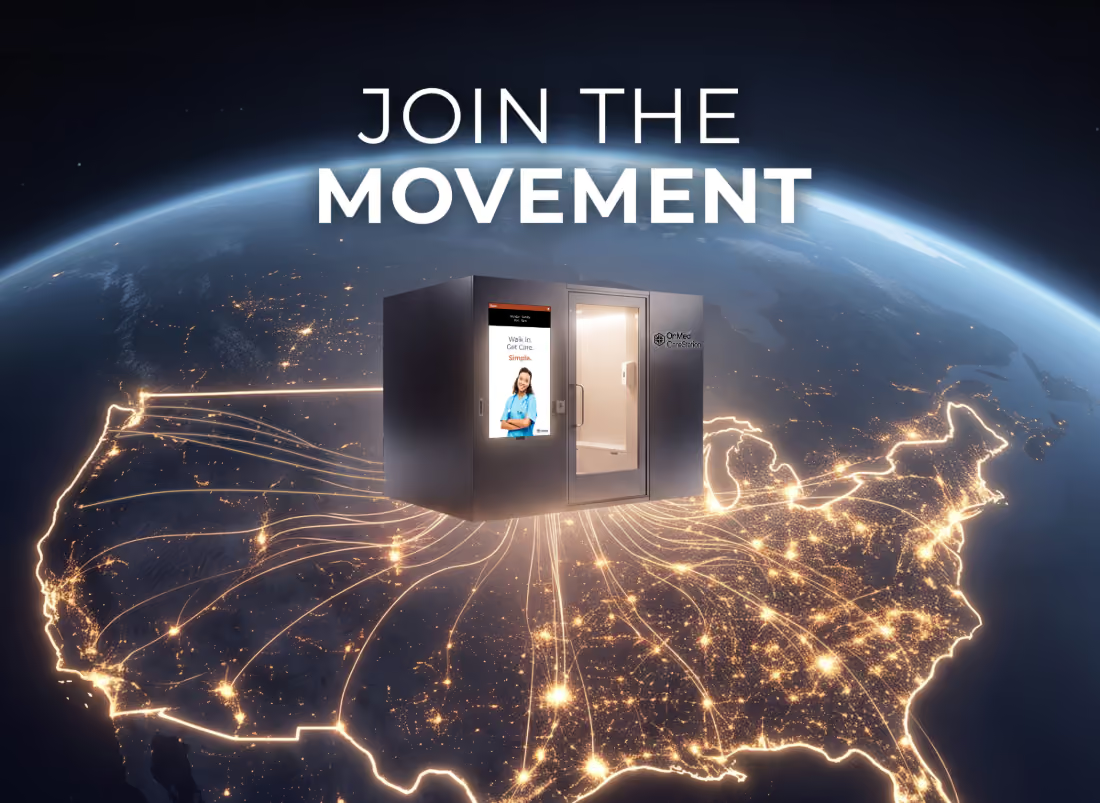
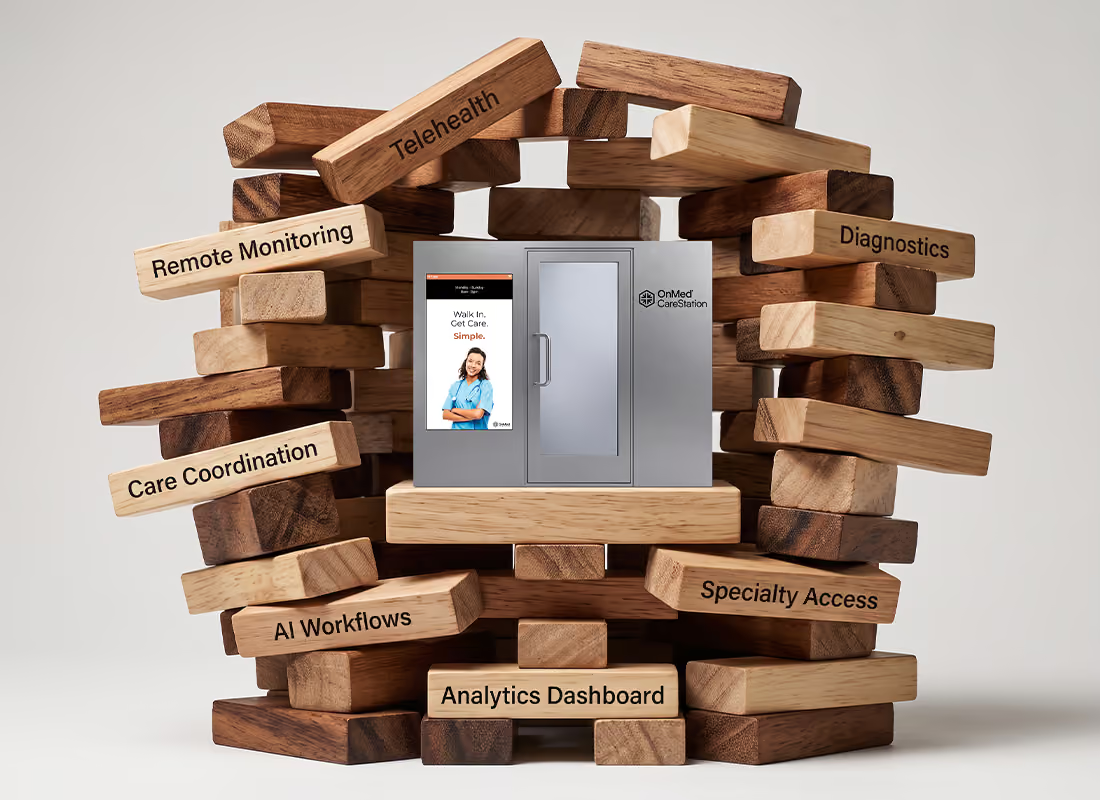
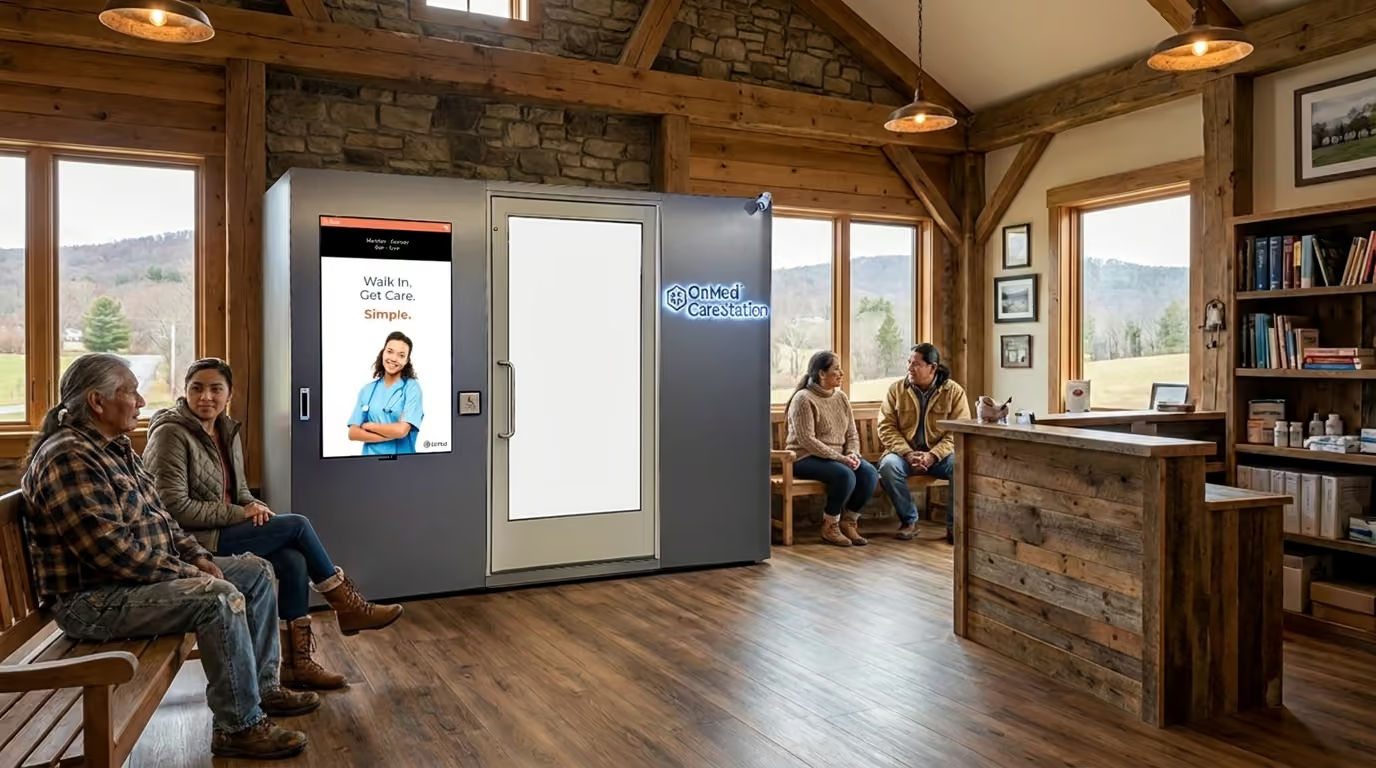
This is where the CareStation comes in. An 8x10 foot "Clinic-in-a-Box," it becomes a way to extend Tribal healthcare access into places communities already trust, including housing developments, schools, community centers, cultural gathering spaces, gaming enterprises, and IHS partnership locations, without construction timelines or capital budget cycles.
A fully enclosed unit combines live virtual care with integrated diagnostic tools that allow clinicians to conduct comprehensive exams, develop treatment plans, issue e-prescriptions, and make referrals from a secure and private setting, running on broadband or satellite. Site and care coordinator roles can be filled by community members, creating local employment opportunities while helping ensure the care experience remains rooted in the community itself. Healthcare access and economic self-determination do not have to be separate goals.
Why Tribal Nations Choose the CareStation:
Across current CareStation deployments, 86% of visits are resolved on-site—no emergency room, no transport, no specialist referral required. The remainder are escalated or referred exactly as they should be. 80% of patients report having no primary care provider before the CareStation became their medical home, and 58% say they would otherwise have gone to an emergency room or urgent care for the same visit. Patients rate the experience 4.96 out of 5 before they leave the unit.
The CareStation is designed to extend the capacity of the Tribal healthcare systems and care teams a Nation has already built—not to replace IHS providers, Tribal health staff, or Community Health Representatives. A Nation that already runs its own health programs can use the CareStation network to reach housing, schools, and enterprise sites its existing staff cannot cover on their own. A Nation that has not yet taken on self-governance can use the same network as a first, Tribally controlled step toward it—building the operating, billing, and clinical foundation to take on more of its own health programs at its own pace.
OnMed works across all 50 states. Funding rarely comes from a single source, and OnMed works alongside each Nation to map the full stack available to it: the Rural Health Transformation Program (RHTP), which several states have specifically reserved for Tribal Nations; IHS and Title I/Title V 638 contracts; Medicaid, which is reimbursed at a 100% federal match for services delivered at Tribal facilities; and HUD IHBG, ROSS, and Choice Neighborhoods funding for care embedded in Tribal housing.
Every Tribal Nation's healthcare journey is different. What remains constant is the need for solutions that expand access while respecting sovereignty, supporting existing care teams, closing care gaps, and strengthening the systems Tribal leaders have worked for decades to build. The future of healthcare across Tribal Nations will not be built by outside organizations. It will be built by Tribal Nations themselves. The opportunity is to expand the reach of the systems, people, and programs already serving communities today. OnMed is committed to supporting that work, on the Nation's terms.
For the Tribal Health Director looking at that map, the goal was never to replace the systems already serving the Nation. It was to bring those systems closer to the people who depend on them.
Whether your Nation is evaluating RHTP opportunities, expanding an existing 638 program, or exploring new ways to reach communities that current systems can't cover on their own, OnMed can help identify funding pathways and deployment options that fit your goals.
See how the CareStation fits your Nation's health strategy.
The CareStation is a private space where a patient meets with a licensed clinician over live video while integrated diagnostic tools—blood pressure monitoring, pulse oximetry, thermal scanning, and a high-definition exam camera—support the visit. It runs on broadband or satellite and needs only a power outlet.
The CareStation is built around a simple principle: the Nation remains in control. Health data belongs to the Nation and is directed by Tribal leadership. Care protocols, including referral pathways into traditional healing practices, are set by the Nation's own health department. Branding and identity reflect the Nation rather than OnMed.
Health data generated in the community belongs to the Nation. It is directed by Tribal leadership, with no third-party intermediaries and no use without explicit Tribal consent. Care protocols, branding, and identity are also directed by the Nation rather than by OnMed.
No. The CareStation is designed to extend the capacity of the care teams a Nation has already built. It gives existing IHS providers, Tribal health staff, and Community Health Representatives another access point to reach community members, not a replacement for their roles.
Deployment for Tribal partners typically takes about 60 days, with no construction or new building required. The unit can be placed in Tribal housing developments, schools, community centers, gaming enterprises, or alongside existing IHS facilities.
Funding can be layered from several sources, including the Rural Health Transformation Program (RHTP), which several states have reserved specifically for Tribal Nations; IHS and Title I/Title V 638 contracts; Medicaid, reimbursed at a 100% federal match for services delivered at Tribal facilities; and HUD IHBG, ROSS, and Choice Neighborhoods funding for care embedded in Tribal housing.
No. Healthcare is delivered differently from Nation to Nation. Some operate under IHS direct-service models, others manage their own programs under Public Law 93-638 self-governance authority, and Alaska follows its own regional Tribal health organization structure. OnMed works within whichever structure a Nation already has.
Follow along as we continue to redefine the healthcare landscape and bring the OnMed CareStation to communities across the U.S.