Explore how on-site healthcare can help employers improve workforce health while supporting business performance.

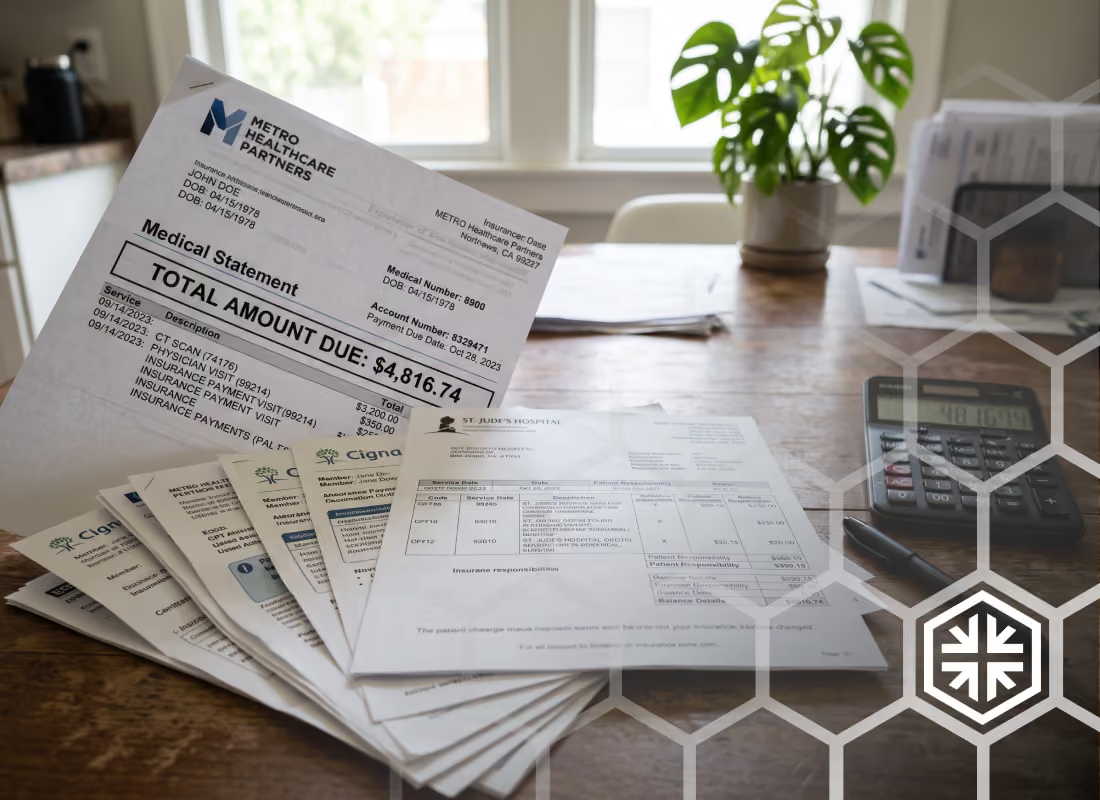
Dana runs payroll for a 150-person plant outside Toledo. Every spring, her company's wellness vendor offers a free preventative biometric screening. But it's off-site and takes place during a shift. Dana has skipped it three years in a row because competing responsibilities like an unexpected obligation, inadequate staffing coverage, or an unplanned caregiving need, have consistently took precedence.
Her blood pressure hasn't been checked since her last physical. If it's been climbing, it could go unnoticed until she has a stroke or cardiac event that leads to an ER visit and a bill.
Dana's experience shows how easily a benefit can go unused when it doesn't fit into the workday. For HR leaders, the challenge is getting employees to use the health and wellness benefits intended to help them stay healthy and lower the company's claims costs.
Designing the right wellness program is only part of the job. Employees also need time to use it. Employer-sponsored wellness programs without incentives see median participation rates near 20%, leaving three out of five employees without the preventive touchpoints those programs are intended to provide. Timing and location can be a barrier even when a screening is well designed. Someone may have fifteen minutes between meetings but have to give up half a day for an off-site appointment.
Proactive healthcare aims to make preventive care easier to use. A benefits strategy can offer screenings and still leave employees struggling to fit them into the day.
Missing a blood pressure check can mean missing a chance to identify a problem early. Some chronic conditions caught early can be managed with a conversation and a prescription. When detected later, they may require specialist referrals, ER visits, and years of care and claims. Emergency department care illustrates the cost difference: it runs roughly 12 times what care for the same condition costs in a lower-acuity setting. The U.S. spends an estimated $168 billion a year on ED visits that could have been treated elsewhere.
Absenteeism and presenteeism account for $575 billion in annual losses. Ordinary, treatable conditions can contribute to those losses when they aren't identified and managed. For physically demanding workforces, workers' compensation adds another concern: the average workers' comp claim costs more than $47,000. Earlier triage doesn't eliminate injury risk, but it may help address minor issues before they develop into claims.
There’s a newer line item on this list that most employer benefits strategies haven’t caught up to yet: mental health. Behavioral health claims rose 17% in 2025 alone, and it’s increasingly showing up among the top drivers of employer healthcare spend. It's escalating the same way a missed blood pressure check does––quietly, until it's a claim.
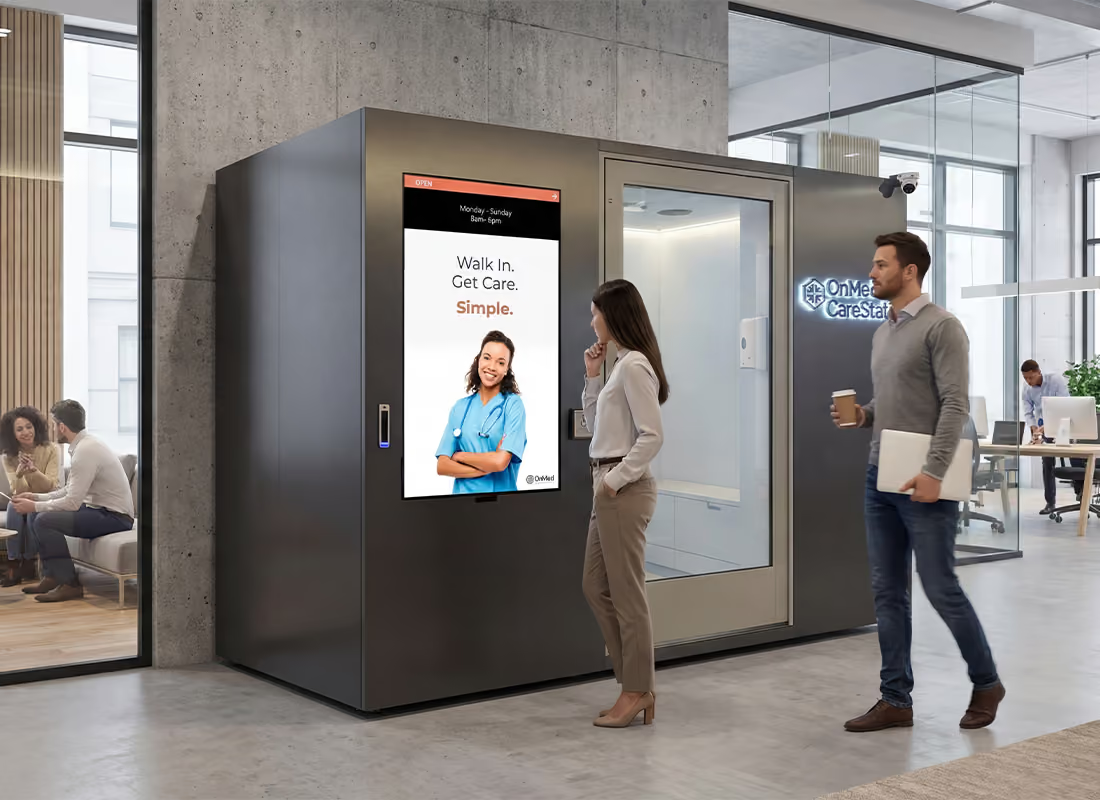
The OnMed CareStation® brings care into the workplace so employees can get a screening without leaving the site. This tech-enabled, AI-amplified, human-delivered "Clinic-in-a-Box" pairs a licensed clinician with diagnostic tools that a wellness portal or video call alone doesn't provide. A visit takes about 20 minutes. Available tools include HD exam cameras, a digital stethoscope, an otoscope, calibrated blood pressure monitoring, pulse oximetry, and thermal imaging.
Because it's in the building, on-site, Dana can get checked without giving up half a day or having to decide whether the appointment is worth the time away.
That same visit now includes screening for anxiety and depression, with clinicians trained to recognize suicide ideation, inside the same private encounter as a physical complaint rather than a separate program employees have to seek out on their own.

Employers can add on-site care alongside their existing benefits strategy rather than rebuild the plan. The practical question is whether easier access can help employees get care sooner and what that could mean for claims costs. The CareStation is designed to be operational in about 45 days and requires an electrical outlet.
Across CareStation deployments, 86% of visits are resolved on-site without an outside referral. Another 58% of users say they would otherwise have gone to the ED or urgent care for the same issue. Three in four American adults live with at least one chronic condition—and more than half manage two or more—with prevalence climbing to over 90% among adults 65 and older, 75% among adults 35 to 64, and 60% among adults 18 to 34, showing how often these conditions are part of the care employees seek. Employers see an average of $1,300+ in annual savings per user. The model brings care to the workplace without requiring employers to build a clinic or hire staff, and employees can seek care where they already come to work.
Talk to our team about adding CareStation access to your existing benefits plan and making it easier for employees to get preventive care at work or learn more about how OnMed brings on-site clinician-led care to employees.
Download The Complete Employer Guide to On-Site Healthcare to see how employers add on-site care alongside their existing benefits, or read how Georgia’s State Health Benefit Plan brought the OnMed CareStation® to state employees.
Coverage removes the cost barrier, not the scheduling, travel, or time-off barrier. Most preventive care gaps come from access friction, not affordability, even though the visit itself carries no deductible cost.
50% of unmanaged chronic conditions will ultimately escalate to emergencies, and emergency-setting care costs roughly 12 times more than the same condition managed early in a primary-care or on-site setting.
The OnMed CareStation® is an 8-by-10-foot "Clinic-in-a-Box" that connects patients in real time with licensed clinicians and integrated diagnostic tools through a fully integrated device and human platform. Patients can walk in and receive a diagnosis, treatment plan, and e-prescription, often without an appointment or waiting room. Unlike traditional telehealth, the CareStation combines virtual care with diagnostic tools, real-time scans, and vital sign monitoring to support comprehensive clinical evaluations where care is needed most. See how a CareStation visit works.
Across OnMed employer deployments, 86% of conditions are resolved on-site, 58% of patients would have otherwise sought care in an emergency room or urgent care setting, and more than two hours of productivity are returned per visit. Employer deployments have also demonstrated 2-3x higher wellness engagement and more than $1,300 saved per employee patient. Patient satisfaction averages 4.96 out of 5, and 99% of patients would recommend the CareStation.
The Georgia State Health Benefit Plan (SHBP) case study reports separate program-specific outcomes. Download the Georgia SHBP case study.
During implementation, OnMed works with your benefits team to map your existing wellness programs, EAP, and health-management vendors. When relevant, the clinician shares point solutions with the employee and documents the referral in the visit summary.
Follow along as we continue to redefine the healthcare landscape and bring the OnMed CareStation to communities across the U.S.