Inside Tampa Hope's partnership with Tampa General Hospital, Catholic Charities Diocese of St. Petersburg, and the City of Tampa—and the health risks uncovered when care became easier to reach.
When Tampa Hope added on-site care through an OnMed CareStation® in October 2024, it did not just make healthcare easier to reach. It revealed how much medical need had been hiding in plain sight—from undiagnosed hypertension to a steep drop in the shelter's own 911 call log once residents had somewhere reliable to turn.
For people experiencing homelessness, healthcare often sits at the intersection of every challenge they face.
A chronic condition that goes unmanaged can make it harder to work. A preventable illness can derail progress toward stable housing. A lack of transportation can turn a routine doctor's visit into an impossible task. And without an established primary care provider, many health concerns go untreated until they become emergencies.
These realities are well documented across communities nationwide, but they also raise an important question: What happens when healthcare is brought directly to the people who need it most?
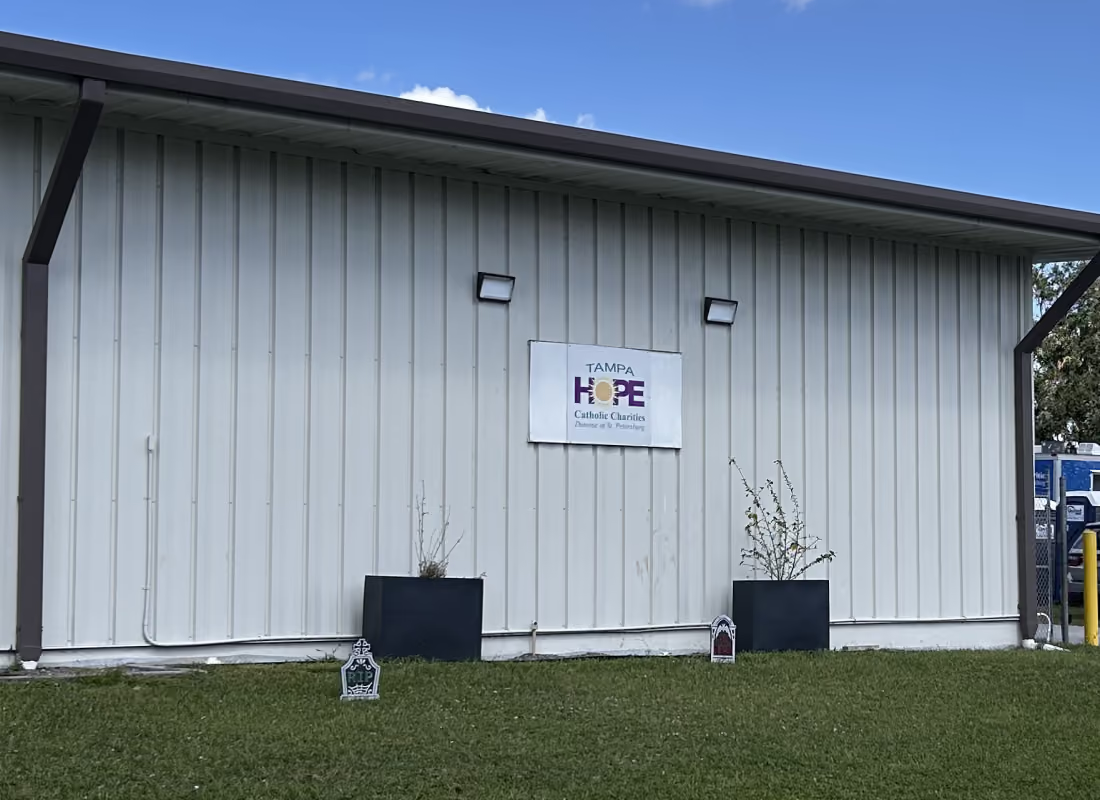
Tampa Hope, a shelter in the City of Tampa supporting residents on the path back to stable housing, is one of the clearest examples yet. Tampa General Hospital, Catholic Charities Diocese of St. Petersburg, and the City of Tampa joined forces to put an OnMed CareStation® on the property itself, giving residents a way to see a clinician without an appointment, a ride, or a referral.
Since launch, the results demonstrate what is possible when healthcare access moves closer to where people already are.
People experiencing homelessness face some of the most significant barriers to healthcare access. Lack of insurance, limited transportation, competing daily priorities, and difficulty maintaining ongoing provider relationships often make routine care difficult to obtain. For many, the emergency department becomes the default point of care despite being designed to address acute needs rather than ongoing health management.
Many residents arrive at Tampa Hope carrying health problems that were never treated and chronic conditions that were never managed, often with no doctor they can call their own. For this population, healthcare isn't something to handle once everything else is stable. It's often the thing that has to come first.
The shelter recognized that improving health outcomes required more than pointing residents toward existing healthcare resources. It required removing the barriers that prevented people from accessing care in the first place.
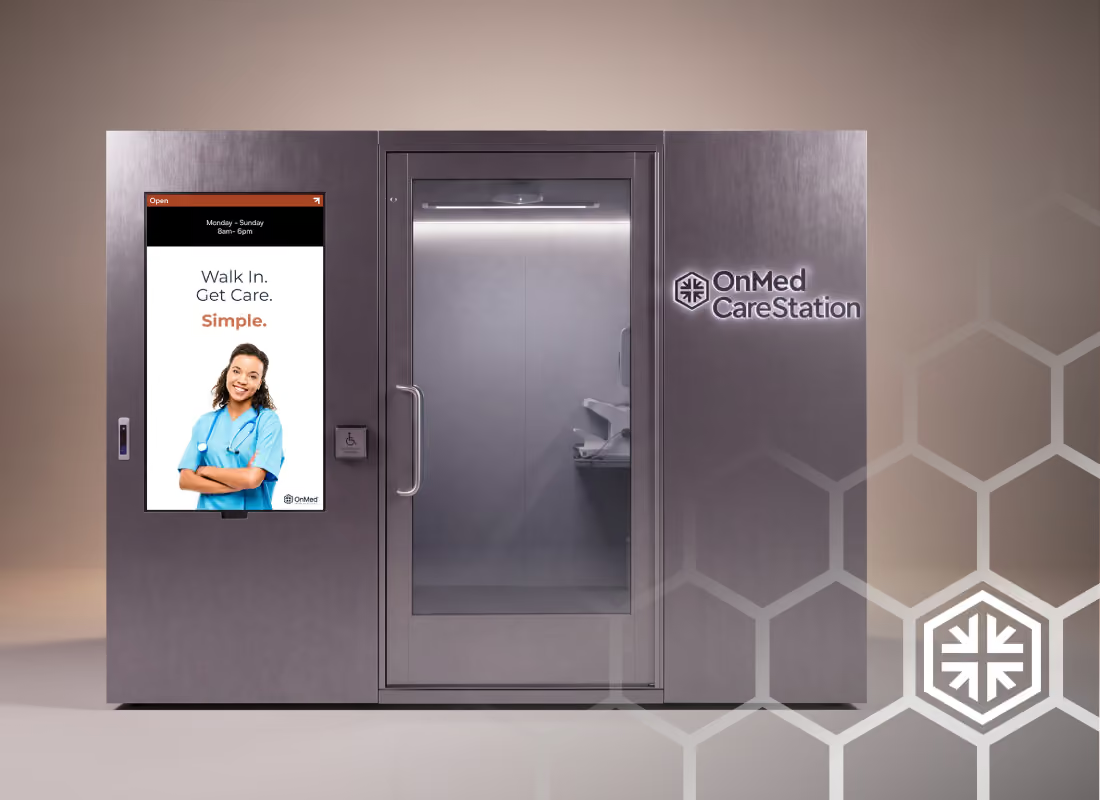
To address those barriers, Tampa Hope introduced the CareStation in October 2024, creating a new access point for care directly within the shelter. Rather than asking residents to arrange transportation, schedule appointments, or navigate referrals, the CareStation made clinician-led care available where residents were already receiving support. Residents could connect with licensed clinicians in real time, receive evaluations using clinic-grade diagnostic tools, discuss symptoms, and leave with a treatment plan and prescription when appropriate, all in a single visit.
The model was designed to fit seamlessly into existing shelter operations. Tampa Hope integrated the CareStation into resident onboarding and ongoing case management, helping ensure residents were aware of the resource and encouraging engagement over time.
The data emerging from Tampa Hope tells a powerful story.
In roughly two years, 279 different residents have used the CareStation across 465 visits, about 80% of everyone living at the shelter, and rated the experience 4.91 out of 5 on average.
Those numbers describe how often people showed up. They don't describe what showed up once they did. More than 70% of patients carry at least one documented chronic condition; 16% carry three or more. A documented behavioral-health condition shows up in better than one in five residents.
The clearest example is blood pressure. Among 266 residents with a reading on file, 102 have hit Stage 2 hypertension or worse at least once. Thirty-eight of those residents had no hypertension diagnosis anywhere in their record, and thirty-five of them also had no primary care provider to catch it. Six were already at crisis level the first time anyone checked.
These are the kinds of health risks that can remain invisible for extended periods when regular access to care is unavailable.
“The OnMed CareStation® has already proven invaluable here at Tampa Hope. It means our residents can access essential medical care without delay, and that makes a real difference—not just in treating immediate health concerns, but in providing consistent, preventive care that helps them get back on their feet.”
— Maggie Rogers, Executive Director, Catholic Charities Diocese of St. Petersburg
One of the most striking findings from the Tampa Hope program is how many residents lacked an established healthcare relationship before engaging with the CareStation.
Before the CareStation arrived, close to 95% of residents had no primary care provider at all. For most of them, it isn't a nice-to-have. It's the only clinician they see, period.
This reflects a broader challenge across healthcare today. Access is not simply about having healthcare resources available somewhere in the community. Access means creating practical pathways that allow people to actually use those resources.
When care becomes easy to reach, opportunities emerge for earlier intervention, chronic disease management, preventive screenings, medication adherence, and continuity of care. For many residents, the CareStation became a consistent touchpoint for managing everyday health needs, serving as a quarterback for care in a system that often feels fragmented and difficult to navigate.
Another important outcome has been the program's ability to resolve many healthcare needs before they require escalation.
Roughly three out of every four visits end at the CareStation itself, with no referral out and no second stop at another facility. Over that same stretch, the number of 911 calls placed from the shelter dropped from 24 in 2024 to 14 in 2025. Plenty of factors can move that number in either direction, but the timing lines up with a simple idea: when people have somewhere to go before a problem turns into an emergency, fewer problems turn into emergencies.
For healthcare systems, community organizations, and public-sector leaders, this represents an important opportunity. Improving access is not only about increasing convenience. It can help identify risk earlier, improve continuity of care, and support more appropriate utilization across the healthcare ecosystem.
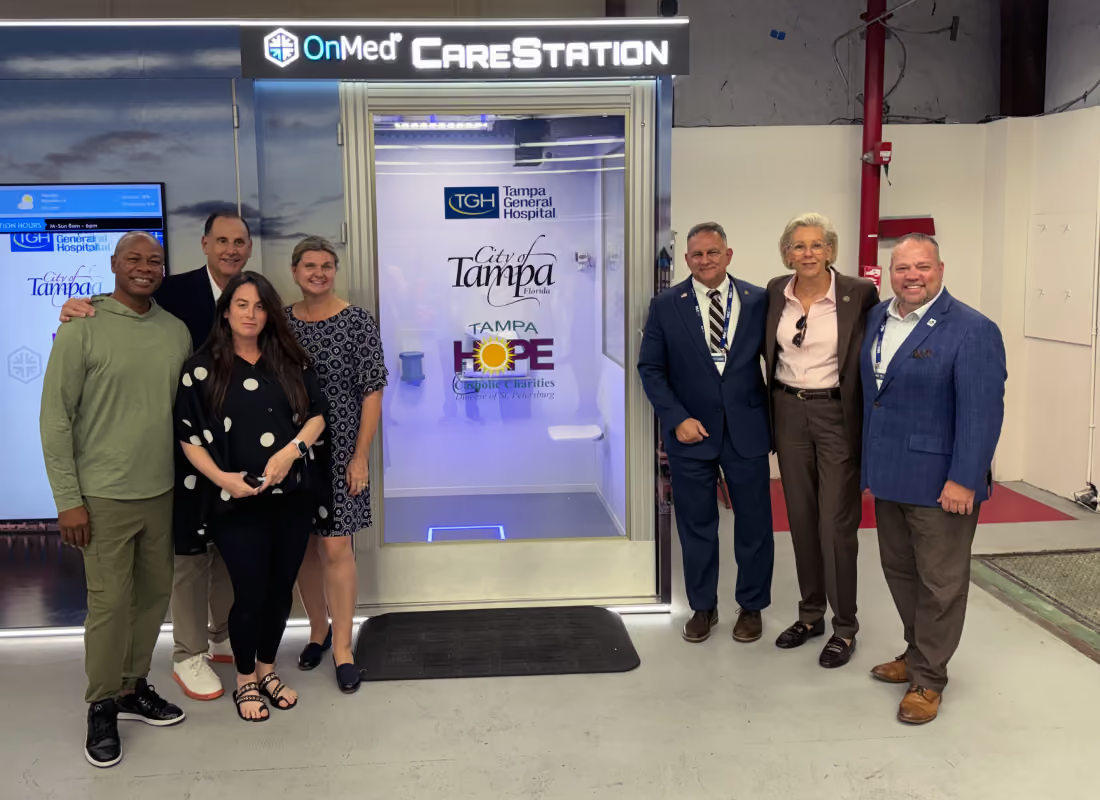
The Tampa Hope initiative demonstrates that bringing healthcare closer to people can produce measurable results for populations that have historically been difficult to reach.
By removing common barriers such as transportation, scheduling, and provider shortages, the program has created a reliable point of access for residents who previously had few options. In the process, it has uncovered significant chronic disease burden, engaged a large majority of shelter residents, and provided an ongoing connection to care for individuals who might otherwise go untreated.
Healthcare cannot improve outcomes if people cannot reach it. Sometimes the most effective solution is not building another destination for care. It is bringing care directly to the people who need it.
Tampa Hope demonstrates what can happen when communities remove traditional barriers and create a straightforward path to care. By meeting residents where they are, the program is helping identify previously undetected health risks, provide timely treatment, reduce reliance on emergency services, and create stronger connections to ongoing care.
Want to see what this could look like for your community, organization, or healthcare network? Learn how the OnMed CareStation® can help expand access to care where people need it most.
The OnMed CareStation® is an 8-by-10-foot "Clinic-in-a-Box" that connects patients in real time with licensed clinicians and integrated diagnostic tools through a fully integrated device and human platform. Patients can walk in and receive a diagnosis, treatment plan, and e-prescription, often without an appointment or waiting room. Unlike traditional telehealth, the CareStation combines virtual care with diagnostic tools, real-time scans, and vital sign monitoring to support comprehensive clinical evaluations where care is needed most. See how a CareStation visit works.
On-site healthcare helps people experiencing homelessness by removing the barriers that keep them from care, such as transportation, appointments, and referrals. At Tampa Hope, a shelter in the City of Tampa, an OnMed CareStation® on the property lets residents connect with a licensed clinician in real time, receive an evaluation using clinic-grade diagnostic tools, and leave with a treatment plan and prescription when appropriate, all in a single visit. See how OnMed partners across industries to expand healthcare access.
Yes. Roughly 80% of CareStation patients have no primary care provider. For many of them, the CareStation becomes their consistent point of contact for both routine and unexpected health needs, effectively serving as a medical home. The CareStation is designed to extend access to care rather than replace a patient's existing primary care provider. Find a CareStation near you.
OnMed partners with state and local governments, healthcare organizations, and community stakeholders to expand access to care in underserved communities. Through the OnMed CareStation®, organizations can establish permanent healthcare access points that support public health goals, improve healthcare access, and strengthen local healthcare infrastructure.
Interested in bringing a CareStation to your community? Contact us.
At Tampa Hope, a shelter in the City of Tampa, 279 different residents have used the OnMed CareStation® across 465 visits in roughly two years, about 80% of everyone living at the shelter, and rated the experience 4.91 out of 5 on average. Before the CareStation arrived, close to 95% of residents had no primary care provider, and more than 70% of patients carry at least one documented chronic condition. The program is a partnership with Tampa General Hospital, Catholic Charities Diocese of St. Petersburg, and the City of Tampa. Read the Tampa Hope case study.
Follow along as we continue to redefine the healthcare landscape and bring the OnMed CareStation to communities across the U.S.