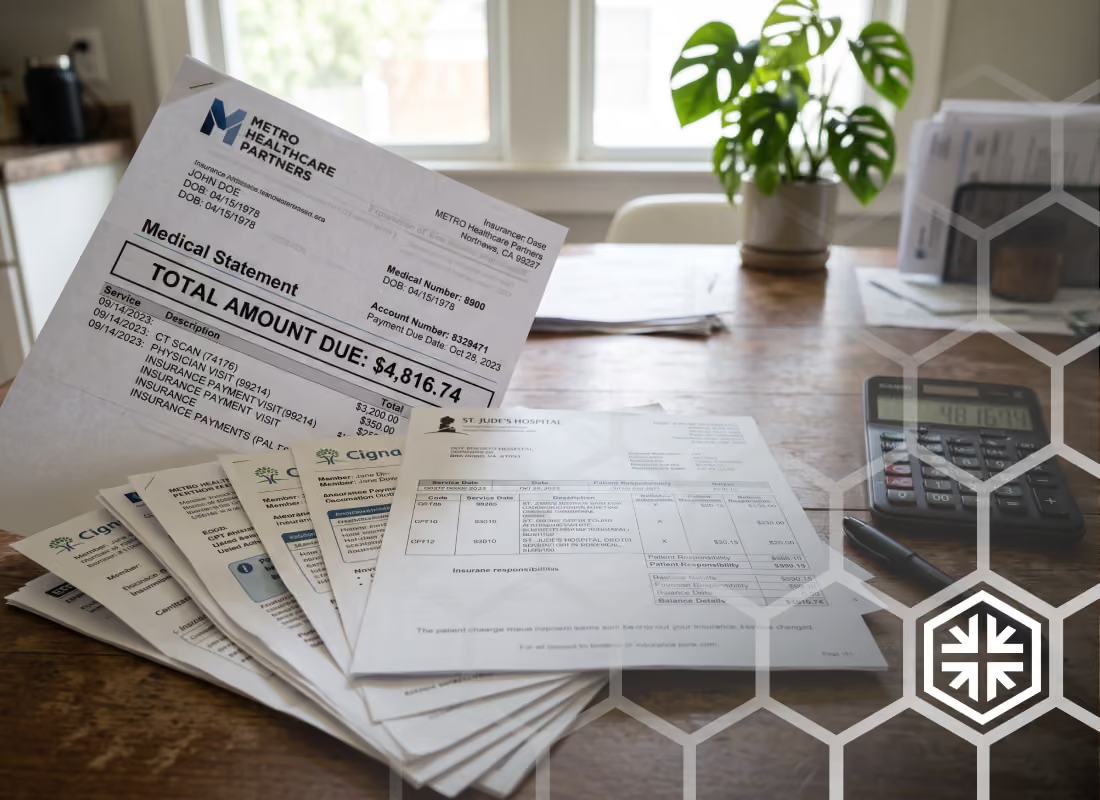
Explore how on-site healthcare can help employers improve workforce health while supporting business performance.


What collective bargaining has built into America's union health and welfare funds —and the structural gap that remains for members and the funds that serve them.
Selena has been an operating engineer for eleven years. Her local's health and welfare fund is, by any reasonable measure, a good one: low deductibles, a broad provider network, dental and vision built in. When her knee started locking up on a job outside Tucson last spring, she never doubted the benefit was there. What she doubted was whether she could use it before her crew rotated to the next site.
By the time an appointment opened up, the crew had moved on—and so had she.
That distinction, strong coverage, uneven access, looks different from trade to trade. A laborer may work through pain to meet a deadline. A carpenter, plumber, or pipefitter may move between hazardous sites and put off care until the next project. An operating engineer may spend long, solitary hours in heavy equipment, while a Teamster’s route can make even a routine appointment difficult to reach. Hospitality and manufacturing workers face their own mix of irregular schedules, public exposure, repetitive strain, and pressure to keep moving.
Across these jobs, the common thread is not a weak benefit. It is a working day that makes timely care hard to fit in.

Union membership stands at roughly 14.7 million workers—about 10 percent of the wage and salary workforce—and spans far more than the traditional assembly-line image. Today’s members include teachers, healthcare and municipal employees, transit and utility workers, protective service workers, and building tradespeople. Their jobs differ, but many share schedules and worksites that make routine care difficult to reach.
That 10 percent reflects a long decline. At its mid-20th-century peak, roughly a third of American workers belonged to a union. Economists point not to a single cause but to a mix of economic, legal, and workforce shifts: a shrinking share of manufacturing jobs, where unions were traditionally strongest; right-to-work laws that have strained union finances; and a widening gap between organizing success in the public sector and the private sector. Yet even with a smaller share of the workforce, collective bargaining continues to deliver some of the strongest health benefits available to American workers.
For millions of union families, that bargaining power becomes tangible in the form of lower deductibles, broader networks, and benefits that extend to dependents and retirees. Much of this coverage is delivered through Taft-Hartley health and welfare funds: multiemployer trusts established under the 1947 Labor-Management Relations Act and jointly governed by labor and management trustees. Counting dependents and retirees, as many as 26 million Americans receive benefits through these plans. Unionized workers also tend to have more comprehensive coverage, contribute less toward premiums, and face lower cost-sharing than nonunion workers—an advantage that has persisted even as national coverage patterns have changed. The achievement is real; the question is whether members can use it when work and life intervene.
For Selena, the problem was never understanding her benefit. It was fitting care into a work life that refused to hold still. Her crew’s location changed before an appointment opened, and the next site brought a new schedule, a new commute, and the same aching knee. That pattern is familiar across organized labor: the Teamster whose route overlaps clinic hours, the nurse rotating between days and nights, the teacher with a thirty-minute lunch, and the tradesperson moving from one job site to the next. The coverage may be strong, but using it can still require time and flexibility the job does not allow.

Most union leaders did not enter the labor movement to become healthcare experts. Yet trustees, fund administrators, and joint labor-management boards are asked to make consequential benefit decisions for the people they represent. When care is delayed, the consequences appear on both sides of that responsibility: a member’s manageable need can become an urgent care or emergency department visit, while the fund absorbs higher-cost utilization and avoidable claims. The challenge is to protect the value of hard-won benefits while responding to a claims trend shaped not only by the price of care, but by whether members can reach it in time.
The access gap is especially visible in work that moves. A utility crew may be dispatched far from home; a construction worker may report to a different site the following week; a driver may spend the hours when clinics are open somewhere on the road. Nearly 44 million Americans live in an area with a documented primary care clinician shortage, so the next available appointment may be distant as well as inconvenient. The stakes rise in safety-sensitive work: employers covered by OSHA recordkeeping requirements reported 2.5 million nonfatal workplace injuries and illnesses in 2024, along with 5,070 fatal workplace injuries. Each case becomes a practical question in the moment—how quickly can the worker be evaluated, and will a delay return later as a larger claim?
This is not, at its core, a coverage problem. It is an access problem—one that affects members and the people responsible for overseeing their plans in the same breath.
For a trustee, the familiar options force an uncomfortable tradeoff. A fully staffed clinic can offer hands-on care, but it is expensive, slow to build, and difficult to justify when members are scattered across many employers and job sites. Telehealth is easier to reach, yet a screen cannot take vitals, examine an injury, or run a diagnostic test. One model asks the fund to concentrate care where the membership is not concentrated; the other reaches members more easily but cannot complete many of the encounters they need.
The opening, then, is for a model that can move closer to members without giving up the clinical capabilities that make an in-person visit useful.
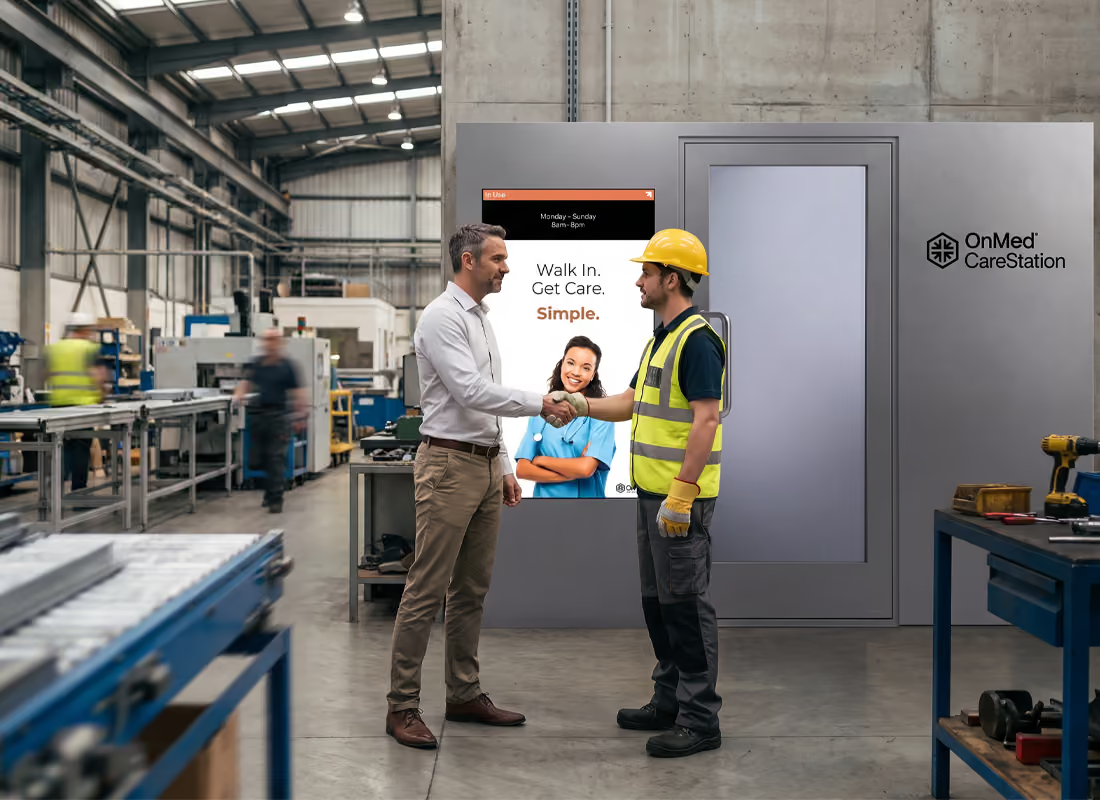
That is the gap the OnMed CareStation® is designed to address. The patented 8×10-foot “Clinic-in-a-Box” brings a live, licensed clinician and integrated diagnostic tools to a contributing employer’s worksite, a union hall, or another shared location covered by the trust—placing a more complete clinical encounter closer to the member’s actual day.
For a trustee, the financial question is what happens when a member cannot get routine care at the right time. Nationally, $168 billion is spent each year treating avoidable, non-emergency conditions in emergency departments, while health-related absenteeism and presenteeism cost employers more than $575 billion annually. In a self-insured fund, those pressures are not abstract: they surface in claims experience, missed work, and renewal terms.
The practical test is whether the model resolves care where members already are. Across OnMed’s CareStation locations, 86% of visits are resolved on-site without a referral, and 58% of users say they otherwise would have gone to an emergency department or urgent care. A CareStation can be deployed in as little as 45 days without construction, allowing a fund to extend a consistent access point across multiple contributing-employer locations rather than building around a single address.
For Selena, strong coverage was not enough to get her knee examined before the next job took her elsewhere. That is the next challenge for union healthcare: not simply preserving the benefits members have earned, but making those benefits reachable within the schedules, locations, and physical demands of the work itself.
If your union health and welfare fund is weighing how to make strong benefits easier to use across dispersed employers and worksites, connect with our team to explore what an on-site or near-site deployment could look like for your members.
The OnMed CareStation® is an 8-by-10-foot "Clinic-in-a-Box" that connects patients in real time with licensed clinicians and integrated diagnostic tools through a fully integrated device and human platform. Patients can walk in and receive a diagnosis, treatment plan, and e-prescription, often without an appointment or waiting room. Unlike traditional telehealth, the CareStation combines virtual care with diagnostic tools, real-time scans, and vital sign monitoring to support comprehensive clinical evaluations where care is needed most. See how a CareStation visit works.
Strong coverage does not guarantee timely access. Many union members work schedules and worksites that make routine care hard to fit in: crews rotate between job sites, drivers are on the road during clinic hours, and shift workers move between days and nights. Appointment availability adds to the problem, since nearly 44 million Americans live in an area with a documented primary care clinician shortage. When care is delayed, a manageable need can become an urgent care or emergency department visit.
Learn more about the scale of the problem in Healthcare Access in America.
A Taft-Hartley health and welfare fund is a multiemployer trust, established under the 1947 Labor-Management Relations Act, that provides health benefits to union members. It is jointly governed by labor and management trustees. Counting dependents and retirees, as many as 26 million Americans receive benefits through these plans.
See how on-site access can work for self-funded plans in The Complete Employer Guide to On-Site Healthcare.
Across OnMed employer deployments, 86% of conditions are resolved on-site, 58% of patients would have otherwise sought care in an emergency room or urgent care setting, and more than two hours of productivity are returned per visit. Employer deployments have also demonstrated 2-3x higher wellness engagement and more than $1,300 saved per employee patient. Patient satisfaction averages 4.96 out of 5, and 99% of patients would recommend the CareStation.
The Georgia State Health Benefit Plan (SHBP) case study reports separate program-specific outcomes. Download the Georgia SHBP case study.
Yes. A CareStation can be placed at a contributing employer’s worksite, a union hall, or another shared location covered by the trust, bringing a live, licensed clinician and integrated diagnostic tools closer to members. It can be deployed in 45 days from contract signing without construction, so a fund can extend a consistent access point across multiple contributing-employer locations instead of building around a single address. Across OnMed’s employer clients, 86% of patients are fully treated inside the CareStation without redirection to a specialist, urgent care, or emergency department.
To explore what an on-site or near-site deployment could look like for your members, connect with our team.
Follow along as we continue to redefine the healthcare landscape and bring the OnMed CareStation to communities across the U.S.